
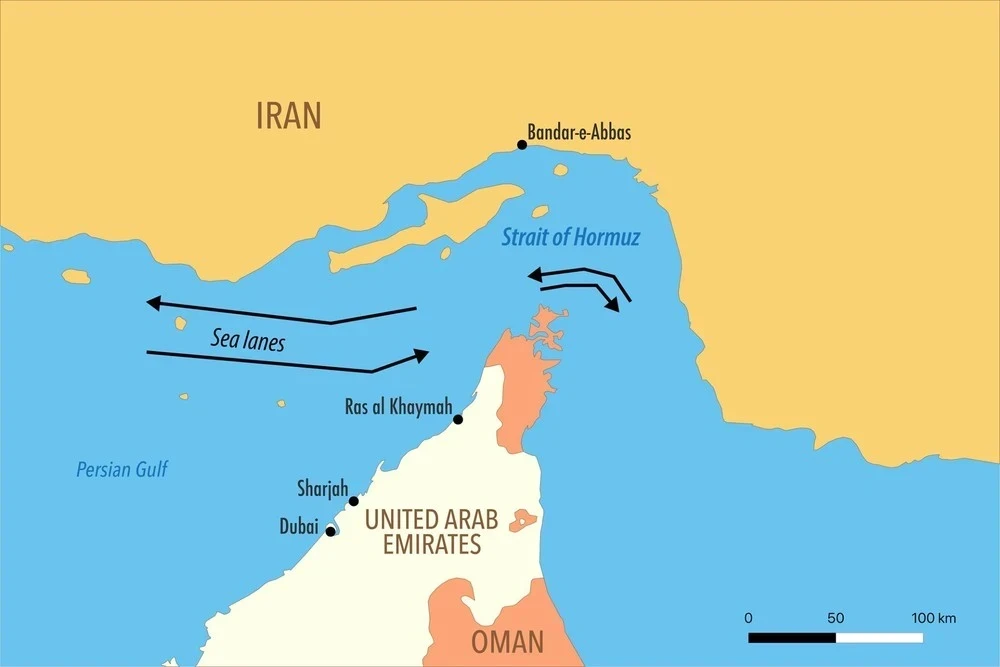
President Trump discussed with advisors the possibility of ending military operations in Iran, even if the Strait of Hormuz remains closed, according to an article in The Wall Street Journal. Sources report that the president and his team concluded that operations to open the strait could take longer than initially expected — from four to six weeks. Trump's main objective remains to weaken the Iranian navy and destroy its missile program.
According to WSJ, Trump plans to halt current combat operations and focus on diplomatic pressure on Tehran to resume free trade. If this cannot be achieved, the U.S. administration will insist that European and Persian Gulf countries take the initiative to open the strait, sources clarified.
Trump's team believes that the Strait of Hormuz holds greater strategic significance for European, Middle Eastern, and Asian countries than for the U.S. itself. In recent weeks, administration representatives have been actively negotiating with allies and partners, urging them to prepare for negotiations or actions aimed at opening the strait, The Wall Street Journal reports.
Recently, Trump stated that serious negotiations are taking place with a "new and more reasonable regime" in Iran regarding the cessation of military operations and again warned of the possibility of destroying Iranian power plants if the Strait of Hormuz is not opened immediately. As noted by WSJ, the 31st Marine Expeditionary Unit and units of the 82nd Airborne Division have already been deployed to the region; Trump is considering sending an additional 10,000 troops.
White House Press Secretary Caroline Levitt noted on March 30 that the U.S. is "working" on normalizing the situation in the Strait of Hormuz, but did not describe it as a primary military objective, such as strikes against the Iranian navy, missile program, and nuclear capabilities. On the same day, U.S. Secretary of State Marco Rubio stated that the American campaign will conclude in the coming weeks. "Then we will face the issue of the Strait of Hormuz, and the solution will depend on Iran," he added.


