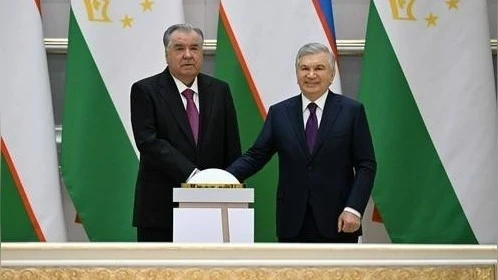
During the ceremony for launching new initiatives, Presidents Mirziyoyev and Rahmon emphasized the importance of cooperation in areas such as furniture and leather goods production, expanding the output of household appliances, and constructing textile enterprises in Tajikistan. In Tashkent, plans are in place for the construction of a residential complex and commercial facilities, as well as the launch of canned goods production in the Fergana region.
As part of these projects, facilities for dairy production will be established in the Andijan region, and fruit juice and metal briquette production will begin in the Surkhandarya region.
Following the event, a joint statement was signed in which the presidents expressed their intention to deepen strategic partnership and allied relations. Additionally, a package of documents aimed at developing multilateral cooperation was signed at the level of governments and ministries.
The signed agreements cover key areas of interaction, including increasing trade turnover, developing industrial cooperation, and implementing electronic goods certification systems. Agreements have also been reached on cooperation in healthcare, science, and radio frequency regulation in border areas.
The parties agreed on a number of programs and "roadmaps" for the period 2026–2028, concerning various sectors such as industry, innovation, mining, tourism, the agro-industrial complex, and cultural exchange. Memorandums of cooperation were signed in the fields of innovation, public service, finance, education, and the enforcement of judicial decisions.
At the conclusion of the event, a ceremony was held where one of the streets in New Tashkent was named after the capital of Tajikistan — Dushanbe.
Economic ties between Uzbekistan and Tajikistan continue to strengthen. In particular, it is expected that trade turnover between the countries will reach $718.3 million by 2025, which is 22.5% more compared to the previous year.