
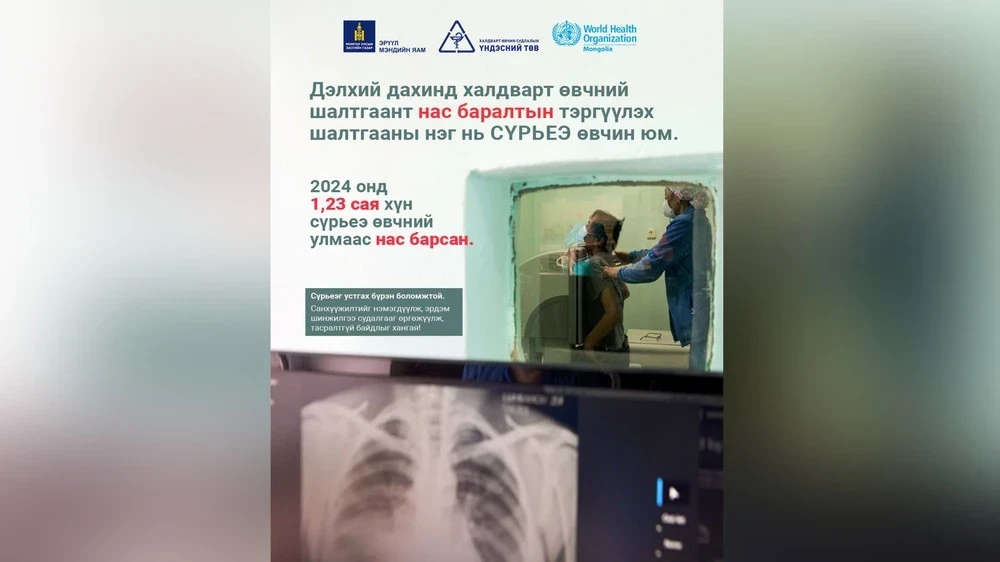
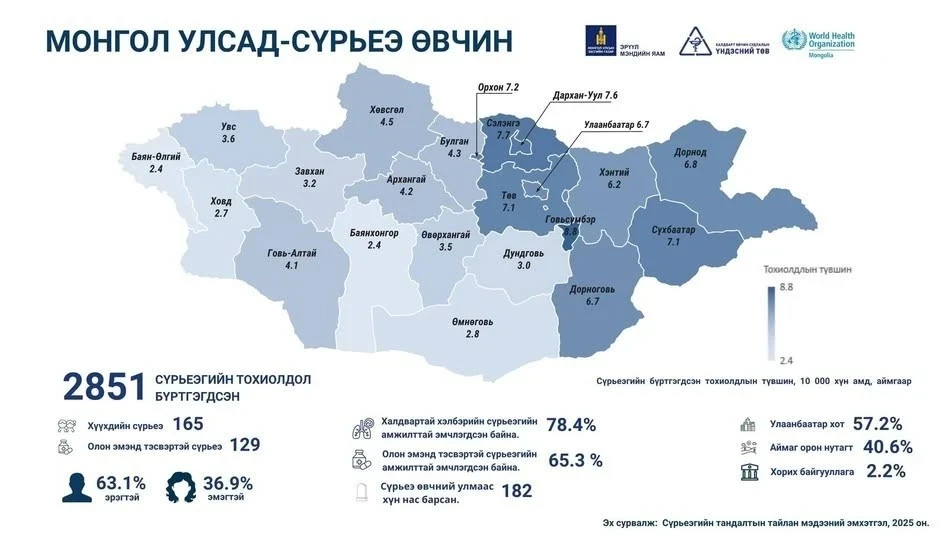
On Tuesday, the Ministry of Health of Mongolia reported the registration of 2,851 new cases of tuberculosis in the country in 2025, among which 182 ended in death.
Of the total number of cases, about 130 were classified as multidrug-resistant tuberculosis.
At a press conference dedicated to World Tuberculosis Day, Mongolia's Minister of Health, Chinburen Jigjiduren, noted that the foundation of a successful fight against tuberculosis is early diagnosis, timely treatment, and completion of therapy. "If these measures are effectively implemented, the eradication of tuberculosis will become a reality," he added.
Chinburen emphasized that Mongolia has made significant progress in the fight against tuberculosis in recent years. He reported that molecular diagnostic technologies have been implemented in 78 medical institutions across the country, and the use of AI-based digital X-ray methods has also begun.
However, the minister noted that tuberculosis is still more prevalent among vulnerable populations and low-income individuals. Some patients, even after receiving a diagnosis, do not complete their treatment.
The minister urged citizens to get tested for tuberculosis if they have a persistent cough lasting more than 14 days.
At the same time, at the same press conference, the director of the WHO Global Tuberculosis Program, Teresa Kasaeva, emphasized that tuberculosis is not only an infectious disease but also a problem exacerbated by social inequality.
She explained that factors such as overcrowding, malnutrition, alcoholism, smoking, and economic vulnerability contribute to the spread and severity of the disease. Kasaeva highlighted the importance of coordinated actions in the fields of health care, social protection, education, and labor to achieve the goal of eradicating tuberculosis.
World Tuberculosis Day is observed on March 24 to raise public awareness of the disease and mobilize international efforts to combat the global epidemic.


