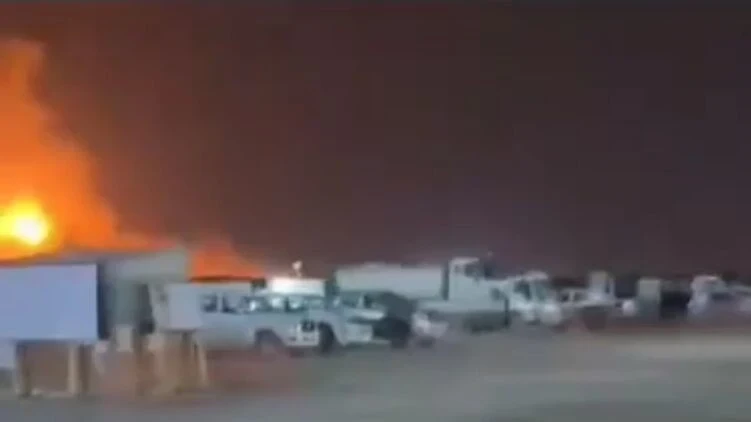
According to Qatari authorities, the fire that broke out at the site of the strike was quickly localized, and no one was injured.
As Bloomberg points out, the plant in Ras Laffan produces about 20% of the world's LNG supplies. The facility's operations were suspended in early March following an attack by an Iranian drone. On March 18, the site was fully evacuated due to Iran publishing a list of potential targets in the region, which included Ras Laffan.
The Qatari Ministry of Foreign Affairs condemned this act, calling it "a dangerous escalation and a gross violation of sovereignty," as well as "a direct threat to national security and regional stability."
The strike on Ras Laffan was another step in the escalating conflict that affects key energy infrastructure in the Persian Gulf, Bloomberg notes. The closure of the Strait of Hormuz and attacks on industrial facilities have already led to a sharp rise in oil and gas prices, forcing producers to cut output. Recent events cast doubt on the possibility of a quick recovery of supplies, even if the strait is reopened, the agency emphasizes.
The Qatari Ministry of Defense also reported that Iran launched five ballistic missiles towards Qatar, four of which were intercepted. The Emir of Qatar, Tamim bin Hamad Al Thani, characterized the attack as "reckless and a dangerous escalation of the conflict in one of the most important energy hubs of the global market."
In turn, the Saudi Ministry of Defense reported intercepting eight ballistic missiles over Riyadh. Debris fell in various areas of the city, including near an oil refinery south of the capital. According to Saudi civil defense, four people, identified as foreign nationals, were injured as a result of the debris falling. There are also reports of six drones being intercepted, including one that was targeting a gas facility in the Eastern Province, as reported by CNN.
Additionally, Saudi Foreign Minister Prince Faisal bin Farhan stated at a press conference following a meeting with the foreign ministers of Arab and Islamic countries that the kingdom "reserves the right to take military action" against Iran if necessary. He added that Saudi Arabia "will not succumb to pressure," asserting that such pressure could backfire on the authorities themselves.
“We reserve the right to take military action if deemed necessary, and when the time comes, the leadership of the Kingdom will make the necessary decisions. We will not shy away from defending our country and our economic resources,” he emphasized.
According to bin Farhan, two oil refineries in Riyadh were targeted in the attacks, and "significant damage" was caused to the industrial city of Ras Laffan in Qatar.
According to the UK Maritime Trade Operations (UKMTO), early Thursday morning, a vessel was struck by an "unknown projectile" off the eastern coast of the UAE, near the Strait of Hormuz. The vessel encountered an accident in the Gulf of Oman, located 11 nautical miles east of Khor Fakkan, resulting in a fire on board.
In Abu Dhabi, gas production at key energy facilities was suspended due to debris from intercepted missiles. Emergency services are "responding to incidents" at the Bab oil field and the Habshan gas complex, which houses one of the largest onshore gas processing plants in the world.
Global oil prices surged to $110 per barrel following the attacks on Middle Eastern energy infrastructure.
- Earlier, Tehran stated its intention to attack the energy infrastructure of the Persian Gulf countries in response to strikes on the Iranian South Pars field.
- “South Pars” is the largest natural gas field in the world. The “Northern” part is owned by Qatar, while the “Southern” part is owned by Iran. The latter is an important source of energy resources for Turkey.