
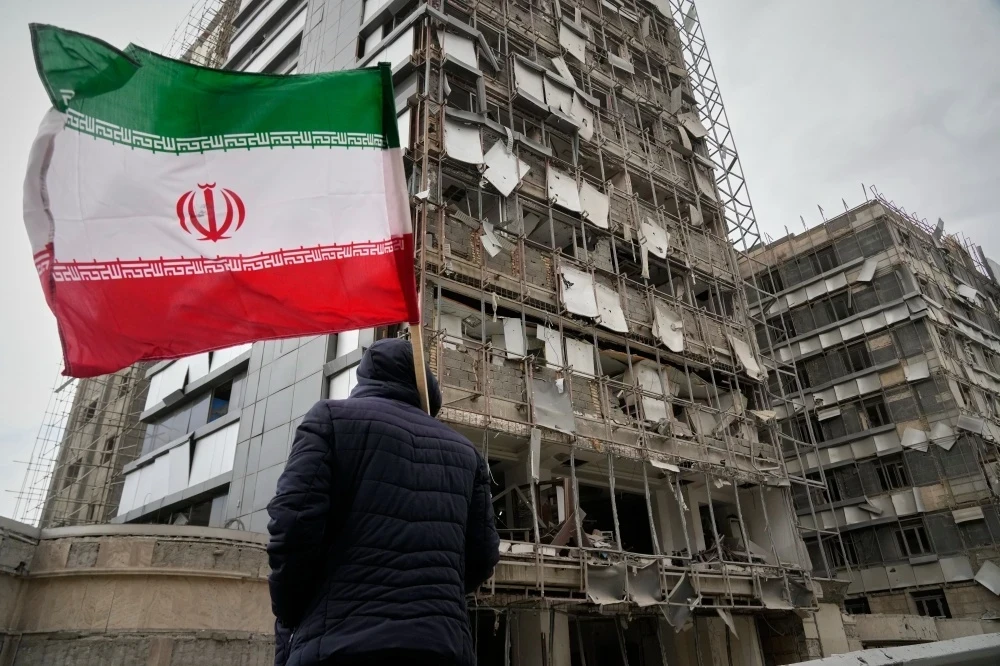
Among the factors contributing to the aggressive actions of the USA and Israel against Iran, one can highlight the Epstein scandal, attempts to weaken Russia and China, concerns about the Iranian nuclear program, and the development of missile technologies. The issue of control over Iran and its natural resources is also extremely important. Which of these aspects became decisive in the attack?
Iran is a country with a rich history and culture, possessing significant natural resources, including oil and minerals. For centuries, it has been a center of scientific and cultural development, making a substantial contribution to world civilization.
However, its modern history is largely defined by the attempts of Western powers to establish control over its resources and use the country's strategic position to strengthen their influence.
Until 1979, when the Islamic Revolution occurred, Iran was under the influence of Britain and then the USA. The rulers of Iran came to power with the support of these countries, acting in the interests of Washington.
The Islamic Revolution, led by Ayatollah Khomeini, allowed the people of Iran to overthrow the Pahlavi regime, which was dependent on external forces. This enabled the Iranians to take control of the country into their own hands.
Since then, the USA has actively sought to restore its influence lost after the revolution. Among their strategies were inciting neighbors to aggression, which led to a prolonged war between Iran and Iraq, as well as the imposition of economic sanctions and attempts at coups.
Washington also supported separatist groups and organized internal unrest, which resulted in many casualties among the Iranian people. However, all these attempts only strengthened the determination of the Iranians to defend their independence and territorial integrity.
Despite the pressure and suffering, the Iranians continue to uphold their values and principles, sacrificing their lives for freedom.
In recent years, the USA and Israel have used the Iranian nuclear program as a pretext for imposing sanctions and political isolation. However, international organizations, such as the IAEA, confirm that this program is exclusively peaceful, which is also enshrined in the Joint Comprehensive Plan of Action (JCPOA) with the "5+1" group of countries.
The nuclear issue is undoubtedly used by the West, especially the USA, as a tool of pressure on Iran. In the absence of this reason, other pretexts could arise, such as the development of defensive technologies or support for Palestine.
Ultimately, the USA seeks to return Iran to a state where its resources would be controlled by the West, and its people would not fully benefit from their wealth. This means that the country must act in the interests of external forces, rather than in accordance with its national interests.
Nevertheless, all the reasons mentioned above are not the only factors that prompted the USA and Israel to aggression against Iran. The Epstein scandal, pressure on Russia and China, as well as pretexts related to the nuclear program, only exacerbate the situation. In fact, many countries around the world peacefully use nuclear energy, and some possess nuclear weapons.
The main driving force behind the conflict is the desire of the USA to establish control over Iran, returning it to the status that existed before the Islamic Revolution of 1979, when its resources were under Western control.
The Iranian leadership and people are aware of this goal and resolutely oppose it. They remember the past when the country was dependent and poor, and are aimed at an independent and dignified existence.
Abdolreza Seyfi, cultural advisor of the Embassy of the IRI in the KR


