A joint statement by the leaders of Central Asia on environmental issues and sustainable development in the region will be adopted at the summit.
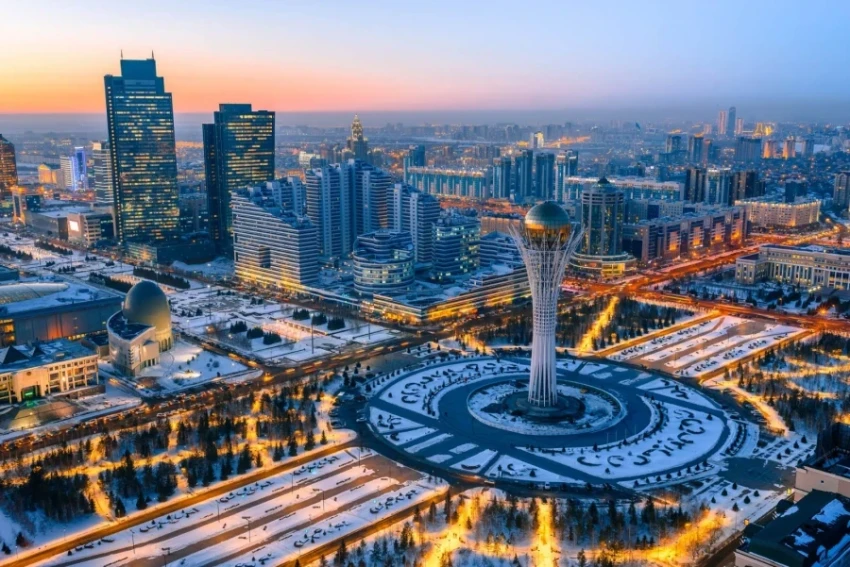
From April 22 to 24, 2026, Astana will serve as the venue for the Regional Environmental Summit (RES), as reported by the Ministry of Ecology and Natural Resources of Kazakhstan.
About 1,500 delegates representing government structures of the region's countries, international organizations, the business community, and civil society are expected to attend the event.
Presidents of Kazakhstan, Uzbekistan, Tajikistan, Armenia, Mongolia, and other high-profile officials will participate in the plenary sessions.
The forum aims to develop joint solutions to combat climate and environmental challenges in cooperation with the United Nations.
The idea of holding the summit was announced by the President of Kazakhstan, Kassym-Jomart Tokayev, at the 78th session of the UN General Assembly in 2023 and confirmed at the 80th session in 2025.
Support for RES 2026 is provided by important organizations such as the Organisation for Economic Co-operation and Development (OECD), the International Renewable Energy Agency (IRENA), the International Energy Agency (IEA), and other international and regional institutions.
The UN confirmed its support for this initiative through General Assembly resolution 78/147, adopted on December 19, 2023, which emphasizes the importance of regional solidarity in addressing environmental issues in Central Asia.
The summit aims to create practical and coordinated solutions that reflect the region's approach to climate and environmental challenges, including the Aral Sea problem and the declining level of the Caspian Sea.
The main priorities of the forum include identifying Central Asia's needs for green financing, supporting adaptation measures, developing low-carbon technologies, and strengthening the region's environmental resilience.
The summit will also see the signing of a joint declaration by the heads of state of Central Asia regarding regional cooperation in ecology and sustainable development.
Additionally, a regional action program for 2026–2030 is expected to be adopted in collaboration with UN agencies for a sustainable future for Central Asia.
Furthermore, the launch of new environmental initiatives and projects covering key areas of the summit is anticipated.