
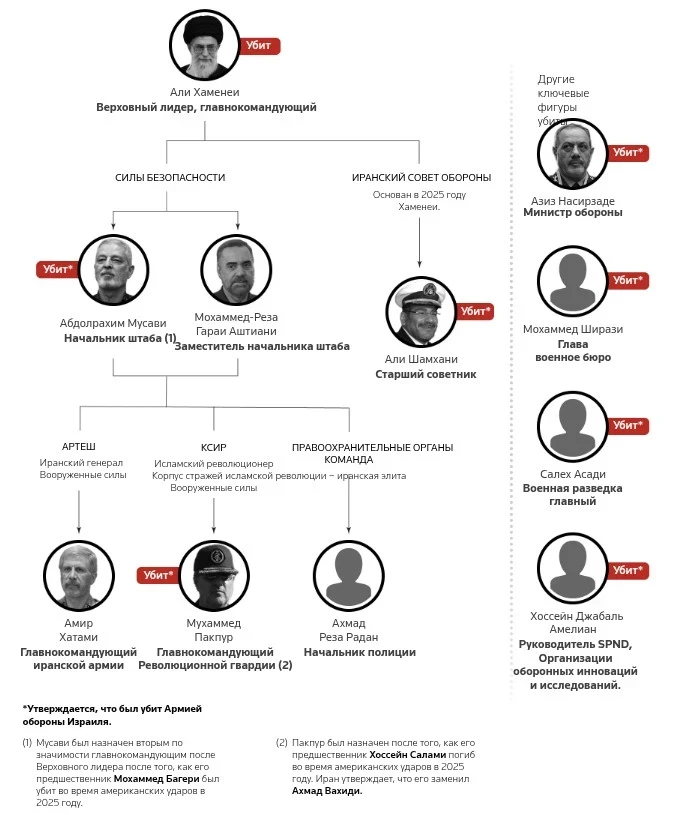
According to Israeli sources, several key figures from the Iranian military leadership were also eliminated as a result of these attacks.
As reported by Reuters, over the past two years, a number of high-profile Iranian military personnel have already been eliminated during Israeli operations, leading to a significant weakening of Iran's proxy forces in the region.
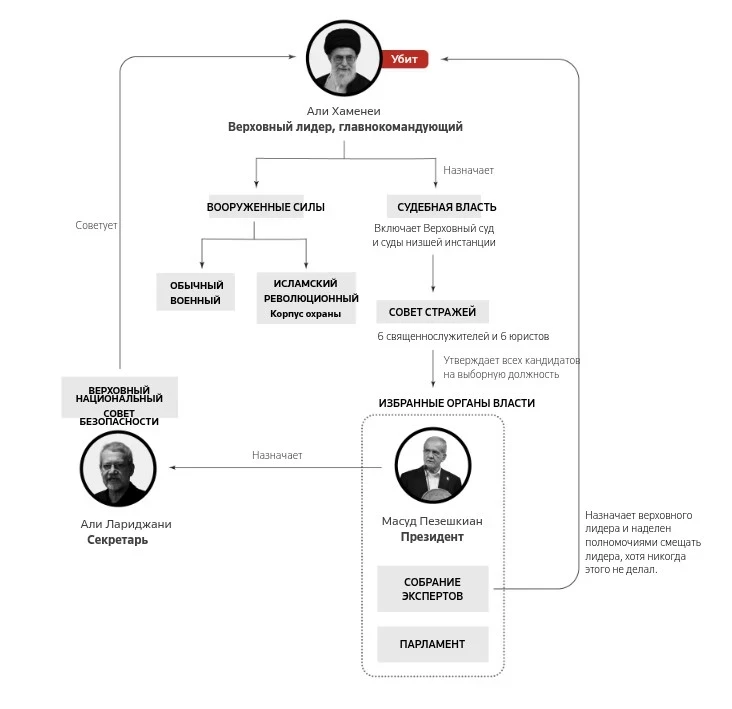
The next day, on Sunday, Iranian President Masoud Pezeshkian announced that the functions of the Supreme Leader would temporarily be carried out by a governing council consisting of himself, the head of the judiciary, and a representative of the Guardian Council.
Ali Larijani, the head of security, accused the U.S. and Israel of attempting to destabilize Iran and warned of a harsh response to any actions by "separatist groups." This statement was made against the backdrop of a series of airstrikes, including the bombing of a girls' educational institution. Independent sources, such as Reuters, were unable to confirm the information provided by state media.
Power Structure in Iran
The death of Khamenei has raised skepticism among high-profile American officials. They doubt that military actions against Iran will lead to an immediate regime change.
During discussions in American intelligence, the consequences of Khamenei's assassination were considered not only in terms of a possible change of power.
Two high-profile sources told Reuters that since the beginning of the year, active discussions have been taking place among employees of various agencies, but there is still no consensus on how Khamenei's death will affect the negotiation process between Iran and the U.S. regarding the nuclear program.
According to unnamed officials, the consequences that both the death and the overthrow of Khamenei could have on the Iranian nuclear program and missile technologies were also discussed.
Map of Attacks by American and Israeli Forces on Iran and Tehran's Response (March 1, 2026, 16:27 GMT+6)
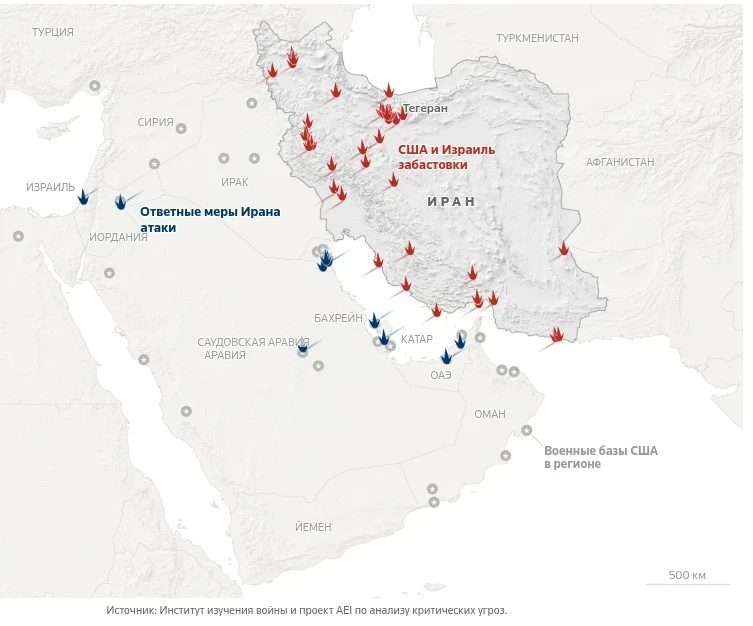
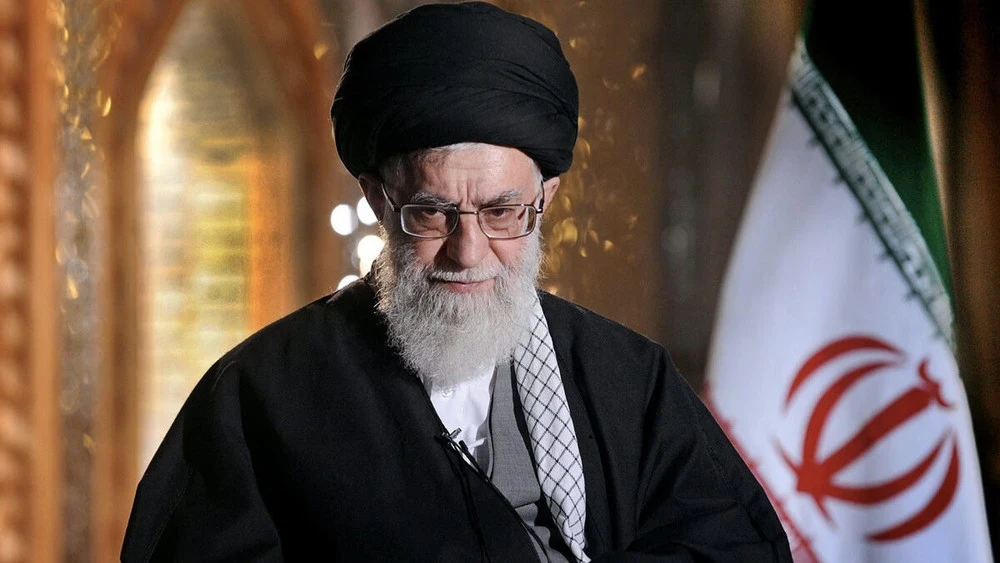
On Saturday, the largest attacks on Iran in decades were carried out, resulting in the death of Supreme Leader Ayatollah Ali Khamenei.
This incident became the largest foreign policy risk during Donald Trump's presidency, who during his election campaign positioned himself as the "president of peace," stating a preference for a diplomatic approach to the conflict with Iran.
During the attacks, the United States used a wide range of weapons, including Tomahawk cruise missiles, stealth fighters, and for the first time in combat conditions, low-cost strike drones modeled after Iranian technologies.
Iran characterized the strikes as unprovoked and illegal, responding with missile attacks on Israel and U.S. bases in at least seven countries, including Persian Gulf states.


