
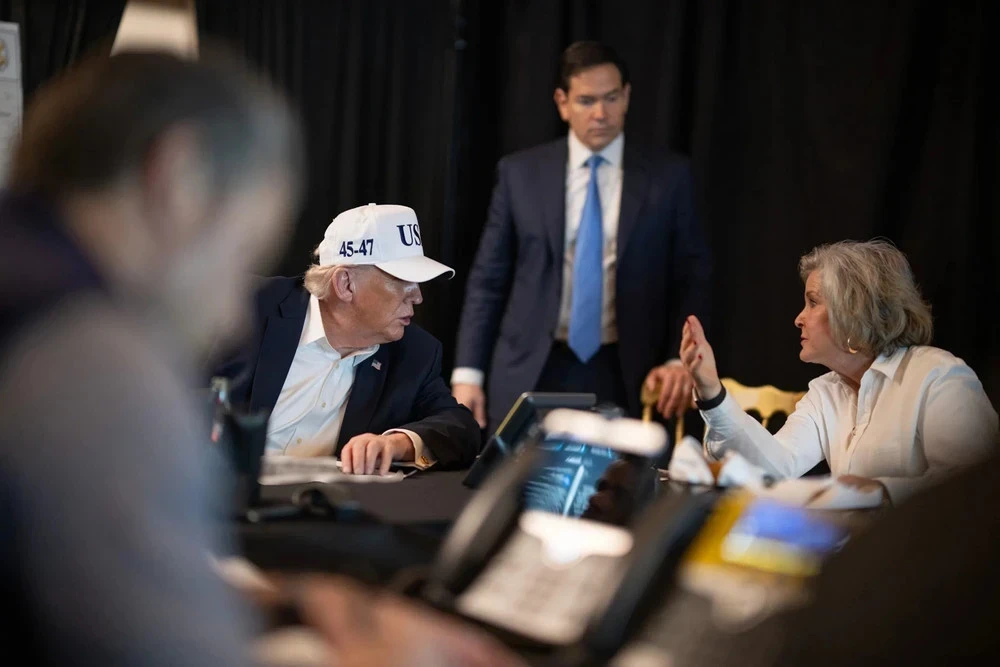
In this photo released by the White House on February 28, President Donald Trump leads the "Epic Fury" operation alongside Secretary of State
Trump ordered military strikes against Iran, resulting in the death of Ayatollah Ali Khamenei, marking another step in the sharp shift of American foreign policy. Just a few weeks ago, American forces also captured the president of Venezuela during an unexpected military operation. The strikes on Iran have already resulted in dozens of casualties, including three American soldiers, and provoked retaliatory missile attacks from Iran, reflecting the escalating tensions in the region. The effects of these actions are already impacting global oil prices and investor sentiment, which is increasingly anxious about geopolitical risks.
One thing is clear: now no foreign opponent can feel safe, except perhaps nuclear powers. Adversaries will face a new, more aggressive form of American power, which critics argue undermines the legal norms that the U.S. has insisted on for other countries.
“Trump seems ready to use military force without being constrained by international law and acting according to his own notions of national interests,” commented former British National Security Advisor Peter Ricketts. “Such an approach sets a dangerous precedent, allowing any state to act similarly, which contradicts the principles of the UN Charter.”
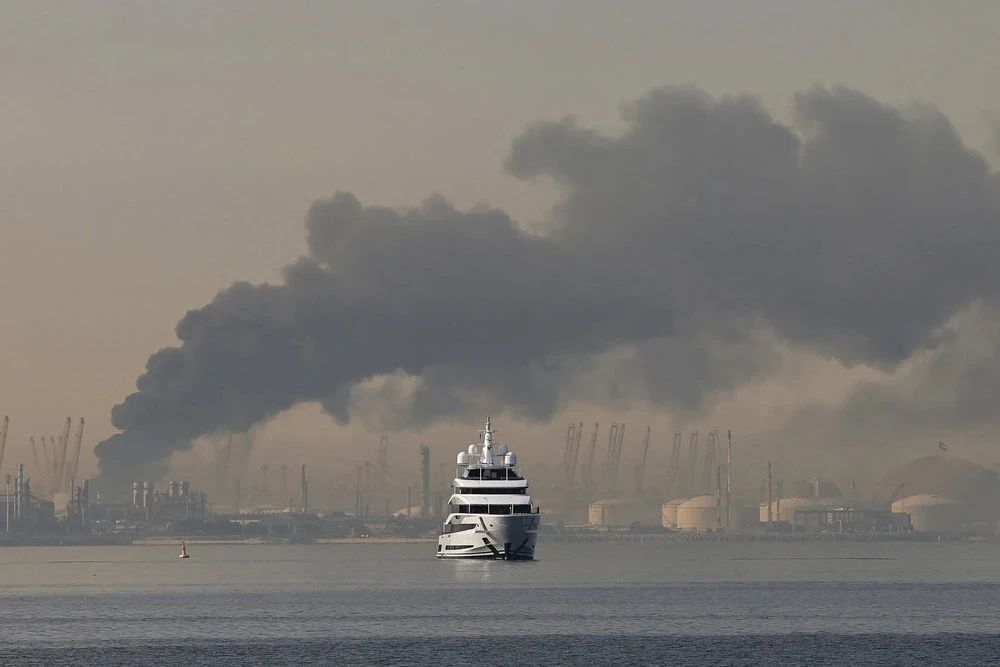
A yacht sails past a plume of smoke rising over the Jebel Ali port following reports of an Iranian strike on Dubai on March 1.
The situation in the Persian Gulf has escalated as Iranian missiles began targeting sites in the region, causing a slowdown in supplies through the Strait of Hormuz, which is a vital artery for global oil and gas trade. Shipping companies are suspending routes, and airlines are canceling flights, including to major transport hubs like Dubai.
Brent crude prices, which have already risen nearly 20% this year, surged by 13% to around $82 a barrel. If the Strait of Hormuz is closed, Bloomberg Economics estimates that prices could reach $108 a barrel. All this is happening against a backdrop of rising gold and dollar prices, while U.S. stock markets opened lower.
“None of our previous presidents have used the full power of the country so openly. Trump has raised the level of aggression to the maximum,” noted Jack Devine, former director of the CIA's operations division. This creates a completely new reality on the international stage.
Despite Trump's calls for protesters in Iran to seize power, there are no signs that his administration is preparing a plan to support the opposition. The risk of a protracted war is prompting investors to seek safer assets, such as Treasury bonds and gold. At the same time, in Iran, some people took to the streets to celebrate Khamenei's death, while others mourned him, and no large-scale uprising is observed. Trump stated that Iran requested additional negotiations, but U.S. officials do not rule out continuing strikes for several days or weeks.
“The removal of a key figure may lead to a regime change, but it does not guarantee the disappearance of the regime itself,” noted Dennis Ross, former envoy of Bill Clinton to the Middle East. “This will only be considered a success if there is a threat that leads to an uprising, and it does not provoke mass repression.”
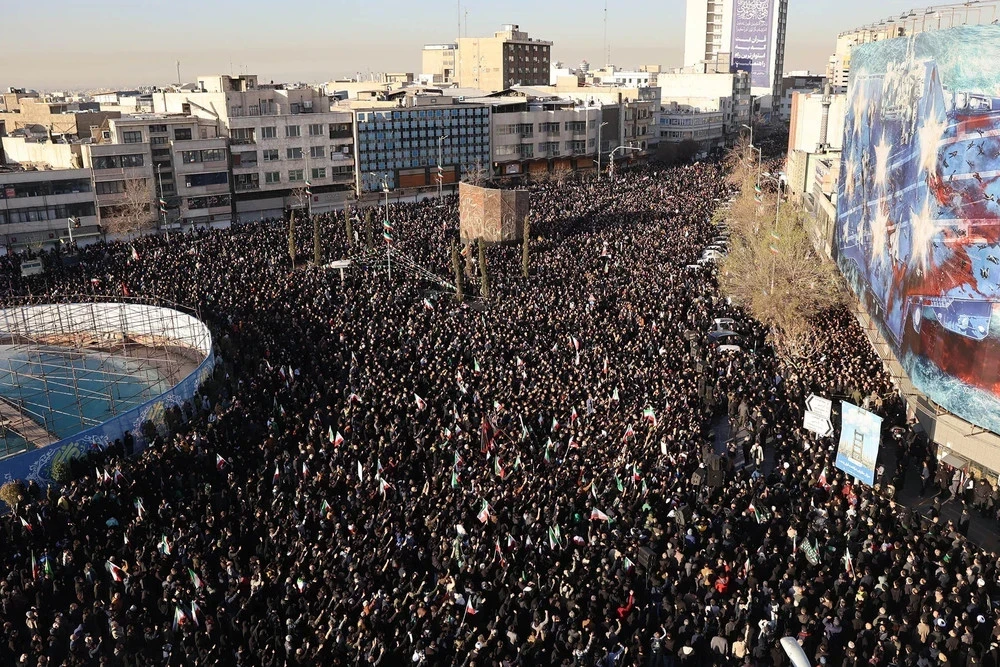
On March 1, people gathered in Tehran to pay tribute to Ayatollah Ali Khamenei.
In a video address made on Sunday, Trump warned of potential casualties among Americans, adding that military operations would continue until all objectives are achieved.
Meanwhile, his aggressive foreign policy risks becoming an adventure, as support at home for such issues is limited. The escalation occurs against the backdrop of upcoming midterm elections, in which, according to polls, the Republican Party may lose ground due to economic troubles.
Trump is attempting to implement radical changes in foreign policy reminiscent of George W. Bush's actions after September 11, but there is no such unity in society now. The opposition in Congress is more active, and public support for military conflicts is nearly absent.
According to the latest Reuters/Ipsos poll, only 25% of Americans approve of the strikes that led to Khamenei's death, while about 50% believe that Trump is too eager to use military force.
Some of Trump's allies characterized the operations as a historic success. Senator Lindsey Graham noted that the ayatollah's regime may soon cease to exist, declaring it “the biggest changes in the Middle East in a thousand years.” However, critics do not share this optimism.
“Trump exhibits imperial ambitions, seeking to use U.S. power without a clear strategy,” said Democratic Senator Andy Kim. “Everything depends on one person — Donald Trump.”
Recent strikes on Iranian targets are significantly different from previous actions, as Khamenei, who controlled Iranian politics for over three decades, was killed, creating a crisis in the country's power structure.
In Venezuela, although President Nicolás Maduro has resigned, the state apparatus remains largely intact, managed by interim head Delcy Rodríguez, who agreed to grant Trump control over the oil industry.
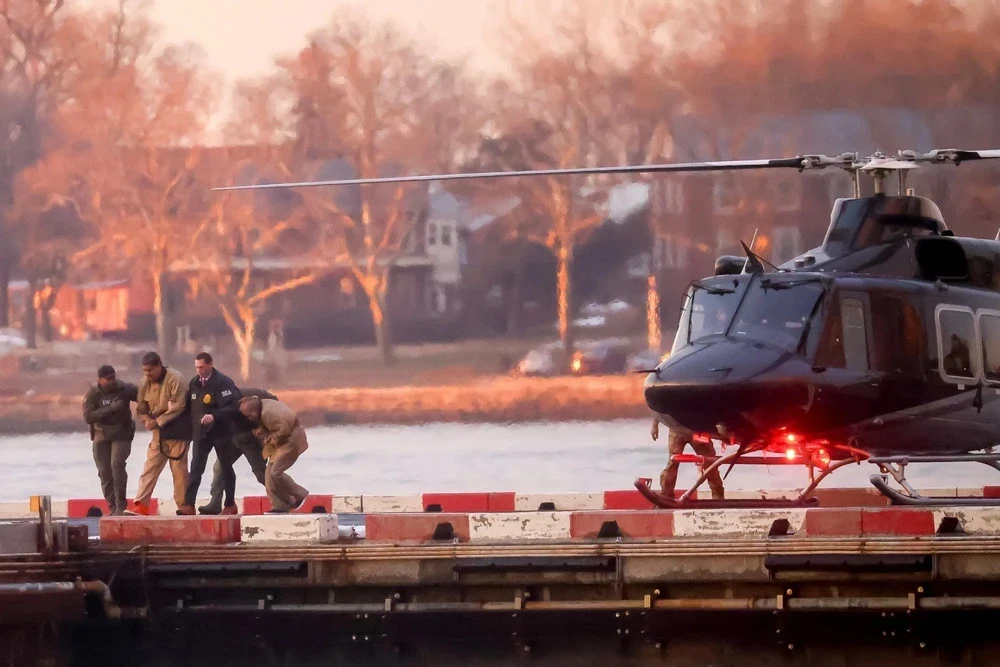
Overthrown Venezuelan President Nicolás Maduro arrives at a helipad on Wall Street before his appearance in federal court.
Trump also hinted at the possibility of aggressive steps against Cuba. Tightening sanctions and pressure on the energy sector have only exacerbated economic difficulties but have not led to significant changes in the political situation.
Iran, meanwhile, is under high pressure: its missiles are attacking various sites in the Persian Gulf, including Israeli and American ones. The lesson for other world leaders is clear.
For some, possessing a nuclear arsenal and skillful management from Washington may serve as protection, as demonstrated by Putin and Kim Jong-un. Trump has repeatedly emphasized that Iran should not have nuclear weapons, which Tehran claims is not its intention.
A regime change in Iran would be a serious blow to Russia and China, which have developed cooperation with Tehran. Putin characterized Khamenei's assassination as “a cynical violation of international law,” while Chinese Foreign Minister Wang Yi called open attacks on sovereign states unacceptable.
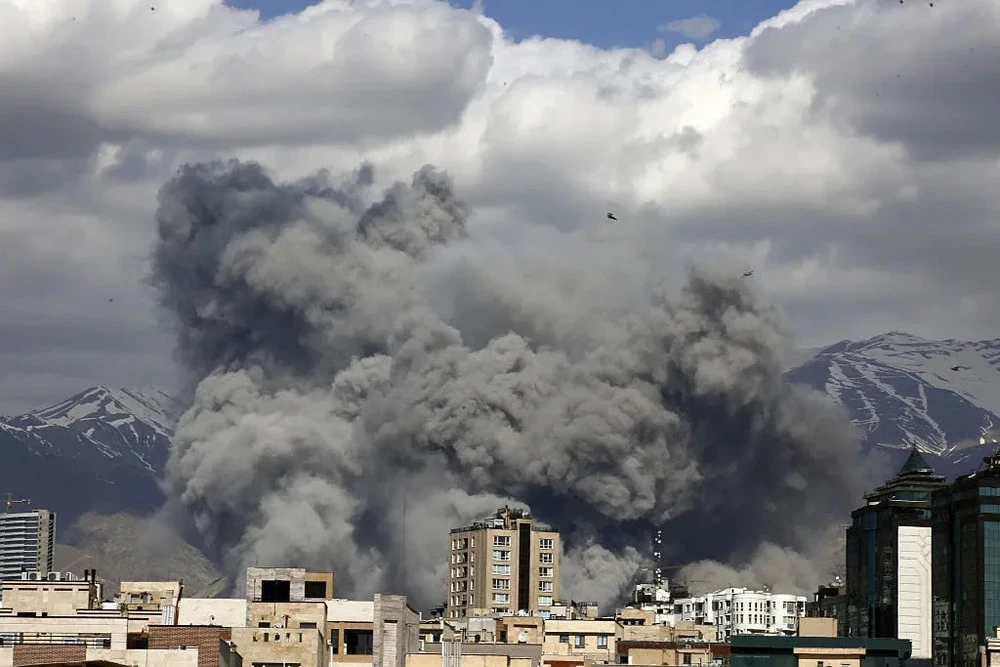
Smoke rises over an area that was attacked in Tehran on March 1.
Analysts from China suggest that prolonged U.S. involvement in conflicts in the Middle East could distract attention from the Asian region. “If the Iranian government can continue to function, it will not significantly affect China's interests,” said an expert from Shanghai.
Meanwhile, Indian Prime Minister Narendra Modi has faced criticism for failing to condemn the attacks.
Trump's allies express concern. Leaders from France, Germany, and the UK issued a joint statement emphasizing that their countries were not involved in the strikes against Iran and called for the resumption of negotiations.
In private conversations, some European officials noted that Trump is conducting his foreign policy more aggressively than in previous years, and this is becoming the new norm, even if they do not agree with his actions. They emphasized that while no one in Europe is mourning Khamenei or Maduro, the methods used to overthrow them are regrettable.
“Europeans are concerned that the U.S. and Israel are acting at their discretion without notifying their allies,” said Kori Schake, director of foreign and defense policy studies at the American Enterprise Institute.
Trump's policies have already had a significant impact on oil markets. Venezuelan oil, previously delivered by shadowy vessels, is now arriving in the U.S., Europe, and India from Western ships.
It is unclear how the attacks on Iran will affect global supplies. Shipping companies are monitoring the situation as reports of slowdowns in trade routes and attacks on vessels come in. Tehran has stated that it does not plan to close the Strait of Hormuz, but this does not reassure shippers who fear for the safety of their routes.
Iran's ambassador to the UN Amir-Saeed Iravani arrives for a Security Council meeting in New York on February 28.
At the same time, airlines have suspended flights to Dubai and other key cities, causing significant inconvenience for thousands of passengers and disrupting operations at one of the busiest airports.
The network of Iranian proxy forces could also contribute to the expansion of the conflict, although Israel has already significantly weakened their military capabilities. The Houthis threaten to resume attacks on vessels associated with the U.S. in the Red Sea.
According to a senior European diplomat, Trump is now pursuing his foreign policy goals much more actively than during his first term.
“The president has shown a willingness to use force, even if it does not lead to prolonged operations, but his actions have already proven effective,” noted former general and CIA director David Petraeus. “I hope this signal will be heard by potential adversaries.”
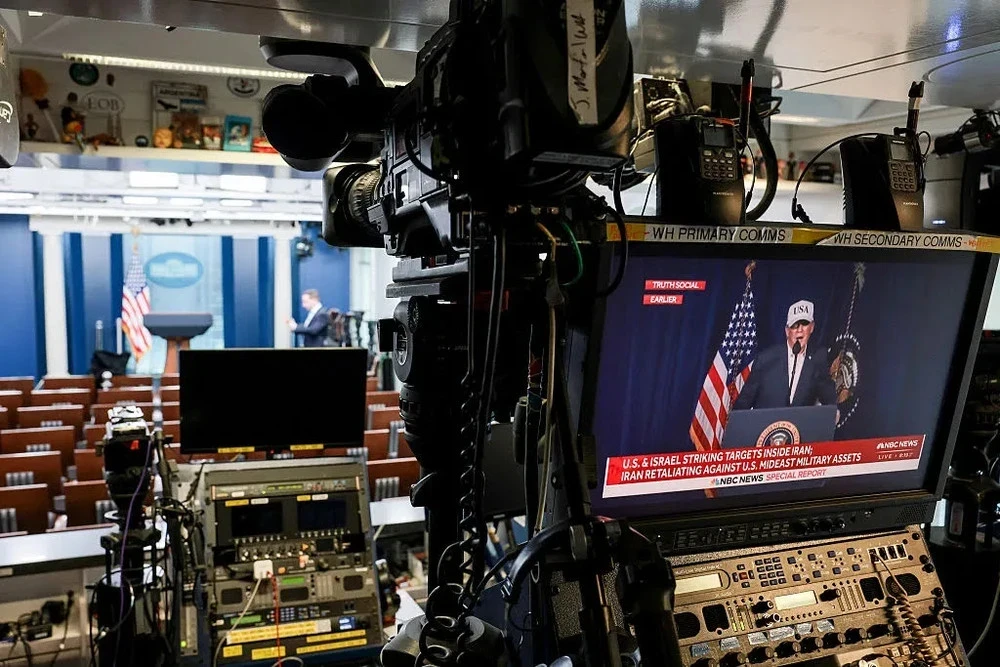
A fragment of President Trump's video address to the Truth Social organization is broadcast live from the James S. Brady Press Briefing Room.
Critics argue that Trump is reacting to current events and news without a clear strategy. American voters are showing less patience for prolonged conflicts. Instead of lengthy operations, he prefers quick and powerful strikes.
His approach is not new — targeted killings have been part of the American fight against terrorism since September 11. Barack Obama significantly increased the use of drones, and Joe Biden continued this direction, tightening the rules but leaving the option for use.
During his first term, Trump pushed the boundaries of what was acceptable, ordering the assassination of Iranian General Qasem Soleimani, but refrained from attacks on key Iranian politicians.
“Trump has become the first president to openly ignore international law, claiming that he does not need it,” said Mary Ellen O'Connell, a law professor at the University of Notre Dame.
The history of U.S. intervention in the Middle East is full of unexpected consequences, which sometimes become apparent only years later — from the coup in Iran in 1953 to the chaos that led to the rise of the Islamic State in Iraq and Syria.
The collapse of power in Tehran could provoke a new wave of refugees, affecting Europe and leading to new conflicts involving neighboring countries and world powers.
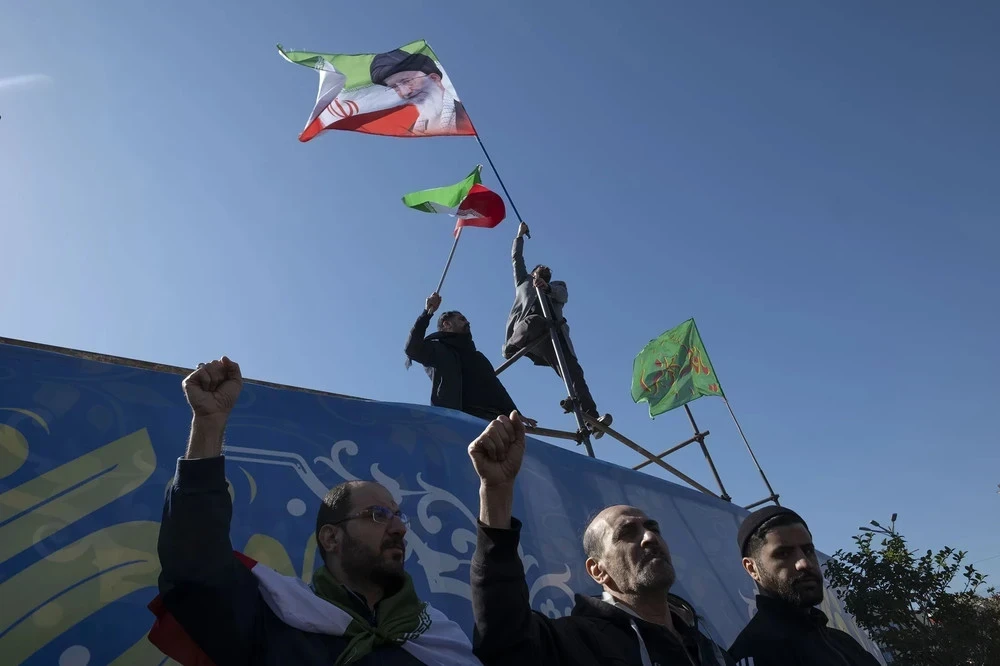
Protesters chant anti-American and anti-Israeli slogans during a rally in Tehran on March 1.
“In such situations, the one with the most people and weapons ready to act wins,” added Petraeus.
The U.S. has historically pursued foreign leaders, but this usually happened in the shadows — from the coup in Chile to attempts to eliminate Fidel Castro. Trump's current actions differ in their openness: this is a public military campaign against a sovereign government that many believe does not pose an immediate threat to the U.S.
“Now the United States, as the most powerful country, has overthrown regimes without warning and justification,” noted Rosemary Kelanic, director of the Middle East program at the Defense Priorities think tank. “The lack of a plan for the future raises serious concerns.”


