
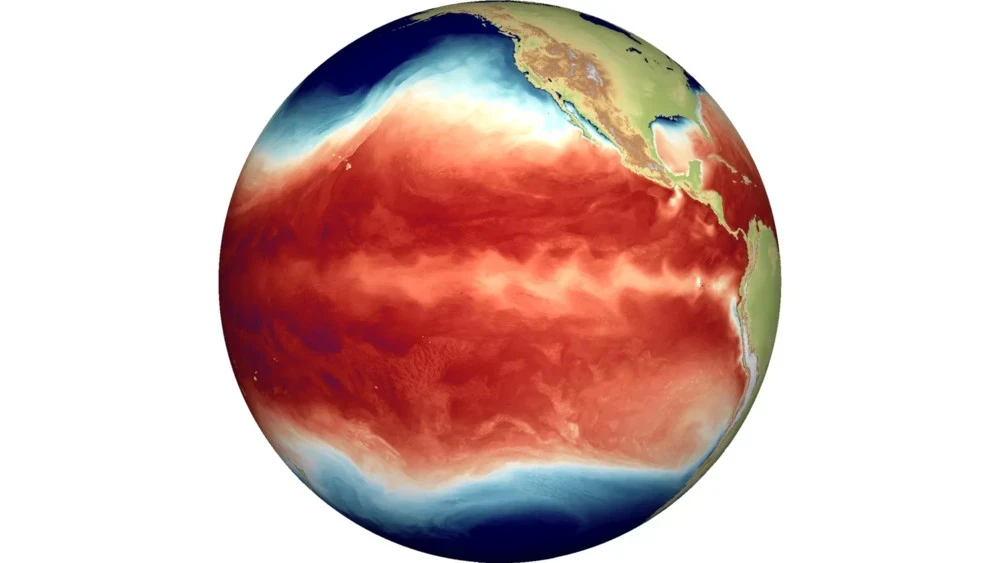
The study emphasizes that the natural El Niño cycle, which influences climate conditions worldwide, not only exacerbates global warming but is also undergoing changes as a result. It is also important to note that this research helps explain why global temperatures have reached record levels over the past three years.
At the beginning of 2023, the average temperature of the Earth significantly exceeded long-term trends associated with anthropogenic climate change, and high temperatures were observed until 2025. Among the key factors contributing to this, scientists highlight the intensification of the greenhouse effect, reduction of pollution from shipping, underwater volcanic activity, and increased solar activity.
According to Japanese researchers, the main factor has been the increase in Earth's energy imbalance—the difference between solar energy received by the planet and heat escaping into space. They suggest that about 75% of the increase in this indicator is related to anthropogenic warming and the transition from a three-year La Niña phase to a warm El Niño phase.
From 2020 to 2023, an unusual "triple" La Niña was observed—three consecutive years without breaks for El Niño. During this period, warm waters sank to the depths of the ocean, which contributed to a decrease in surface temperature and prevented heat from escaping into space, leading to the accumulation of additional energy in the climate system.
Scientists compare this accumulation process to the increase in human body temperature: the higher the temperature, the more the body seeks to release heat. However, the prolonged La Niña phase, as if "closing the lid," allowed heat to accumulate. When the El Niño phase began, this energy started to be actively released, further enhancing global warming.
El Niño represents a periodic warming of the surface waters of the equatorial Pacific Ocean, which usually leads to increased global temperatures and changes in precipitation worldwide. At the same time, La Niña is characterized by cooler waters and a temporary slowdown in global warming.
Both phenomena significantly affect weather patterns, causing droughts, floods, and hurricanes. Research shows that La Niña can cause more harm to the United States by increasing hurricane activity and prolonged dry periods.
For decades, climatologists have defined the onset of El Niño and La Niña periods by the deviation of ocean temperature from the climatic norm by 0.5 °C. However, the "norm" itself is rapidly changing due to the overall warming of the oceans.
Previously, NOAA revised baseline climate indicators every ten years, then every five years, but this proved insufficient. As a result, a new relative index was introduced, in which temperatures are compared not with historical norms but with other tropical regions of the planet.
Experts believe that the new methodology will lead to more episodes being classified as La Niña and fewer as El Niño compared to the previous system.
According to NOAA forecasts, a new El Niño cycle may begin in the second half of this year—in late summer or fall. If it forms early enough, it could reduce the activity of Atlantic hurricanes but simultaneously increase the likelihood of record temperatures in 2027.
Experts warn that the concept of "normal" weather effectively no longer exists, and the accumulated heat in the climate system will contribute to increasingly extreme weather events in the coming years.


