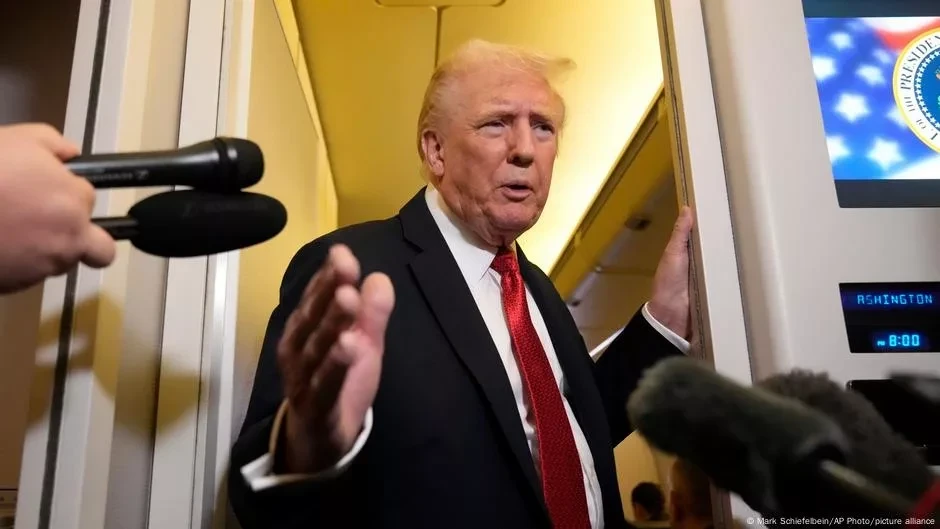
The decision was made with a vote of 6 to 3. The dissenting opinion was expressed by Justices Brett Kavanaugh, Clarence Thomas, and Samuel Alito. The court concluded that Donald Trump exceeded his authority by using the International Emergency Economic Powers Act (IEEPA) to impose "reciprocal" tariffs and targeted duties, which the administration justified as a measure against the illegal trafficking of fentanyl.
The judicial body noted that the text of the IEEPA does not contain any mention of the word "tariff," and for nearly half a century of the law's existence, no president had used it to impose tariffs prior to Trump.
Nevertheless, the Supreme Court did not establish a procedure for the refund of previously paid tariffs, passing this issue to a lower court for consideration. It is expected that the amount of refunds could reach up to $170 billion, which is more than half of all revenues from the imposed tariffs. Justice Kavanaugh warned of potential consequences related to possible "chaos" in this process.
The lawsuit against the tariffs was filed in April 2025 by educational toy manufacturers Learning Resources and hand2mind, which primarily import products from China. These companies claimed that their costs due to the tariffs increased from $2.3 million to $100 million. At the same time, a group of small businesses led by V.O.S. Selections also challenged the tariffs in court. In May 2025, lower courts ruled the tariffs illegal, and this decision was upheld by the appellate court in August.
In September, the Supreme Court consolidated the cases and expedited their review. Oral arguments took place on November 5, during which most justices expressed doubts about the validity of the administration's position.
After the court's decision was announced, the White House announced its intention to reinstate the tariffs using other legal mechanisms. However, it is noted that alternative tools are either more complex to implement or have limited scope. At the same time, the court's decision does not affect tariffs on steel, copper, and aluminum, which were established under different legislation—Section 232 of the Trade Expansion Act of 1962.
On the same day, President Trump announced the introduction of a new global tariff of 10% for a period of 150 days. According to him, the order will be issued under Section 122 of the Trade Act of 1974 and will complement the existing tariffs.
Section 122 allows the president to impose tariffs of up to 15% for a period of up to 150 days in the event of serious balance of payments problems without conducting investigations. At the same time, the administration has begun investigations under Section 301 of the same law regarding "unfair trade practices" by other countries and companies.
Trump stated, "We have alternatives, great alternatives. This could bring in more money. We will get more revenue and become significantly stronger."
It is important to note that the new tariffs are temporary, and the procedures under Section 301 may take several months.
Against this backdrop, the U.S. Department of Commerce released results showing that the trade deficit reached a record $1.2 trillion in 2025. When including services, the figure was $901.5 billion—one of the highest in recent decades.
At the same time, exports of goods and services increased by 6.2% and reached a record $3.4 trillion, while imports rose nearly 5% to $4.3 trillion.