
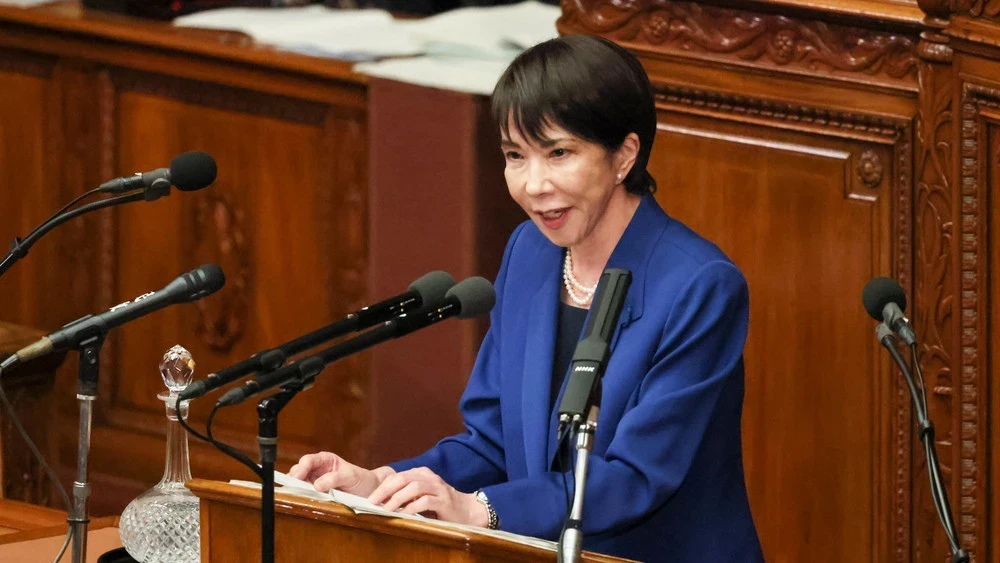
Sanae Takahichi
// Office of the Prime Minister of Japan
On Wednesday, Sanae Takahichi was re-elected as Prime Minister of Japan in the parliament, after the ruling coalition achieved a significant victory in the snap elections. According to Kyodo news agency, this took place on February 18.
According to the Japanese constitution, before the start of the special session of parliament, the cabinet resigned. An announcement of the new government composition is expected soon, with most ministers likely to remain in their positions. This particularly applies to Foreign Minister Toshimitsu Motegi, Defense Minister Shinjiro Koizumi, and Finance Minister Satsuki Katayama.
In the early elections held on February 8, the Liberal Democratic Party led by Takahichi increased its positions in parliament from 198 to 316 seats, while its ally, the Innovation Party, raised its number of seats from 36 to 38. This was the most significant success for the ruling coalition. At the same time, the opposition alliance, consisting of the Komeito Party and the Constitutional Democratic Party, reduced its representation from 167 to 49 seats.
Sanae Takahichi is known for her hardline views on security. She actively advocates for revising Article 9 of the 1947 Japanese constitution, which enshrines Japan's renunciation of militarism. After her electoral victory, she expressed her intention to amend the constitution, although specific details remain unknown. To implement constitutional reforms, support from two-thirds of parliament is required, along with a nationwide referendum. Japanese media emphasize that the country's constitution has not undergone changes since 1947.
According to information from the Associated Press, among the priority tasks of the new government will likely be combating inflation and the lack of wage growth, as well as adopting a budget that was postponed due to the elections.
Previously, Takahichi's statements regarding Taiwan led to a deterioration of relations with China. In December, she announced that Japan's defense spending would reach 2% of GDP ahead of schedule — by 2027. Later, the cabinet approved a defense budget with record expenditures of about $58 billion. As reported by AP, Tokyo is considering the development of nuclear submarines, as well as Takahichi's intention to increase intelligence sharing with the United States, the United Kingdom, and Australia, and to strengthen counter-espionage measures.
U.S. President Donald Trump previously expressed support for Takahichi ahead of the elections. She also advocates for tightening immigration controls and limiting the rights of foreign citizens.


