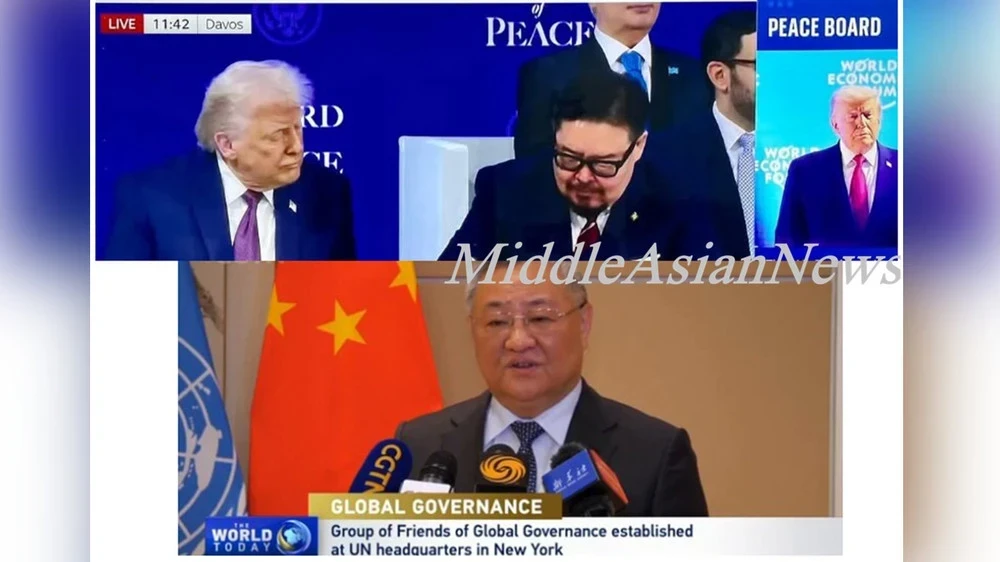
“China's cautious calculations regarding Trump's 'Council of Peace',” emphasizes the author of MiddleAsianNews.
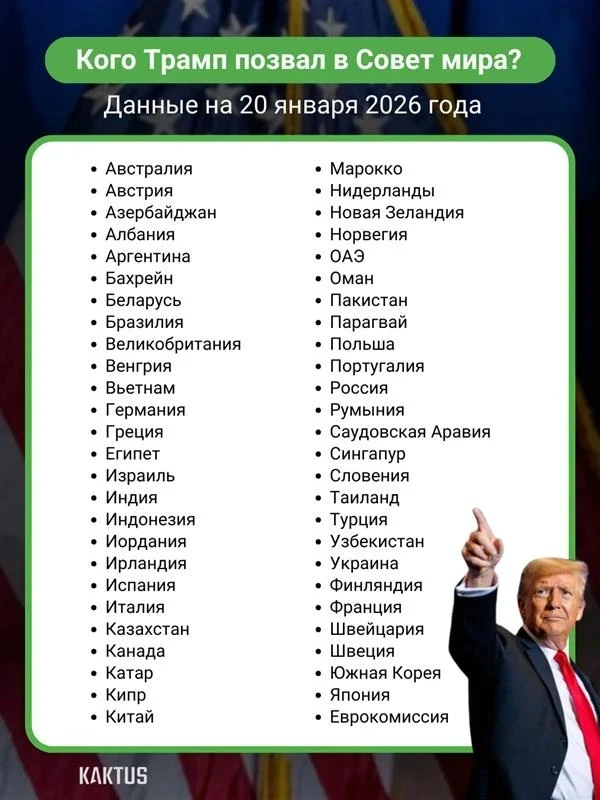
At the beginning of 2026, Trump established the Council of Peace at the World Economic Forum in Switzerland, which elicited a cautious response from China: Gu Jiaqun merely confirmed that the country had received an invitation to be part of the council.
However, Chinese experts expressed doubts about whether the new "Committee of Peace" would become a tool for a U.S. power grab that could undermine the existing international order and replace the UN. Some dismissed this initiative, characterizing it as an imperial project and a mechanism for "extortion," as well as an attempt by Trump to strengthen his position.
Although opinions in Beijing may align with those of other countries, China's concerns about Trump's Council of Peace run much deeper than they may seem at first glance. At the same time, Mongolia has already become part of this council.
China's Multilateral Vision Amid Trump's Peace Initiative
While Chinese analysts express strong criticism of Trump's Council of Peace, it is necessary to consider that Chinese President Xi Jinping actively promotes concepts of global governance and multilateral diplomacy that align with China's interests. Over the past decade, under Xi's leadership, China has launched numerous initiatives, such as the "Belt and Road" and three global initiatives: the Global Development Initiative, the Global Security Initiative, and the Global Civilization Initiative, aimed at creating a fairer system of global governance.
China also actively uses its influence in the UN to promote and legitimize its initiatives.
For example, the "Belt and Road" initiative is already supported by more than 150 countries and over 30 international organizations, including the UN.
Moreover, the Global Development Initiative has also received support from various countries and international organizations, including the UN. The Global Security Initiative, which covers a wide range of international issues, such as the conflict in Ukraine and the Israeli-Palestinian conflict, is supported by the China-UN Peace and Development Fund.
Recently, Xi Jinping introduced the Global Governance Initiative and its five key principles: sovereign equality, supremacy of international law, multilateralism, a people-centered approach, and practical actions. To implement this initiative, a "Group of Friends of Global Governance" was established at the UN headquarters, comprising 43 countries, including Kazakhstan, Malaysia, the Maldives, Mongolia, and Pakistan, aimed at maintaining the international order post-World War II.
In 2025, China also founded the International Mediation Organization to compete with authoritative international institutions such as the International Court. This organization, located in Hong Kong, is intended to mediate disputes between states and international commercial conflicts.
Trump's Strategy and Its Impact on China's Strategic Partners
Another significant issue for China is the composition of Trump's Board of Governors, which includes representatives from countries with strategic ties to China under the "Belt and Road" initiative. Unlike traditional U.S. allies such as the UK and Germany, Trump was accompanied by countries that have long supported China: Mongolia, Pakistan, Saudi Arabia, and others. Mongolia is actively developing cooperation with China in the fields of railway transport and mining, while Pakistan is the center of the China-Pakistan Economic Corridor, where China invests enormous amounts of money. Additionally, Saudi Arabia and China have signed numerous energy agreements, including payments in yuan for oil supplies.
Chinese experts are questioning why these countries chose to cooperate with the U.S. despite their ties to China, viewing this as a possible shift in loyalty or a hedging strategy. The situation regarding the shifting loyalties of traditional partners presents a new reality for China in the context of Trump 2.0.
China's Strategy in the Middle East Under U.S. Influence
Chinese analysts have also noted that among the participants of Trump's "Council of Peace" are not only influential Arab countries but also major Islamic states such as Indonesia, Turkey, and Pakistan. The inclusion of these countries in the U.S.-led "Committee of Peace" is an important political step and may influence the Israeli-Palestinian conflict.
Among the participants are also regional rivals such as Saudi Arabia and Qatar, as well as countries representing different confessional groups, which are ready to set aside internal disagreements and unite within the "Committee of Peace."
For these countries, joining the Council does not necessarily mean full acceptance of U.S. proposals; they seek to participate in the process to ensure that the final decisions take their interests into account. This creates a dilemma for China: opting out of participation may weaken its influence in the Middle East, while participation could lead to new challenges, including the need to deploy peacekeepers under Israeli coordination.
Overall, China approaches Trump's "Platform" with great caution. As a permanent member of the UN Security Council, China has little reason to participate in an organization controlled by Trump. Under Xi Jinping, China is focused on offering "Chinese solutions" to global problems, aiming to create an alternative to the solutions promoted by the U.S. and strengthen its influence in global governance.
Given current trends, China's entry into Trump's Council of Peace seems unlikely. However, China is unlikely to publicly confront Trump, as this could negatively impact trade negotiations. As a result, the country adopts a wait-and-see position, hoping to find the right moment to express its dissatisfaction with Trump's Council of Peace while maintaining global skepticism.