
Economic Trends and Statistics of Mongolia for January 2026
According to the report from the National Statistical Committee, in January 2026, the total volume of Mongolia's foreign economic activity amounted to $2.59 billion, which is 30.1% higher compared to the same month of the previous year. The country's trade balance recorded a record surplus: exports exceeded imports by $906.5 million.
The key factor contributing to these figures was coal exports, which in this month totaled 9.7 million tons, an increase of 86.4% compared to January 2025. All exports of lead and iron ore, copper, molybdenum, zinc concentrate, oil, and coal, as well as 63.5% of washed goat cashmere, were sent to China. These goods accounted for 81.3% of the total export volume.
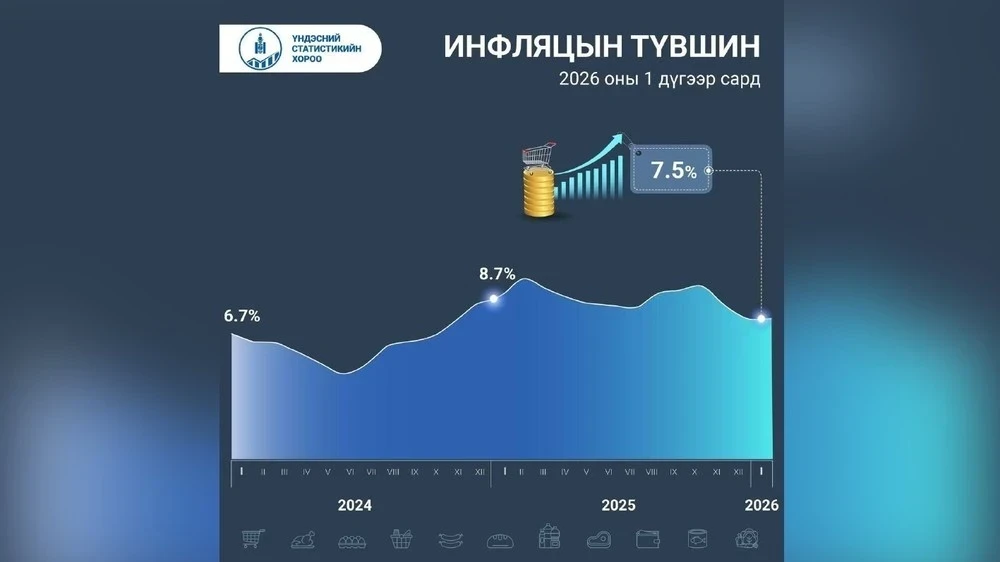
On the domestic market, according to the data from the National Statistical Office, the consumer price index (inflation) in January 2026 increased by 7.5% compared to the same month a year ago and by 1.1% compared to the previous month. Despite rising prices in various sectors, including food (12.4%), services (8.9%), and non-food goods (5.6%), the overall inflation rate slowed down by 1.2 percentage points compared to 8.7% in January 2025.
The main reasons for the rise in inflation are linked to the increase in meat prices by 18.4% (in particular, beef rose by 25.8%, while lamb and goat meat increased by 17.5%), as well as the rise in flour prices (7.7%) and pasta (16.8%). Imported goods, which make up 55.3% of the consumer basket (238 out of 430 items), influenced 25.5% of the overall inflation level. The Central region saw the highest increase in food prices at 13.8%, while in Ulaanbaatar, service prices rose by 10%.


