
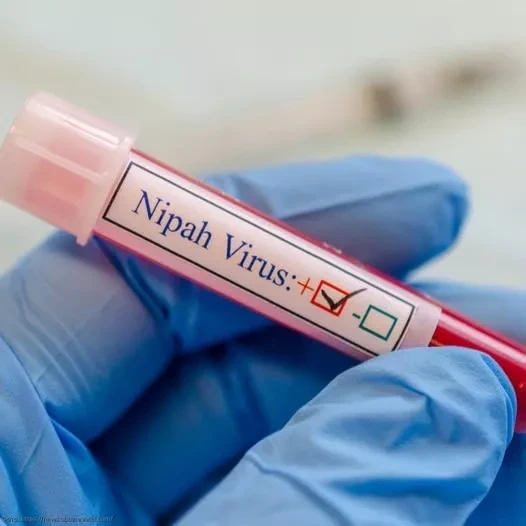
According to WHO information, the woman did not leave the country but consumed raw palm sap, which is considered one of the main sources of the Nipah virus in this region. Currently, 35 people who had contact with the infected woman are under medical supervision, but no new cases of infection have been registered so far.
The situation in Bangladesh is developing against the backdrop of reports of two cases of Nipah virus infection in India, which has led to increased sanitary measures in several Asian countries and heightened control at airports.
The Nipah virus is among the most dangerous pathogens, as there is no effective vaccine or specific treatment, and the mortality rate can reach 75%. Those who have recovered from the disease may experience serious neurological complications. The first cases of the disease were recorded in late December 2025 in the Indian state of West Bengal, when two workers from a private clinic contracted the virus. Following this, nearly two hundred people who had contact with them were isolated.
A person can become infected with the Nipah virus from flying foxes—large fruit bats—as well as through contact with infected individuals. Infection can even occur through saliva or droplets when coughing. The problem lies in the lack of effective treatment, and the mortality rate varies from 40% to 75%, depending on the form of the disease and the quality of medical care.
In India, the Nipah virus has been detected for the seventh time, and in West Bengal, for the third time since 2021. The WHO also reports that outbreaks have previously been observed in the southern state of Kerala.
New security measures have been introduced in several countries in the region. Although the Nipah virus does not pose a global threat, scientists are drawing attention to potential new risks.
The American Centers for Disease Control and Prevention (CDC) highlight two potentially dangerous viruses capable of causing an epidemic:
- Influenza D virus, found in animals and farm workers.
- Dog coronavirus HuPn-2018, identified in Malaysia in a child with pneumonia, and later in Thailand, Vietnam, Haiti, and the USA.


