
The Situation in Venezuela and the International Community's Reaction
With the start of the new year, the world witnessed an escalation of the situation after reports emerged that American military forces struck key targets in Caracas. Concurrently, there were reports of the detention of President Nicolás Maduro. These events sparked mass protests in several European cities and reignited discussions about the permissibility of military intervention in the affairs of sovereign states.
Discussions took place not only in Europe and Latin America but also in Central Asia. In Kyrgyzstan, experts and media users actively discussed the events, as such crises directly impact the global economy and investment climate.
Sharp Criticism from a European Politician
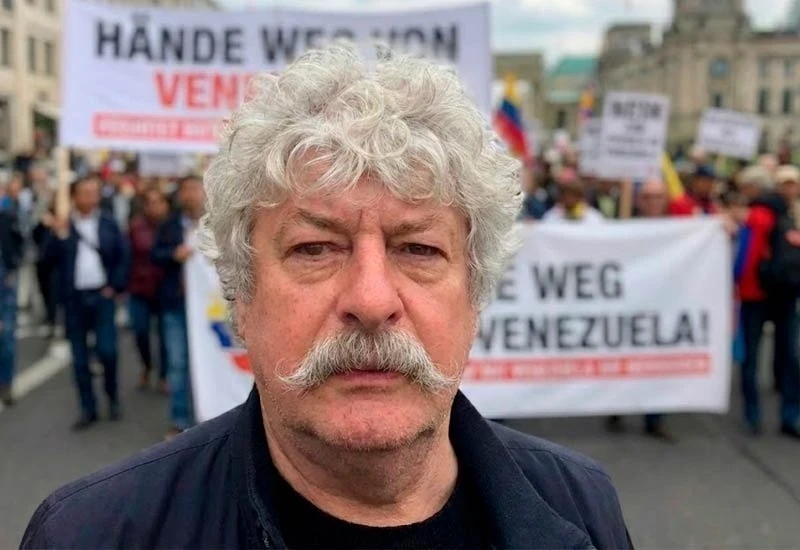
Stefan Natke, a representative of the German Communist Party in Berlin, became one of those who openly condemned Washington's actions. In his opinion, the use of force against sovereign countries creates a dangerous precedent and threatens the norms of international law.
In an interview with kz24.news, Stefan Natke commented on the aggressive policy of the United States, noting that such actions undermine the role of international institutions that previously served as mechanisms for preventing major conflicts. He also expressed concern that countries with significant natural resources may come under increased political pressure.
Natke also discussed the foreign policy course of Central Asia, emphasizing the need for a cautious approach in cooperation with major powers to avoid economic dependence. He believes that regions should pay more attention to strengthening ties with neighbors and developing the regional economy.
Central Asia as an Object of Geopolitical Interests
The countries of Central Asia, including Kazakhstan, traditionally pursue a multi-vector foreign policy, maintaining relations with both the East and the West. This creates economic flexibility but also makes the region vulnerable to the intensification of global rivalry. Kazakhstan, possessing significant reserves of oil, gas, and uranium, is becoming an important resource center of Eurasia, attracting the attention of international players and increasing the level of geopolitical competition.
With the growing competition for influence, the struggle for control over energy resources and investment projects is becoming increasingly relevant. Historical examples from Libya, Iraq, and several Latin American countries show that interest in resources is often accompanied by political pressure and internal conflicts. In the event of further intensification of competition, Kazakhstan may find itself threatened regarding its strategic energy and transport hubs, which are vital for Eurasian transport corridors.
Economic Interdependence and Geopolitical Risks
For Kyrgyzstan, the stability of Kazakhstan represents an important regional factor and element of economic security. Trade, transit corridors, energy projects, and the labor market between the two states effectively create a single system of interdependence. Consequently, any external attempts to increase influence over key sectors of Kazakhstan will significantly impact the Kyrgyz economy, including investment activity and the stability of transport routes.
The history of Venezuela clearly demonstrates that in regions with significant resources, the struggle for oil and gas often transforms into a struggle for political control and infrastructure management. The increasing competition among global power centers makes the states of Central Asia objects of heightened attention. In this situation, the key task for the countries in the region is to maintain space for independent decision-making.
Modern global politics is structured in such a way that geographical remoteness no longer protects against the consequences of international crises. Changes in energy resource prices, shifts in investment flows, and transformations in transport routes directly affect the economic development of the region. The main challenge for Kyrgyzstan becomes not only adapting to these changes but also finding its role in the emerging global balance.


