
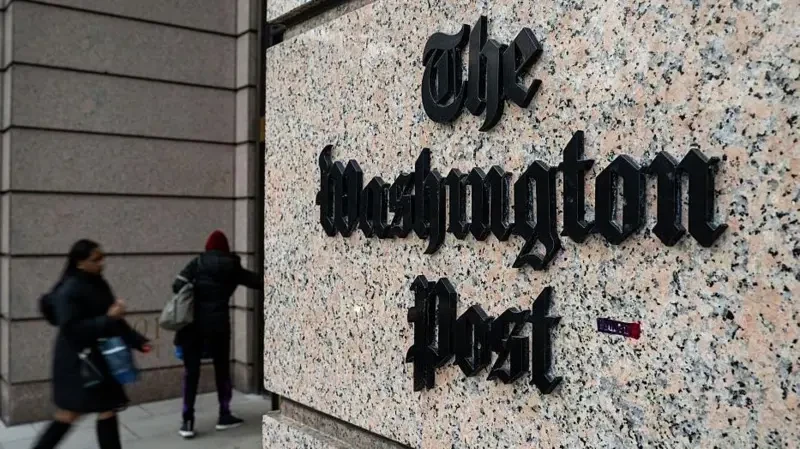
On Wednesday, the editorial team of the Washington Post announced plans to reduce staff in several departments, primarily affecting the sports and local sections, as well as international correspondents, according to information from the BBC.
The Washington Post, known for its long history and prestige, was purchased by Jeff Bezos for $250 million. In 2017, with the onset of Trump's presidency, the newspaper adopted a slogan that became a symbol of the fight for freedom of speech.
Matt Murray, the executive editor of the publication, spoke about the need for changes to ensure the newspaper's stability.
“This news is hard. These are tough decisions,” Murray noted in a letter to the team. “To not just survive but to thrive, we need to change our approach to journalism and business models, raising new ambitions.”
However, many employees and former leaders sharply condemned these measures.
Marty Baron, the former executive editor, called this moment “one of the darkest in the history of one of the greatest news organizations in the world.”
Explaining the cuts, Murray emphasized the significant decline in the publication's online traffic over the past three years amid the rapid growth of artificial intelligence.
“We often write from one perspective — targeting a specific audience,” he added, noting that the Washington Post will now focus on politics, national security, investigations, as well as health and wellness issues.
In the lead-up to this announcement, foreign and local journalists appealed to Bezos to save their jobs.
After the announcement of the layoffs, many dismissed journalists began sharing their experiences on social media, expressing dissatisfaction with the reduction in international coverage.
The former head of the Cairo bureau reported her dismissal along with other correspondents and editors working in the Middle East. One correspondent who worked in Ukraine stated that he lost his job “in the midst of war.”
Other sources reported mass layoffs in the metro department, which covers events in Washington and its surroundings.
Official data on the number of layoffs has not been disclosed. However, according to two sources from the New York Times, the Washington Post intends to cut about 30% of its staff, affecting more than 300 of its 800 journalists.
The BBC reached out to the Washington Post for comments regarding the scale of the layoffs.
Baron also reminded that Bezos once actively advocated for press freedom when he himself led the publication, including during Trump's first term.
“But today,” he added, “I don’t see that same spirit. It’s just not there.”
Disappointed Subscribers
These layoffs have become part of an ongoing process of staff reduction and voluntary departures observed in various departments of the Washington Post in recent years amid criticism of editorial policies.
The employees' union, the Washington Post Guild, stated that “constant layoffs only weaken the publication, alienate readers, and undermine the newspaper's mission.”
After the decision to stop supporting candidates in the upcoming U.S. elections, the Washington Post lost tens of thousands of subscribers. This decision was made by Jeff Bezos.
Thus, the publication broke a long-standing tradition of supporting Democratic Party candidates in elections since the 1970s.
Bezos's decision to refocus opinion columns on topics of “personal freedoms and free markets” led to the resignation of the editor of that section.
While the Washington Post faces financial difficulties and subscriber losses, the New York Times, on the contrary, announced the addition of about 450,000 new subscribers to its online service in the last quarter of 2025.


