
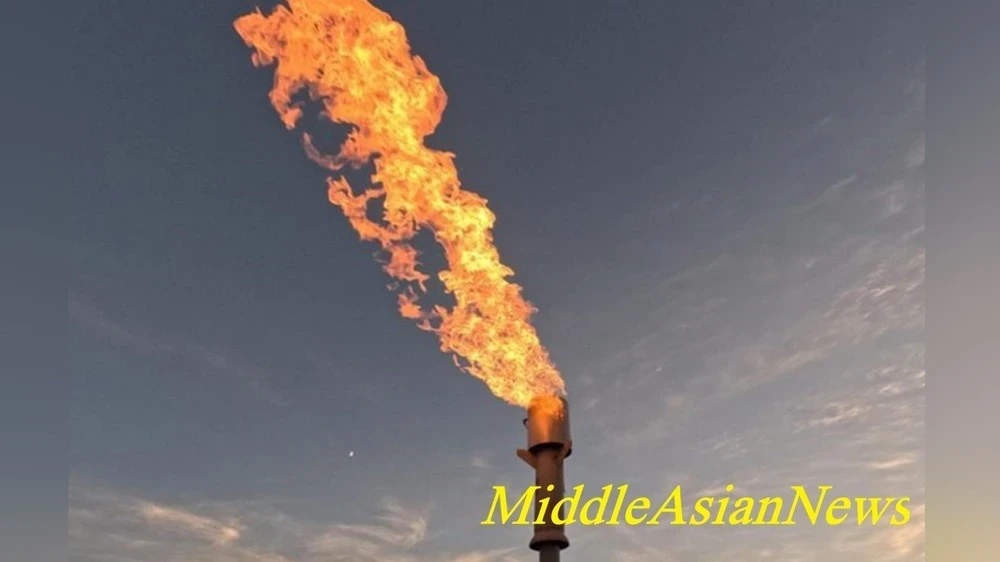
According to MiddleAsianNews, TMK Energy continues to demonstrate impressive results, setting a new record within the Pilot Well pilot project, which is part of the larger Gurvantes XXXV project for methane extraction from coal seams in southern Mongolia.
On January 21 of this year, the company achieved a new record for daily gas production, amounting to 674 m³, which is equivalent to more than 23,800 standard ft³ per day.
Additionally, a monthly record was set at the Pilot Well, totaling 18,370 m³, surpassing the previous December level of 16,306 m³.
Thus, the average monthly gas production increased to 593 m³, which is 13% higher than the December record of 526 m³. It was also noted that water production remained stable at 497 barrels per day (b/d).
These records highlight significant progress in production at the project. The LF-07 well, which was recently drilled and is located at a high altitude, demonstrated a production rate of over 10,000 standard ft³ per day, becoming the first to reach this mark. In January, LF-07 doubled its production twice, again reaching 10,000 standard ft³ per day.
“Six months of continuous gas production growth have strengthened our belief in the project's success. In February, we plan to conduct additional pressure build-up tests to gather more data on reservoir pressure decline, which is a key factor for further success,” noted TMK Energy CEO Dougal Ferguson.
Ferguson added that minor interruptions in electricity supply from external sources at the end of the month temporarily reduced gas tariffs, confirming the benefits the company gains from generating its own electricity through current gas production.
This month, the company plans to continue pressure testing to obtain data on the rate of reservoir pressure decline (desorption), which is an important indicator for determining the project's future success.
TMK believes it is approaching the necessary desorption pressure level, which will significantly increase gas volumes. Reservoir modeling conducted last year showed a clear path to achieving this optimal pressure.
It is worth noting that ongoing water production at nearly 500 barrels per day contributes to reducing reservoir pressure and gas desorption. Dewatering the reservoir helps lower pressure and facilitates gas desorption from coal seams. Recent studies confirmed that the majority of the water comes from the coal seams rather than from adjacent aquifers, indicating high permeability of the coal seams.
TMK has focused efforts on reducing reservoir pressure below the critical desorption level for an extended period, which is one of the reasons for drilling additional production wells last year.
These new wells will provide the necessary capacity to quickly reach critical pressure, allowing the project to increase gas production immediately. Once this goal is achieved, production volumes are expected to be significantly higher.
The LF-07 well was drilled last year using the powerful TXD200 drilling rig, which was applied for the first time in the country. The Canadian company Major Drilling, which drilled the six previous wells of this project, utilized this rig with a more efficient drilling fluid system to enhance drilling quality.
The company's management expects that industrial gas production will soon begin at the Pilot Well field, located over an area of 60 km² in the Narain-Sukhait region. The company's contingent resources (2C) amount to 1,214 billion ft³ (BCF) of gas, the largest figure in Mongolia. The project also includes prospective resources over an area of 8,400 km², with a total volume of 5,300 BCF.
Currently, there are minor snowfalls and negative temperatures in the project implementation area. However, the team mainly consists of experienced Mongolian citizens who cope excellently with the harsh winter conditions.
Mongolia is striving to transition to cleaner energy sources, moving away from traditional forms such as coal and preferring methane. This type of gas is considered cleaner as it produces half the carbon dioxide compared to coal and burns more efficiently.
Due to its advantageous location at the borders of China and its gas pipelines, TMK has unique opportunities to implement its Gurvantes project, facilitating the transition to cleaner energy sources for Mongolia and all of East Asia.


