
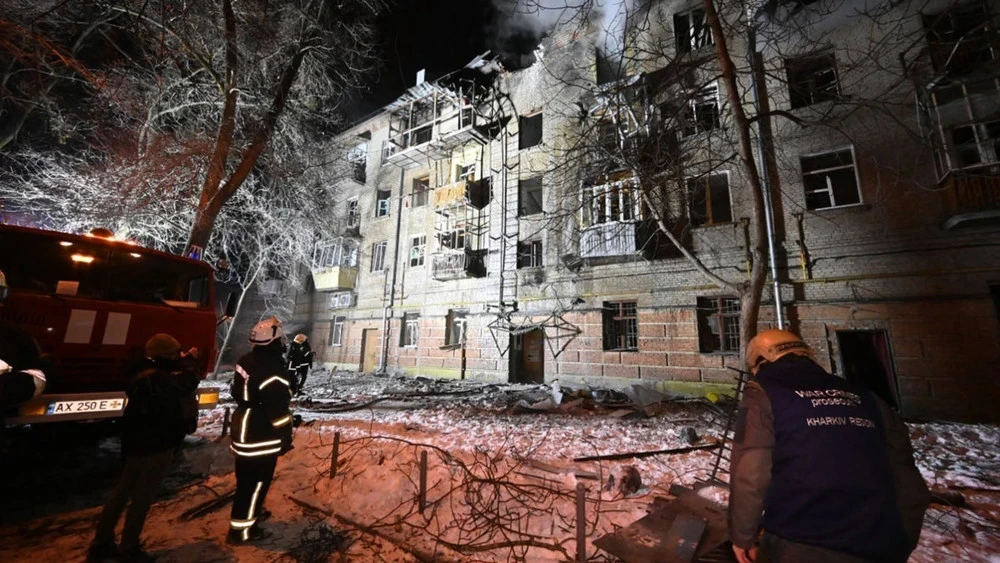
According to Tkachенко, multi-story buildings in the Darnytskyi, Dniprovskyi, and Shevchenkivskyi districts of Kyiv suffered damage. Non-residential premises, gas stations, and vehicles were also damaged. As a result of the attack, three people were injured, according to the State Emergency Service.
Kharkiv Mayor Ihor Terekhov reported that Russian forces are deliberately shelling the city’s energy infrastructure. He expressed confidence that the aim of these attacks is to inflict maximum damage and create conditions under which Kharkiv would remain without heating during severe frosts.
To prevent further problems, a decision was made to drain water from the heating systems in 820 houses that depend on one of the city’s largest thermal power plants. “I understand that this is extremely difficult in frosts of up to twenty degrees. However, the ongoing attacks by the enemy on critical infrastructure leave us with little choice. Our specialists see no other way out,” he added. All 101 points of invincibility in the city will operate around the clock, where residents can warm up, drink hot beverages, and charge their gadgets. Additional heating points will be opened if necessary.
According to the head of the regional administration, Oleg Synegubov, as a result of the strike in Kharkiv, two people were injured—a 27-year-old and a 58-year-old man.
On February 2, the Ministry of Energy of Ukraine reported that Russian troops had resumed attacks on the country’s energy infrastructure, resulting in many consumers in Kharkiv, Sumy, Dnipropetrovsk, and Cherkasy regions being left without electricity. However, soon President Volodymyr Zelensky noted that there had been no “targeted strikes” on Ukraine’s energy facilities within a day.
The Kremlin refused to comment on the duration of the energy truce, which was reportedly in effect until February 1. “I have nothing to add to what I already said at the previous press conference regarding February 1,” said press secretary Dmitry Peskov.


