
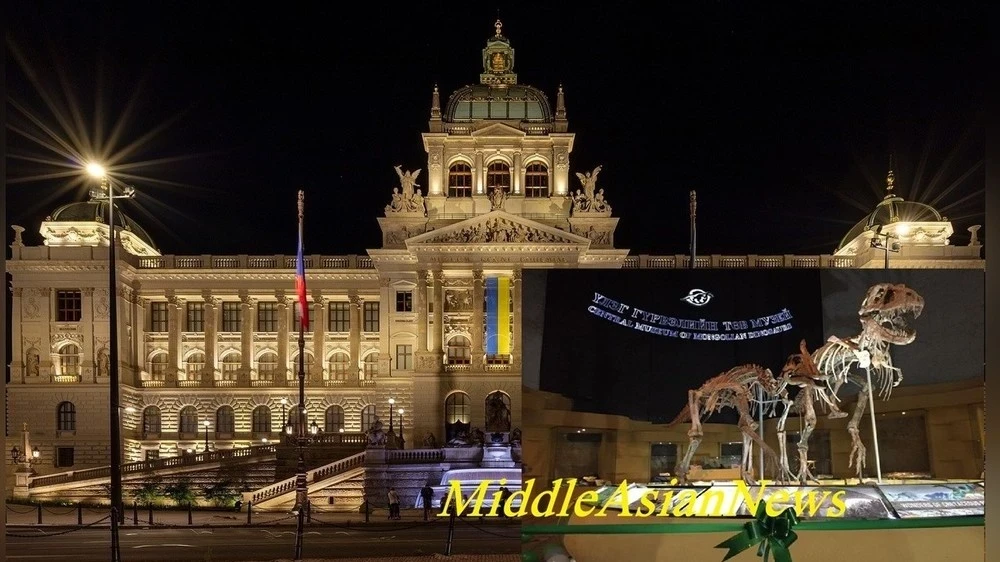
Undram Chinbat, the Minister of Culture, Sports, Tourism, and Youth of Mongolia, held a meeting with Jan Vytopil, the Ambassador of the Czech Republic to Mongolia, where they discussed issues of cultural, sports, and tourism cooperation.
During the discussion, the minister proposed to develop hockey in Mongolia, based on the memorandum of understanding in the sports field that was signed in 2025. Jan Vytopil supported this initiative and also expressed interest in improving archery skills.
As noted at the meeting, the successful exhibition "Genghis Khan," which took place at the Czech National Museum in honor of the 75th anniversary of diplomatic relations between Mongolia and the Czech Republic, laid the foundation for plans to present a new exhibition dedicated to dinosaurs found in Mongolia in 2027.
Undram Chinbat also shared plans to create a documentary film about the dinosaur exhibition, which will open in June 2027. She expressed hope that this event would attract a large audience and help promote Mongolia on the international stage.
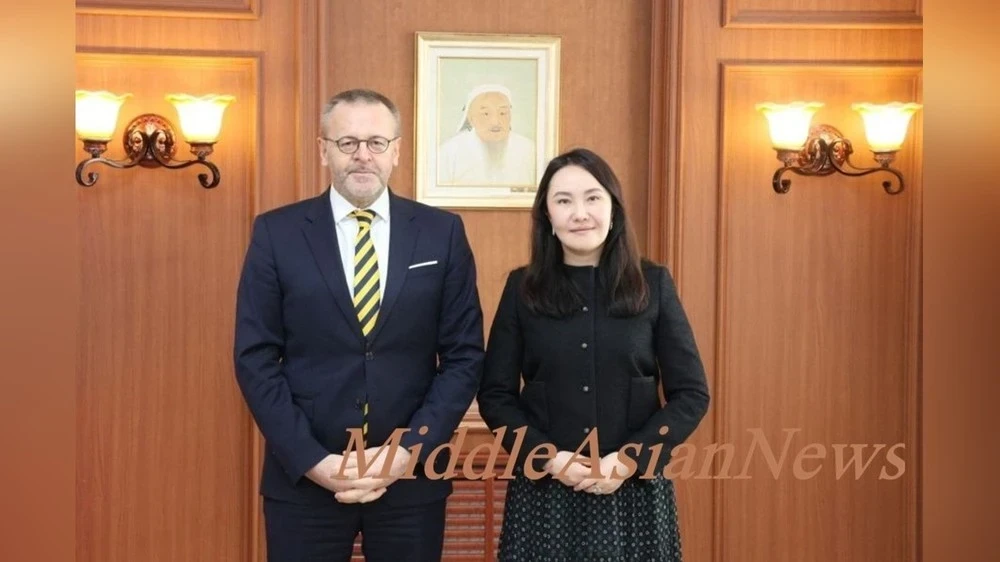
Jan Vytopil and Undram Chinbat
The National Museum (Národní muzeum) is the largest museum in Prague, founded in the early 19th century.
The Neo-Renaissance building of the museum, which exceeds 70 meters in height, was constructed from 1885 to 1890 under the guidance of architect Josef Schulz. It is located on Wenceslas Square and is its architectural symbol.
The building with its majestic dome, built on the site of the former Horse Gate, holds great significance for the Czech people. The main facade is adorned with sculptures: next to Bohemia, seated on a throne, is a young woman symbolizing the Vltava River and an elder representing the Elbe River. Allegories of Moravia and Silesia are also depicted on the facade, and the tympanum features Bohemia, the patroness of science and art.
Under the dome is the Pantheon with busts of famous figures of Czech culture, and above the museum's windows are the names of seventy-two outstanding personalities from Czech history.
In front of the museum stands a monument to Saint Wenceslas, created by Josef Václav Myslbek in 1912.
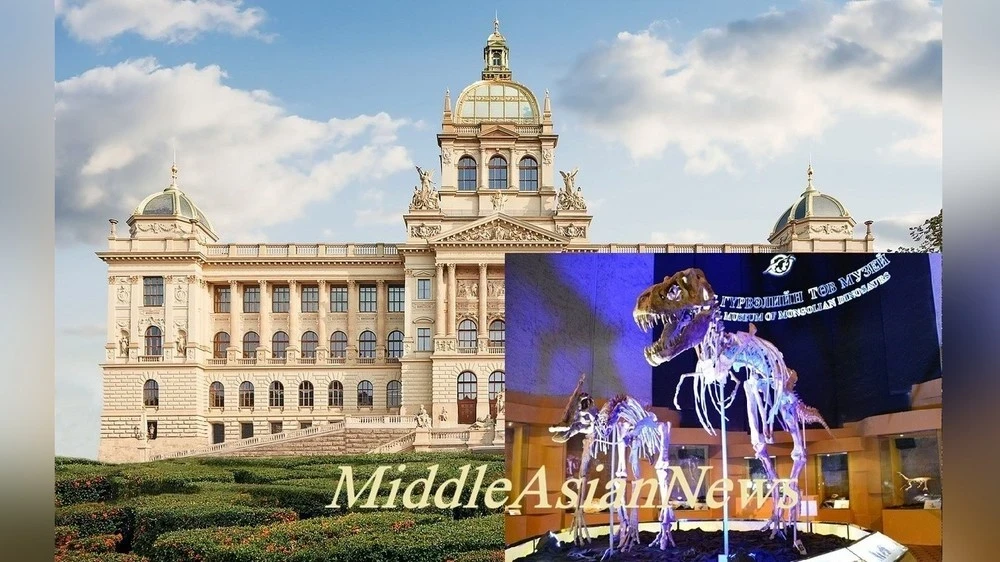
The museum was founded in 1818 in the context of the Czech national revival as a repository of the country's cultural values.
Count Kaspar of Sternberg acted as the museum's patron, while historian and politician František Palacký curated the historical department, which began publishing scientific works in the Czech language in 1827. The first librarian was the philologist and poet Václav Hanka, known as a forger, whose "manuscripts" are outstanding works of Romanticism and an important element of Czech self-awareness. The museum building was designed by Josef Schulz, who also worked on the National Theatre, associated with the national revival movement in the 1880s and 90s. The decoration of the building in the late 19th and early 20th centuries involved the artist Bohuslav Dvořák.
In the 20th century, the museum significantly expanded, splitting into several major collections, including the Museum of Czech Music and the Naprstek Museum of Asian and African Cultures. During the invasion of Warsaw Pact troops into Czechoslovakia in 1968, the museum's facade was damaged during the fighting on Wenceslas Square.
The summer reconstruction of the central building of the National Museum began in 2011 and was completed at the end of 2018.


