
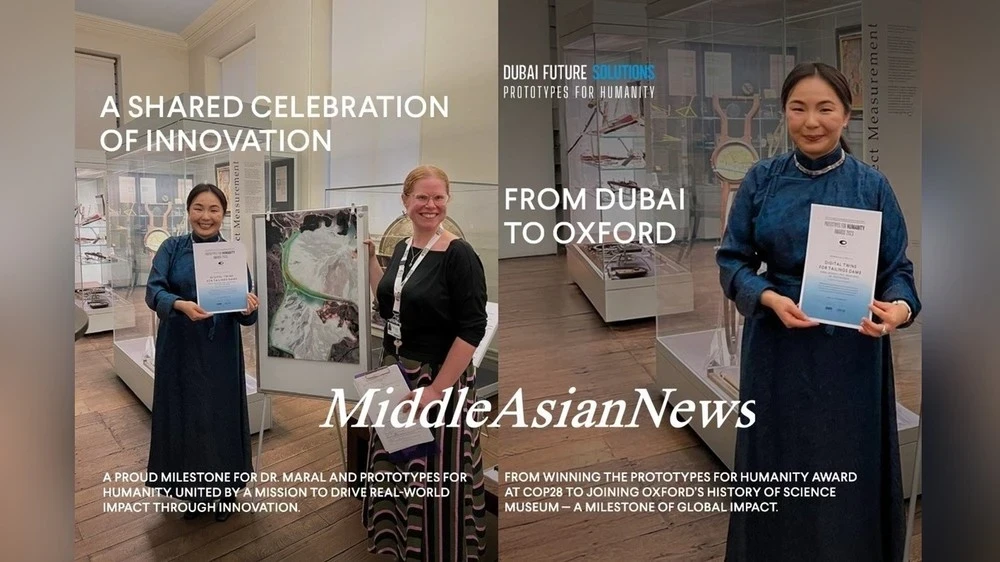
The COP28 award received by a graduate of Wadham College has been included in the exhibition at the Oxford Museum of the History of Science. Additional information is provided by MiddleAsianNews.
Dr. Maral Bayaraa, a PhD in Engineering (2020 graduate), was also invited to create a holographic work reflecting the results of her research.
While writing her doctoral dissertation (Engineering, 2020), Maral Bayaraa presented her project at the COP28 conference in Dubai and was awarded a significant prize. For developing a satellite early warning system to prevent incidents related to waste from the mining industry, she received the award for the best solution in data science and artificial intelligence from Prototypes for Humanity and the Dubai Future Foundation. Wadham College posted this information on its website.
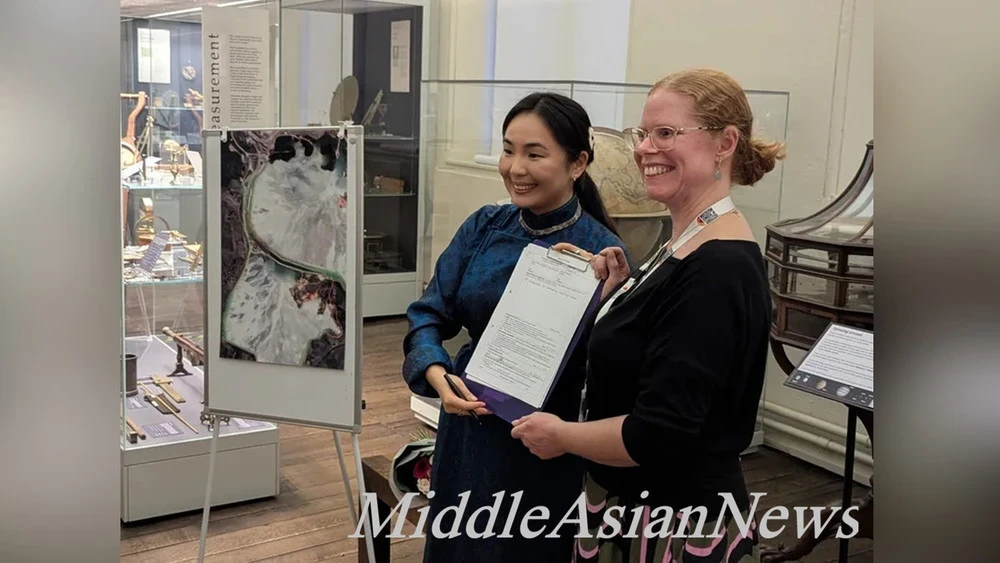
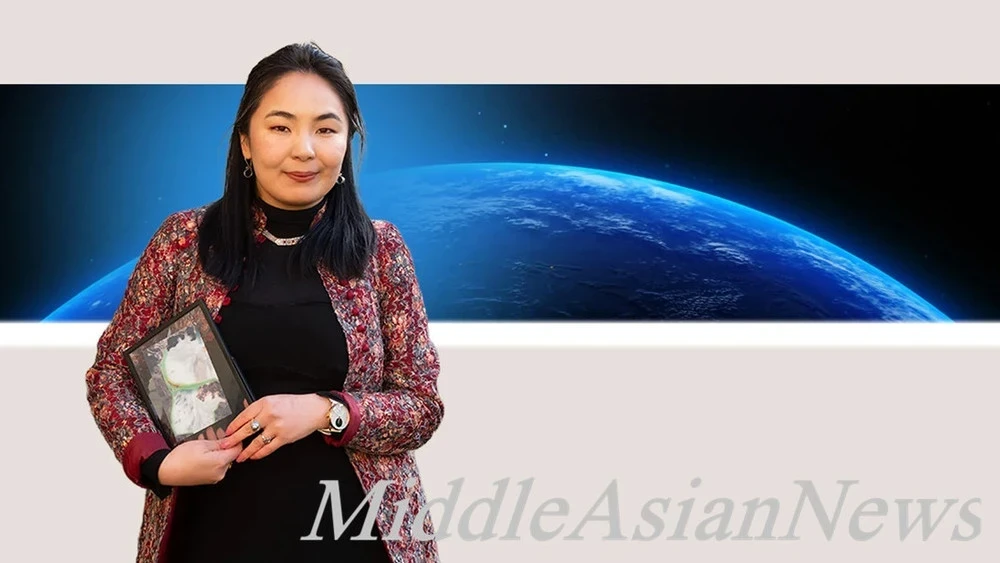
Some time after defending her dissertation, Maral received a new award from Prototypes for Humanity. The COP28 certificate is now part of the collection at the Oxford Museum of the History of Science, curated by Dr. Tina Air. In addition to the certificate, Maral was also invited to create a holographic work illustrating the results of her research:
Maral shares her thoughts: “The hologram looks like a layer of light that moves, with green and red shades. Upon closer inspection, one can see the outlines: the silhouette of a distant dam that holds the waste from the mining industry, which provides energy for our civilization. The green color symbolizes safety and harmony, while the red color slowly expands, warning of potential danger predicted by deep learning algorithms trained on InSAR satellite data.”
“...science and art must coexist.”
Speaking about the connection between science and art, Maral noted: “I have always been interested in culture, its numerous forms and manifestations, and I am convinced that science must go hand in hand with music, history, and art. Without them, our work becomes superficial and meaningless.”
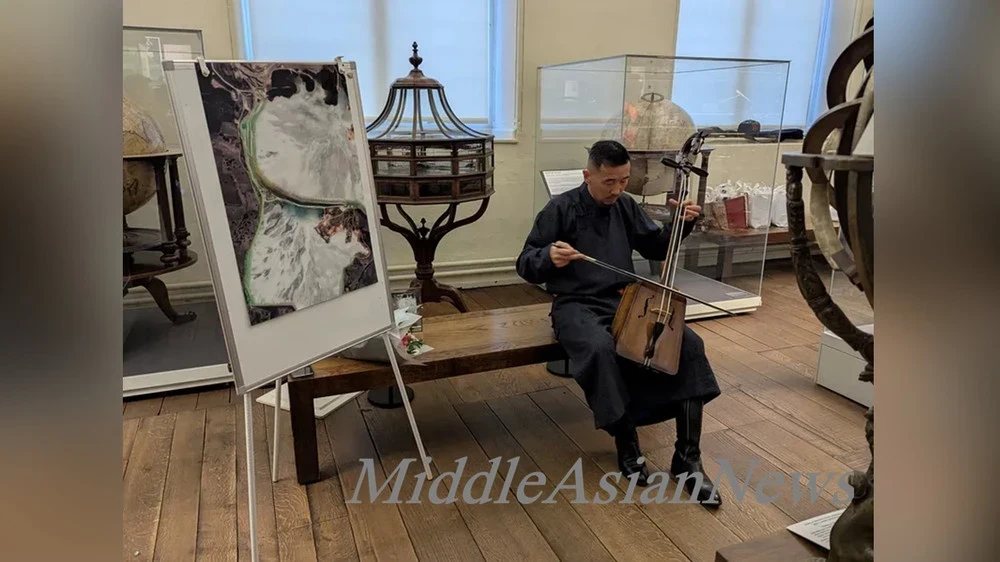
After the official ceremony of handing over the certificate to the museum, the celebration continued at a reception at Wadham College. Maral's roots, hailing from Mongolia, were marked by a traditional performance on the morin khuur — a national Mongolian instrument often used at celebrations.
After the event, she shared that “her melody rose like the wind over the endless steppes, its rhythm was measured, and the song transported listeners to the monastery courtyards of Mongolia.”
Despite the use of advanced technologies in her early warning system, Maral believes that ancient traditions are important for preserving humanity: “These old customs are becoming increasingly significant. They remind us that even while creating artificial intelligence and launching satellites into space, these tools are merely an extension of our will. They must serve for the good; otherwise, they lose their meaning.”
“Museums can be compared to modern temples: places where art, science, and history intersect.”
“Perhaps that is why I am so often drawn to museums,” Maral added. “In a sense, they remind me of modern temples: places where history, art, and science merge into one.”
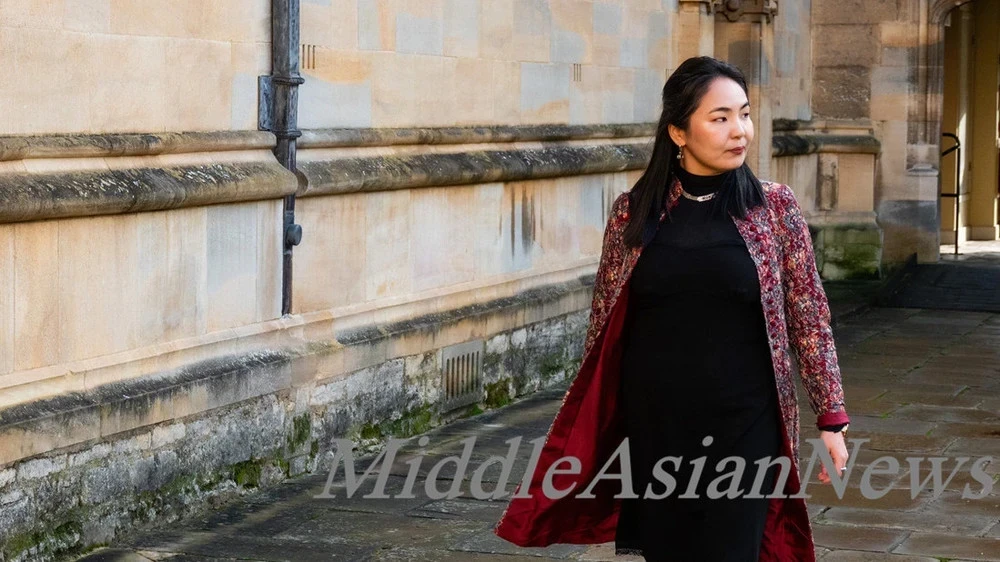
In light of such recognition of the cultural significance of museums, Maral expressed deep gratitude for the inclusion of her COP28 certificate in the collection of the Oxford Museum of the History of Science, thanking everyone who contributed to her research, including:
“Wadham College, for your support and for being my home in Oxford, as well as for organizing the reception in honor of the donation to the museum. The Royal Commission of 1851, thanks to whose scholarship I was able to complete my doctoral dissertation. Prototypes for Humanity and the Dubai Future Foundation, for recognizing my work at COP28. The curators of the Oxford Museum of the History of Science for providing the opportunity to connect art and science in holographic form.”
“I also express my gratitude to the Embassy of Mongolia in the UK, His Excellency Ambassador Enkhzukh Battumur, the diplomatic teams, the Mongolian community, my mentors, advisors, friends, and family.”


