
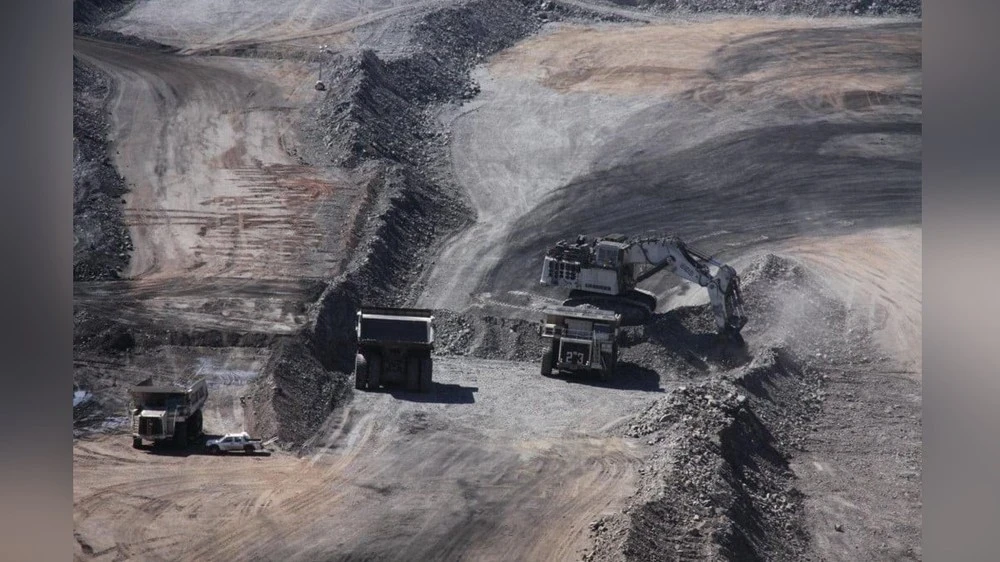
This year, Mongolia aims to achieve production targets of 90 million tons of coal, 1.9 million tons of copper, and 9.4 million tons of iron ore.
During a meeting dedicated to the development strategy in the industrial and mineral resources sector until 2026, it was noted that there are currently 1,031 licenses for mineral exploration and 1,771 licenses for their development in the country. However, there is a significant imbalance, as the number of exploration licenses is considerably lower than that of development licenses, which may threaten the sustainable development of the sector in the future.
The discussion involved the First Deputy Prime Minister and Minister of Economy and Development, Enkhbayar Jadamba, as well as the Deputy Minister of Economy and Development, Davaasuren Sodnomdarjaa. They reviewed current policy aspects in the sector, the progress of key projects, and plans for 2026.
Deputy Minister Davaasuren Sodnomdarjaa emphasized the need to reassess the ratio between licenses and requested clarification on the timelines and funding volumes necessary to restore balance between exploration and development in the Ministry of Industry and Mineral Resources.
In response, officials from the Ministry of Industry and Mineral Resources noted that investments in geological exploration are the foundation for sustainable growth in the mining sector and should be reflected in the budget declaration for 2026–2028. They also highlighted Mongolia's commitment to adhering to international standards, including:
- Sustainable financing for the geological sector (similar to practices in resource-dependent economies);
- Transparent methodology for calculating royalties for the use of subsoil resources;
- Mandatory allocation of a portion of royalties for the development of regions where extraction occurs, which contributes to the social and economic progress of local communities and increases public support for projects.
As a result of the meeting, participants agreed on the necessity of enhancing coordination between ministries to improve policies in the industrial and mining sectors, which should contribute to economic growth and the creation of a favorable investment environment.
The Ministry of Industry declared 2026 as the "Year of Policy Reforms" and began implementing six priority projects within the framework of 14 strategic megaprojects, including: a joint Mongolian-French uranium project, a coal-chemical complex, a coke-chemical complex, a copper processing plant, a steel mill, an oil refinery, and a gold processing plant.
To attract investments and improve the business climate, amendments to legislation concerning mineral resources, heavy industry, oil, and petroleum products are planned to be discussed during the spring session of the Great State Khural.


