
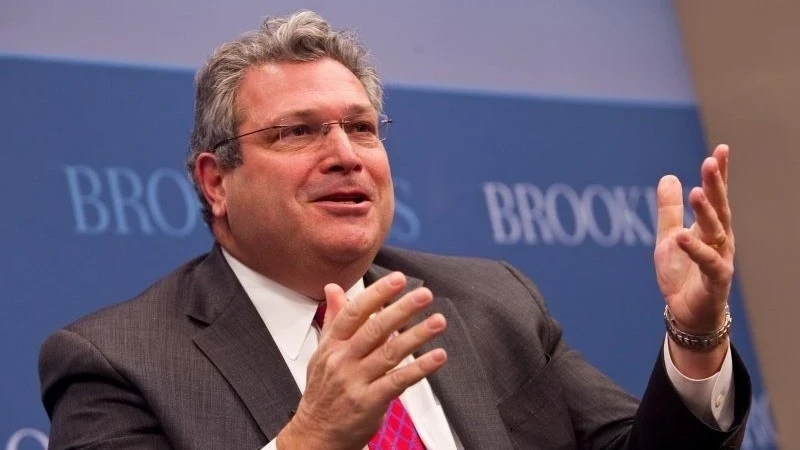
In March 2026, an article by Kagan titled "Every Man for Himself" will be published in the print edition of The Atlantic. The author is a columnist for The Atlantic, a senior fellow at the Brookings Institution, and the author of the book "The Twilight of Democracy: The Seductive Lure of Authoritarianism."
- Kagan argues that the new U.S. security strategy under Trump formalized the end of the American liberal world order, which was built on American dominance. The changes occurred not due to the inability of the U.S. to maintain this order, but because the country itself chose to abandon its role as the guarantor of global security.
We present the translation of the article:
In his view, American power, which supported the world order for eight decades, will now be directed towards its destruction. This will lead to the creation of a dangerous world where the U.S. will find itself without reliable allies and will be forced to rely solely on its strength for survival and prosperity. This will require a significant increase in military spending, as access to resources and markets, provided by a network of alliances, will no longer be guaranteed.
Kagan emphasizes that Americans are not prepared for such a change, as they have lived for a long time under a liberal international order where their allies were generally compliant. However, with the departure from this order, the U.S. will face competition and conflicts, similar to what was observed before 1945.
Kagan also points to the illusions of multipolarity, which are supported by some researchers who believe that America can maintain the advantages of its order if it accepts the new reality. Nevertheless, he emphasizes that historical examples show that multipolar systems often lead to conflicts and wars.
The world order established after World War II was the result of a desire to avoid a repetition of conflicts, and in this context, the U.S. took on the responsibility of maintaining global security. However, Trump and his supporters openly celebrate the end of this "great deal," demanding greater autonomy from allies and making threats against their partners.
Thus, in Trump's national security strategy, Russia and China are viewed not as adversaries but as potential partners in dividing spheres of influence, which undermines traditional U.S. alliances.
In the face of growing aggression from both Russia and the U.S., European states will have to rethink their defense strategies. Kagan predicts that this could lead to rearmament and a rise in nationalism in Europe, which in turn will pose a threat to the stability of the region.
U.S. Asian allies will also face similar challenges. Japan, for example, may begin to strengthen its military to counter threats from both China and the United States. Kagan points out that such a situation could lead to the emergence of new great powers that will act in their own interests rather than in the interests of the U.S.
Problems Arising from the New Order
Kagan concludes his reflections by stating that a multipolar world will lead to increased conflicts and instability, as spheres of influence will once again become important. He emphasizes that in the absence of an American order that ensured stability and security, the world will revert to a state where the struggle for influence will dominate international relations.
Thus, according to Kagan, the world that will emerge as a result of changes in Trump's policy will be far more dangerous than the one Americans have been accustomed to over the past eight decades, and will inevitably lead to new conflicts and challenges for all countries.


