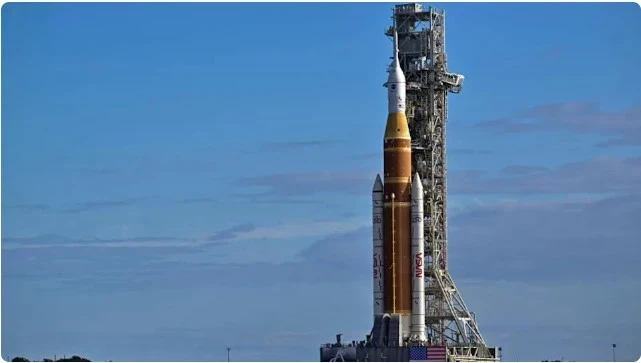
NASA has completed the transportation of the rocket that will be the first crewed flight to the Moon in the last 50 years to the launch pad. According to the BBC, the 98-meter Space Launch System traveled from the assembly building to Launch Pad 39B at the Kennedy Space Center in Florida, taking nearly 12 hours. The special transport platform moved at a speed of just over one kilometer per hour.
In the near future, a team of NASA specialists will conduct final checks and a rehearsal for fueling the rocket. The launch of the Artemis II mission is scheduled for February 6, but backup dates are also planned for late February, March, and April. As part of this ten-day mission, four astronauts will embark on a journey around the Moon, without planning to land on its surface.
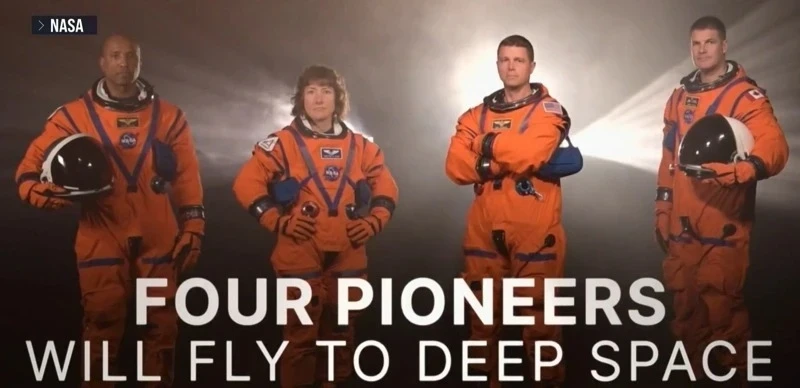
The crew consists of Americans Reid Wiseman, Victor Glover, Christina Koch, and Canadian Jeremy Hansen, who have already observed the rocket's movement process at Cape Canaveral. This will be the first crewed mission to the Moon since Apollo 17, which landed on the Earth's satellite in December 1972. During the first two days, the astronauts will spend time in Earth's orbit before heading to the Moon, which is located about 400,000 kilometers away.
During the flyby of the Moon's far side, the crew will allocate three hours to study geology and take photographs, which will help prepare for a future landing in the area of the lunar south pole. The Artemis III mission, which includes a lunar landing, is scheduled no earlier than 2027, although experts believe a more realistic date is 2028.
A key component of the Orion spacecraft, which the astronauts will fly, was built in Bremen, Germany. The European Service Module, developed by Airbus, will provide the spacecraft with necessary resources: propulsion, electricity, oxygen, and water for the crew.
The head of the mission control team, John Hanicutt, noted: "My primary task is to ensure the safe return of Reid, Victor, Christina, and Jeremy. We will only begin the flight when we are fully ready. Crew safety is our top priority."
Despite significant delays in the program, NASA asserts that it will not compromise on safety.