
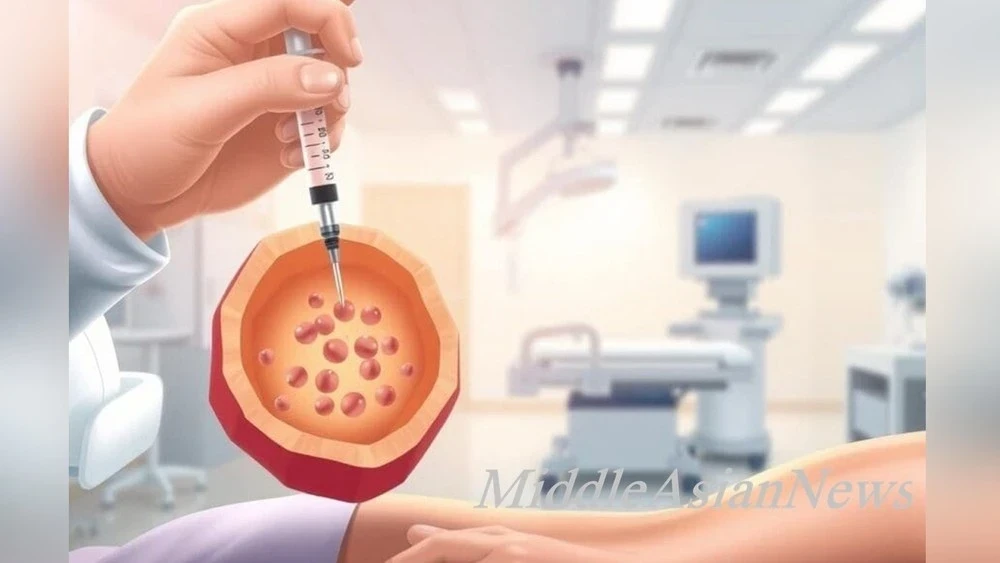
In Mongolia, for the first time, a teenager suffering from cancer has undergone a stem cell transplant using cells taken from his own body. This procedure, known as autologous transplantation, was successfully performed thanks to the efforts of the country's medical institutions. This was reported by MiddleAsianNews.
The patient was a 15-year-old girl from Mongolia who was battling leukemia.
On December 9, 2025, the National Center for Maternal and Child Health, in collaboration with the First Central Hospital of Mongolia, conducted the first successful autologous stem cell transplant for children.
This achievement was made possible through cooperation with "Medical Park Hospital" in Turkey and the international organization TIKA. Specialists noted that this event underscores the importance of enhancing medical professionals' qualifications through training and internships both domestically and abroad.
The team that performed the stem cell transplant included doctors from the Stem Cell Transplantation Center of the First State Central Hospital, as well as nurses and doctors from the National Center for Maternal and Child Health, who specialize in oncology and blood diseases.
The procedure, which involved the use of the patient's own stem cells, fully complied with international standards and safety regulations. As a result, complex medical procedures that were previously only conducted abroad have become possible in the country, significantly improving the quality of cancer treatment for children.
In autologous stem cell transplantation, the patient's own healthy stem cells are collected, stored until the start of high-dose chemotherapy, and then returned to the body after treatment. This allows for effective treatment of blood cancers such as lymphomas and myelomas, as well as autoimmune disorders, while minimizing the risk of rejection.
Autologous transplantation, also known as autogenic or autologous, involves taking stem cells from the patient themselves, storing them, and subsequently returning them to the same individual.
Such procedures are most commonly performed with hematopoietic stem cells, which are responsible for the formation of blood cells, but they are also successfully applied with cardiac cells for recovery after heart attacks.
It is important to note that autologous transplantation differs from allogeneic transplantation, where the donor and recipient of the stem cells are different individuals.


