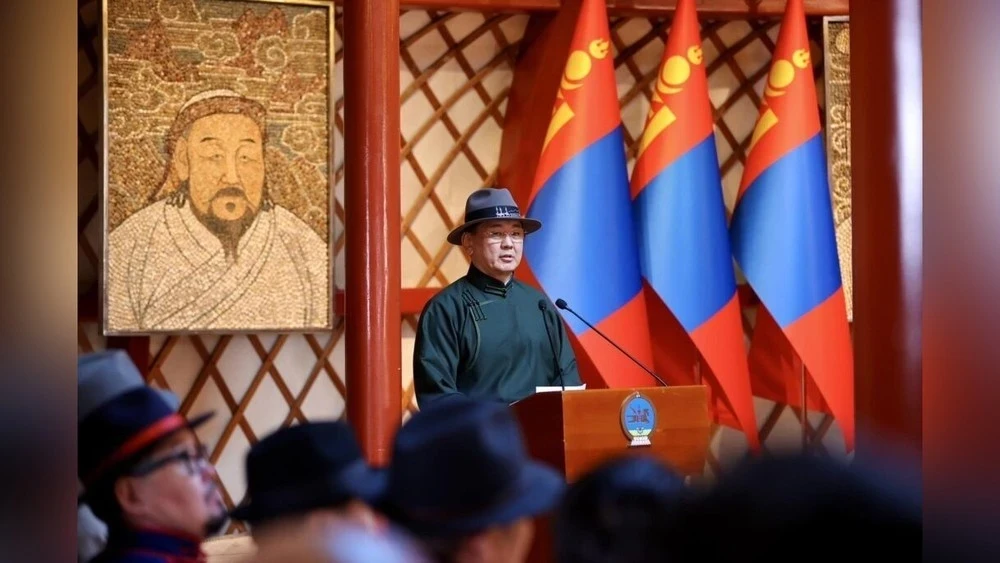
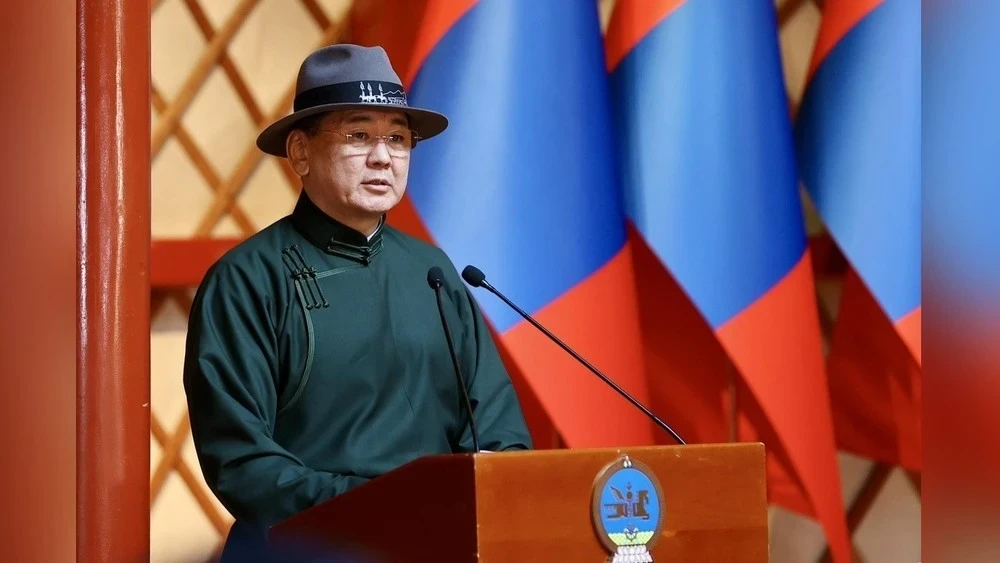
The decree on supporting traditional medicine was signed by the President of Mongolia, Khurelsukh Ukhna, who confirmed his commitment to studying and disseminating knowledge in this field. This information was provided by MiddleAsianNews.
In his speech on this matter, the president noted the following:
“Traditional medicine represents not only methods of diagnosing and treating diseases but is also a valuable heritage rooted in our worldview, way of life, and spiritual traditions of the Mongolian people.”
Mongolian traditional medicine has a history spanning over 5000 years.
In 1681, the outstanding lama Luvsandanzandzanchan, a direct descendant of Genghis Khan, opened the first school for training doctors and medical teachers, which laid the foundation for the creation of educational and therapeutic materials.
For the last three centuries, the knowledge and practices of traditional medicine have been passed down from generation to generation by folk healers, and today, doctors specializing in traditional medicine continue to ensure the health of their people.
The treatise “Deerees togtooson durst tus buriig burdsen bichig” (The Highest Approved Treatise on the Structure of the Body), which served as a textbook on traditional medicine, was registered by UNESCO as a “World Heritage Object” in 2025, promoting the popularization of Mongolian traditional medicine on the international stage.
It is important to note that hundreds of doctors and specialists in traditional medicine successfully work in various countries around the world, especially in Poland, continuing to develop the principles and achievements of traditional medicine.
“On behalf of the Mongolian people, I express my sincere gratitude to all scientists, doctors, and medical workers who are working to preserve and disseminate traditional medicine, as well as to ensure the health of our people,” the president added.
This decree obliges the government of Mongolia to take measures aimed at improving the legal status of the traditional medicine sector, supporting its development using modern technologies and artificial intelligence, as well as implementing a comprehensive personnel policy and ensuring the quality of traditional medicinal products.
Research shows that brain surgeries were performed in Mongolia about 2000 years ago, as evidenced by bone remains found on Mount Chandmani.
Ancient Mongols used 35 different methods for performing brain surgeries. Findings indicate that such procedures were carried out over 2000 years ago, and among the discovered items were spoons, needles, and other instruments.
Additionally, archaeological findings suggest that stone needles were used around 3000 BC, indicating that needles have been in use for 5000 years.
There is also evidence that the ancestors of the Mongols used toothbrushes and toothpicks, which refutes the stereotype that they were uncivilized.
There are many unique treatment methods used by nomads, including massage for treating concussions and the use of mare's milk drinks to improve health. Mongols obtained necessary proteins and vitamins from meat, as their livestock fed on a variety of vegetation. They also used “SHAR SÜÜ” (yellow milk) for cleansing the gallbladder and in cases of allergic reactions.
Moxibustion is another important aspect of traditional Mongolian medicine. It is mentioned in ancient texts such as the “Huangdi Neijing,” written 2000 years ago, which states that “moxibustion came from the north.” Mongols have lived north of China for millennia.
Moreover, the ancestors of the Mongols used bion stones or stone needles for various healing purposes.