
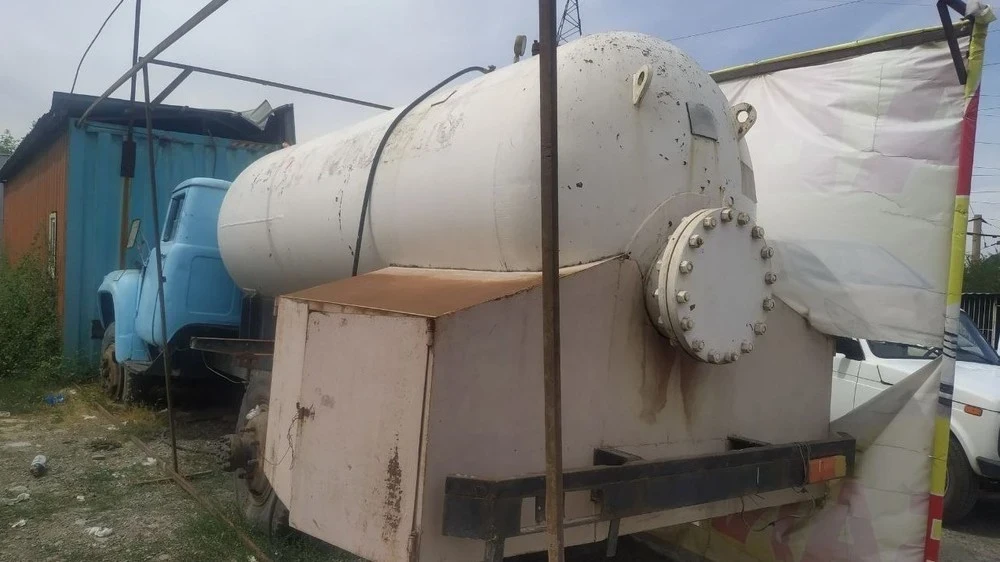
The Committee for the Development of Competition and Consumer Rights of Uzbekistan commented on the significant increase in the price of liquefied gas on the exchange, pointing to a noticeable reduction in the share of local production. Officials clarified that domestic propane is primarily directed towards the needs of the population and social institutions, as stated in the agency's press release.
The response from committee staff regarding the changes in propane prices in the domestic market was swift. Data from exchange reports show that on January 8 of this year, the price of liquefied gas rose to 9.27 million sums ($766) per ton, which represents almost a 30% increase in less than a month.
The agency noted that last year, 358,000 tons of liquefied gas were sold through the exchange, with 61% being local production and 39% being imports. However, starting from August, the share of Uzbek propane began to decline. In December, it did not exceed 35%, and at the beginning of 2026, it fell to 10%. The main reason for this was the distribution of produced gas among the population and social facilities, officials emphasize.
It is also reported that the starting price for Uzbek propane last year did not exceed 7 million sums ($578) per ton, while the import price was 8 million ($661). This was achieved by establishing a price ceiling (which should not exceed 20% of the starting price of the lot) and reducing the purchase limit for one trading session from 10 tons to 5 tons.
Nevertheless, in recent months, the average price on the exchange has been formed based on the increasing share of imported gas and rising demand in the domestic market, which has led to the price of propane now exceeding 9 million sums ($744) per ton.
In response to the current situation, the competition development committee is taking urgent measures to stabilize prices. In particular, regular monitoring of propane prices at gas stations has been organized. According to agency staff, 11% of cars in Uzbekistan use liquefied gas as fuel, and up to 5% of the total volume of propane sales goes to the needs of owners of such vehicles.
Additionally, the antimonopoly agency has urged activists and bloggers to refrain from spreading information on social media about price increases or other information that could lead to a rise in gas prices in the domestic market.
The committee also promised to provide additional information about specific measures aimed at stabilizing liquefied gas prices on the exchange.
Against the backdrop of fluctuations in exchange quotes, an increase in propane prices at gas stations is also being recorded. At the beginning of the year, the price per liter increased from 6200 sums ($0.51) to 7000 sums ($0.58).


