
The time of greatest auroral activity was observed from 1:00 to 3:00 Moscow time, when their intensity level reached 10 on the scale. However, adverse weather conditions significantly limited the visibility of this natural phenomenon.
The best conditions for observation were in the Kemerovo and Chelyabinsk regions, as well as in the Khanty-Mansi Autonomous Okrug. Partially, the auroras could be seen in the Murmansk region and over a significant territory of Europe, including the Scandinavian countries, Poland, and Germany, noted the IKI RAN.
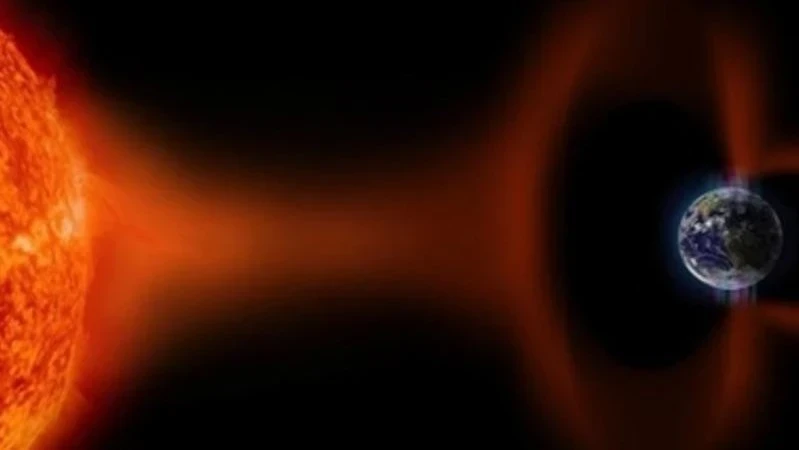
Scientists link the occurrence of the magnetic storm to a cloud of plasma that was ejected by the Sun during one of the recent weak flares. In particular, on January 8, a powerful explosion occurred on the Sun, which researchers believe was the catalyst for the current magnetic storm.
“A less powerful event was forecasted, which was supposed to begin only in the middle of the day. However, the earlier arrival of the plasma cloud and the high intensity of the auroras were unexpected,” added specialists from the RAN.
The first magnetic storm of this year occurred on the night of January 3 and was caused by plasma ejected as a result of a solar flare recorded on December 31.


