
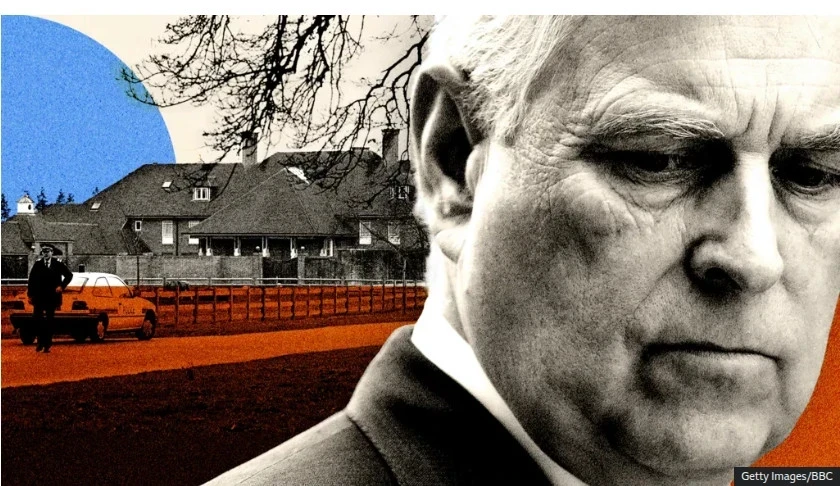
During an investigation conducted by the BBC, it was revealed that Andrew Mountbatten-Windsor received a large sum from a Kazakh oligarch using money from a company accused of corruption.
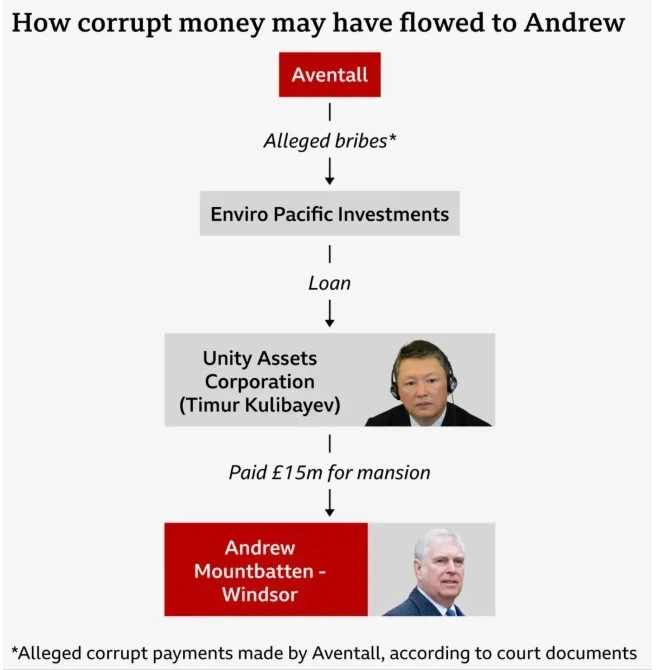
Timur Kulibayev, a billionaire from Kazakhstan, confirmed through his lawyers that he used a loan from Enviro Pacific Investments to acquire Andrew's former mansion.
The Italian prosecutor's office established that in 2007 this company received cash through bribery.
Just a few weeks after the last payment, the oligarch purchased the Sunninghill Park in Berkshire for £15 million (about $20 million) using funds provided by Enviro Pacific.
Kulibayev, who is the son-in-law of the former president of Kazakhstan, is considered one of the most influential figures in the country's oil and gas sector. In another case, an Italian businessman confessed to bribing the oligarch, as reported by the BBC.
Kulibayev's lawyers emphasized that he is not involved in bribery and that the funds spent on the park's purchase were legal.
These facts raise questions about whether the then-prince inadvertently benefited from proceeds of criminal activity and whether he conducted the necessary checks to avoid this.
Money laundering expert Tom Keating, head of the Center for Finance and Security, noted that the deal contained "obvious red flags" requiring more thorough scrutiny to rule out the possibility of "money laundering from corruption."
According to available information, Kulibayev paid £3 million more than the asking price and approximately £7 million above the market value of the property.
Andrew did not respond to BBC requests for comments. In 2009, after criticism of the deal, he told the Daily Telegraph: "It's not my business, once the price is paid. If it's an offer, I'm not going to question whether they overpaid me."
On the Market
Sunninghill Park was gifted to Andrew by the Queen as a wedding present in 1986. The modern two-story red brick house, with 12 bedrooms, 12 bathrooms, and six reception rooms, was mocked for its resemblance to a Tesco supermarket.
After the property was put up for sale in 2001 and received no offers, Andrew intervened himself. Deputy Ambassador Simon Wilson noted that in 2003, during an official visit to Bahrain, the prince seized the opportunity to try to sell the property to members of the royal families of the Persian Gulf.
A buyer was found thanks to Andrew's connections with Kazakhstan: in 2002, he became a patron of the British-Kazakh Society, collaborating with authoritarian President Nursultan Nazarbayev. Andrew visited Kazakhstan in 2006, and later that same year, Nazarbayev met with the Queen.
In 2007, an offer to purchase the park came from Timur Kulibayev, Nazarbayev's son-in-law.
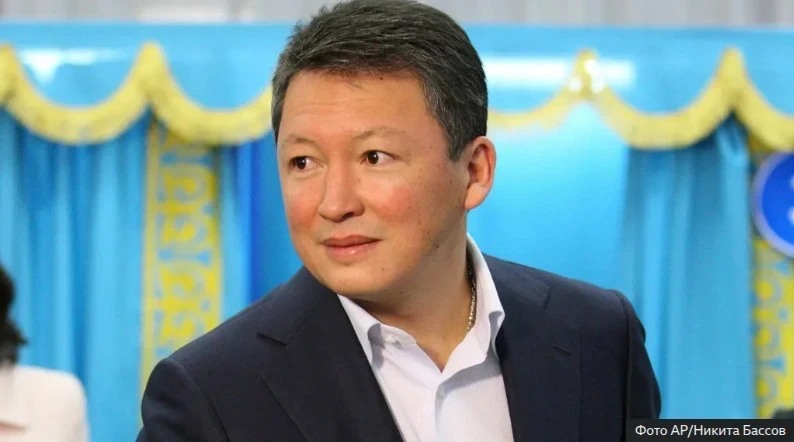
Timur Kulibayev, depicted in a 2011 photo, played a key role in Kazakhstan's oil and gas industry.
At that time, his fortune was estimated at over £1 billion, and he held an important position in managing the sovereign fund Samruk-Kazyna, which controls a large share of the country's oil and gas sector.
Reports indicate that Andrew met Kulibayev through Kazakh businesswoman Goga Ashkenazi, with whom the oligarch has two children. Although she described the prince as a close friend, she claims she has not had dealings with him for the past 15 years.
In June 2007, Andrew and Ashkenazi were spotted at Ladies' Day at Ascot with the Queen. In the same month, a contract for the purchase of Sunninghill was signed. Kulibayev used his offshore company Unity Assets Corporation to acquire the property, while the seller's interests were represented by royal family lawyers from Farrer & Co.
The deal was completed in September of that year. In that month, British taxpayers paid £57,000 for Andrew's charter flight to Kazakhstan on official business as a trade representative.
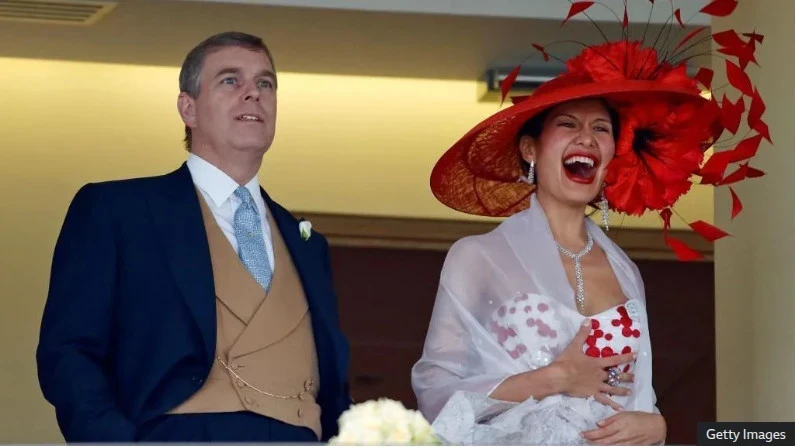
Andrew was photographed with Goga Ashkenazi, who has two children with Kulibayev, at the Royal Ascot races.
At the time of the sale, the UK government expressed concerns about the situation in Kazakhstan. Europe Minister Geoff Hoon told parliament in April 2007 that "allegations of systemic corruption" in the country were "widespread."
Despite these concerns and Andrew's official position as a trade representative, the identity of the buyer remained unknown to all parties, including Buckingham Palace.
In 2007, there were no obligations to disclose the names of offshore company owners purchasing property in the UK, and Kulibayev's name only became known three years later.
Links to Corruption
Discussions about the links of the deal to corruption began as early as 2012, when the Italian prosecutor's office started investigations into Kulibayev.
Among the allegations was the use of bribes to finance the purchase of Sunninghill Park through Enviro Pacific Investments, which is now known to have partially financed the deal. However, no charges have been brought against Kulibayev.
Nevertheless, the BBC reviewed documents from several court cases in 2016 and 2017, which confirm that Italian prosecutors concluded that Enviro Pacific Investments received funds as a result of a bribery scheme.
These documents were first published by L'Espresso magazine as part of the "Caspian Conspiracies" project of the International Consortium of Investigative Journalists.
The investigation established a link between Enviro Pacific Investments and corruption through the company Aventall. In a case being heard in Monza, Italian oil magnate Agostino Bianchi pleaded guilty to bribing Kulibayev and other officials for lucrative oil contracts, and Aventall was mentioned as one of those used to pass bribes. Kulibayev has not been charged.
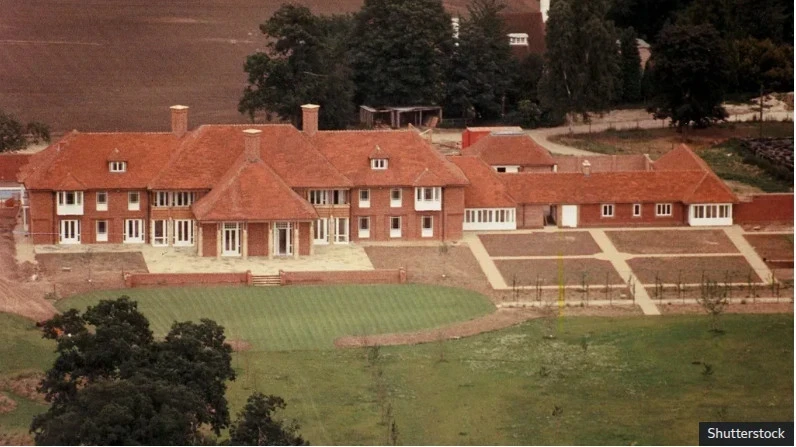
Sunninghill Park, built in the 1980s, was mocked for its resemblance to a Tesco supermarket.
According to plea documents, Aventall was run by Massimo Guidotti, who was considered a "middleman" in corruption schemes.
Court documents in a similar case contain information that he developed a rating system assessing the influence of Kazakh oligarchs. In 2009, he gave Kulibayev the highest rating of five stars. During questioning by prosecutors, Guidotti denied distributing bribes.
In a second case in Milan, prosecutors alleged that Aventall made payments that could be linked to corruption to Enviro Pacific Investments, which provided a loan for the purchase of Sunninghill.
Prosecutors reported that $6.5 million (£3.27 million) was promised, but only $1.5 million (£755,000) in payments could be documented. The last of these was made in April 2007, just two months before the contracts for the purchase of Sunninghill were signed.
The prosecutor's office noted that "open sources" indicate a connection between Enviro Pacific and Kulibayev. However, the case in Milan was closed in January 2017, partly due to the inability to link payments to specific contracts or definitively establish the identities of the public officials who received the funds.
Kulibayev's lawyers told the BBC that he denies receiving bribes and was not involved in awarding contracts, nor was he the subject of any investigations in Italy. They claimed that Kulibayev "was not aware of any corruption scheme" involving Bianchi or Guidotti.
The lawyers also noted that Kulibayev never owned or controlled Enviro Pacific, and it had no assets under his control. When asked about the company's owner, they declined to comment, citing confidentiality.
However, the lawyers confirmed that their client "received a loan from Enviro Pacific in 2007 for commercial reasons and on market terms" to help finance the purchase of Sunninghill Park.
This indicates that a company linked to corruption was also involved in the deal with Andrew.
The oligarch's lawyers did not deny the information about the £6 million loan and stated that Kulibayev subsequently repaid it with interest.
They also assured that the funds used to purchase Sunninghill were entirely legal and that all necessary checks were conducted. According to the lawyers, Kulibayev paid £15 million to secure the purchase of the property, as there was a competing bidder.
Red Flags
After Kulibayev purchased Sunninghill, the property remained empty for many years and was demolished in 2016. A new mansion with 14 bedrooms was built in its place, but it also remained unoccupied.
There is no evidence that the former prince knew the origin of the funds Kulibayev spent on Sunninghill.
However, the deal had many nuances or "red flags" that should have raised concerns among Andrew's lawyers and indicated the possibility that some of the money could have been obtained illegally.
These include:
- Concerns from the British government about "systemic corruption in Kazakhstan" at the time.
- Kulibayev's status as a public official and son-in-law of the president of Kazakhstan.
- The use of complex offshore structures with multiple companies and loan agreements without clear justification.
- Questionable inflated price.
- Lack of transparency regarding the buyer.
Keating emphasizes that regardless of status—whether a member of the royal family, an oligarch, or a billionaire—individuals representing their interests in real estate transactions must be attentive to the legal and reputational risks associated with offshore investments in the UK.
He noted that since 2004, lawyers are required to conduct thorough checks on funding sources, including identifying the owners of offshore companies purchasing property.
Margaret Hodge, the government's anti-corruption representative, expressed "absolute shock" at the BBC revelations, adding that "proceeds of crime" could have been used "in an already controversial deal."
She emphasized that these allegations should be thoroughly investigated by both parliament and relevant national agencies, as "no one is above the law."
Buckingham Palace, like the former prince, declined to comment.
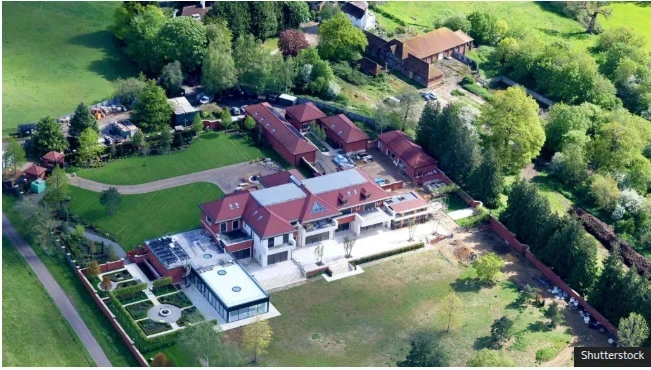
Kulibayev demolished Sunninghill Park and built a new mansion, but it has never been occupied.
Royal family lawyers from Farrer & Co also declined to comment, citing client confidentiality. The buyer's lawyer stated that all necessary procedures were followed and that the firm was aware that Kulibayev was the buyer.
After Nazarbayev's resignation in 2019, the new government of Kazakhstan initiated legal proceedings in Switzerland, trying to recover millions from individuals and legal entities accused of corruption. The bribery scheme in Italy, allegedly involving Kulibayev, is part of this litigation, although the oligarch himself is not a defendant.
In early 2025, media reports emerged that Kulibayev was negotiating a payment of $1 billion (£741 million) to the government of Kazakhstan in connection with an investigation into illegally accumulated assets during his father-in-law's presidency.
Kulibayev's lawyers claim that his wealth was accumulated through a decade of business practice and that he is not under investigation, and any rumors about negotiations for compensation for illegal assets are unfounded.


