
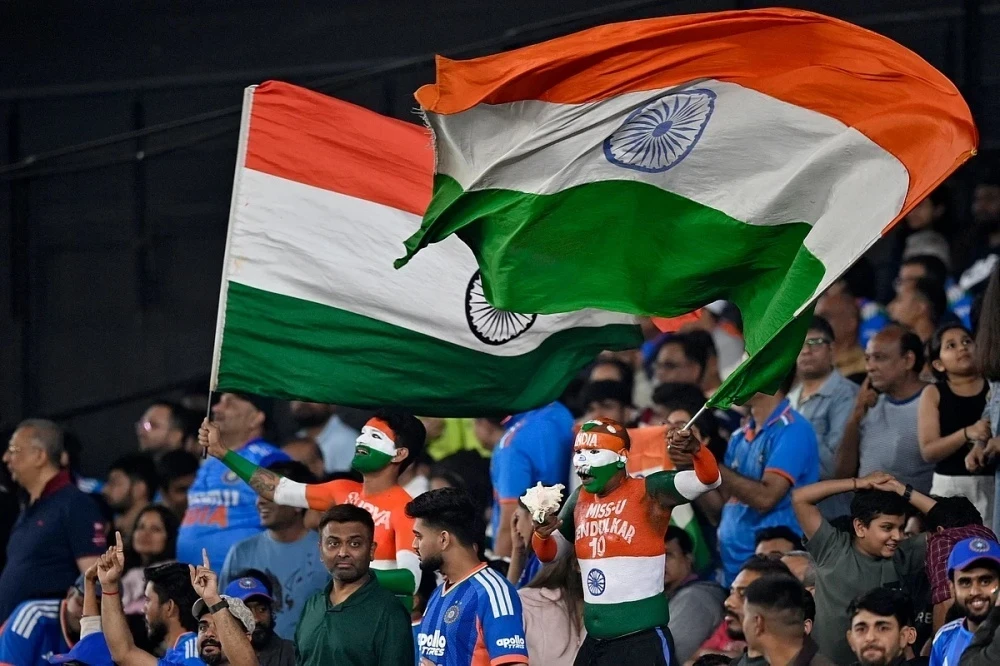
On a warm November evening in Ahmedabad, more than 130,000 spectators filled the "Narendra Modi" stadium not for a concert, but for the final of the cricket World Cup. This event became a true national holiday with a global reach, creating an atmosphere that enveloped not only the stands but also hotels, cafes, and business centers. This day marked another milestone in India's sports history, showcasing the image of a country confidently stepping onto the world stage.
Cricket remains the main driver of this process. According to the Board of Control for Cricket in India (BCCI), a record revenue of 97.41 billion rupees was achieved in the financial year 2023-24, with approximately 57.61 billion rupees coming from the Indian Premier League (IPL). The appeal of the IPL is not limited to financial indicators: the 2024 season attracted 446 million unique viewers, and the 2025 final became one of the most-watched sports broadcasts in the country with 169 million viewers.
However, the Indian sports economy extends beyond cricket. Research indicates that the Indian sports industry is expected to grow at a rate of 12-14% per year and reach nearly $40 billion by 2030. This growth is fueled by investments in infrastructure, media, and technology, as well as programs supporting mass sports across various disciplines.
The sports ecosystem in India is no longer in the shadows; it actively influences economic life, transforming cities into centers of cultural exchange and youth ambitions. This growth is evident in stadiums and arenas across the country.
Consider field hockey, which is regaining popularity as a national sport. The successes of the men's national team, which won bronze at the Tokyo and Paris Olympics, have rekindled public and corporate sponsors' interest. The relaunched Hockey India League (HIL) is expected to attract international players and the attention of global broadcasters, while tournaments in Bhubaneswar and Rourkela consistently draw nearly full stands.
Kabaddi is also showing impressive results in Indian sports. The Pro Kabaddi League (PKL), which started in 2014, attracts around 200 million viewers each season, making it one of the most popular non-cricket leagues in the country, especially among second and third-tier cities.
Football is also finding its audience. The Indian Super League (ISL) is gradually becoming a landmark project, attracting international players and coaches. Average match attendance is comparable to leading Asian leagues, and the television audience has exceeded 150 million viewers in recent seasons, confirming that football is no longer a niche pastime.
Tennis adds a new dimension to the country's sports calendar. The return of tournaments like the Chennai Open and Bengaluru Open has confirmed India's status as an important point on the international tennis map. Although these events are not as grand as cricket, their economic impact is noticeable and attracts international attention.
Badminton is also continuing to develop. The India Open Super 750 tournament attracts top players from around the world and demonstrates high television ratings.
Women's sports are beginning to receive the attention they deserve. From record television ratings for women's cricket to increased sponsorship and attendance at leagues, the trend shows that the sports culture in India is becoming more inclusive and diverse.
These changes align with the country's broader ambitions. With the support of the federal government, the Indian Olympic Association has approved a bid to host the 2030 Commonwealth Games, which is expected to serve as a catalyst for a massive infrastructure upgrade, attracting international participants and boosting tourism, similar to the effect of the 2010 Commonwealth Games in New Delhi.
Moreover, live entertainment events are amplifying this momentum. For example, Coldplay's Music of the Spheres concert in Ahmedabad is estimated to have generated an economic impact of around 641 crore rupees. The two-day show attracted over 220,000 spectators, leading to increased demand for hotels, restaurants, and transportation services.
It is worth noting that this growth in activity is not only observed in major cities. In 2025, dozens of large concerts were held in India with audiences of over 5,000 people - from Kochi to Guwahati.
Economists emphasize the multiplicative effect: major sporting events or concerts not only sell tickets but also contribute to filling hotels, activating transport networks, and increasing retail sales, creating temporary jobs across various sectors.
For Indian youth, this is of immense significance. A generation that previously settled for watching events on screen now has the opportunity to experience them live, fostering participation, ambition, and confidence.
In the future, key challenges will be sustainability and scaling. India is not just hosting events; it is actively shaping the rules of the game.


