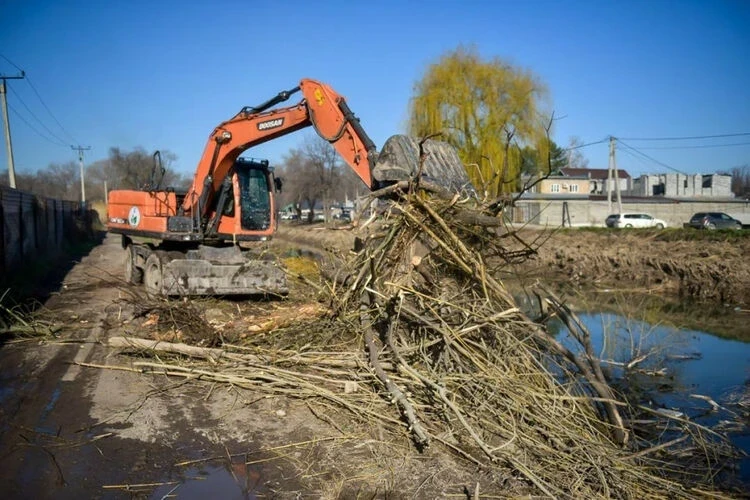
However, among the city's residents, there is dissatisfaction and confusion: why is it necessary to cut down existing greenery to create new public spaces?
Reconstruction of the Big Chui Canal
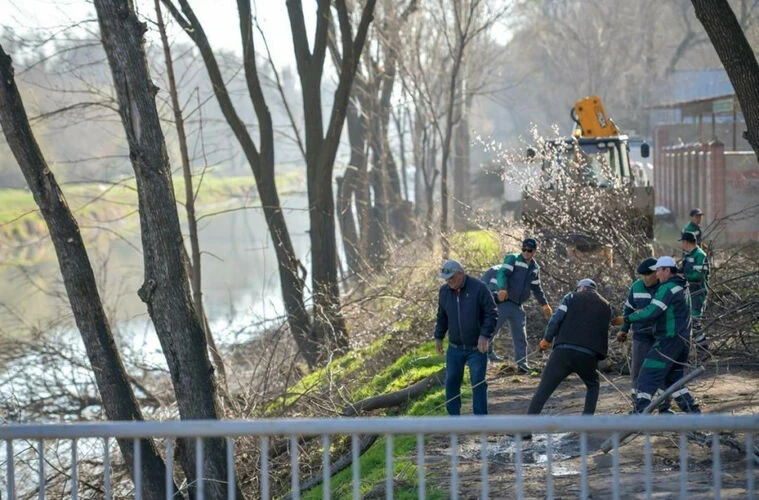
In August 2025, the reconstruction of the Big Chui Canal (BCC) began in Bishkek. The project includes work on bank reinforcement, riverbed cleaning, as well as the removal of hazardous trees and debris.The mayor, Aibek Junushaliev, recently inspected the progress of the first phase, which involves clearing reeds and shrubs, as well as sanitary pruning of trees along the canal.
The Problem with Shrubs
Despite the advice from ecologists to preserve shrubs along roads that protect the city from dust, lowering temperature and improving air quality, the city administration continues to cut them down. This is particularly observed on Chingiz Aitmatov Avenue and at the intersection of Baytik Baatyr and Kulatov Streets, as well as previously on Chui Avenue and in Aitmatov Park.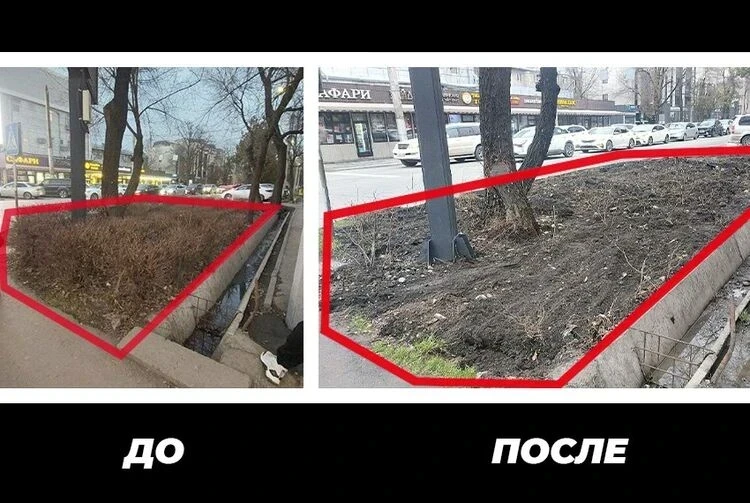
Officials explain this by the need to create more open and "safe" spaces, claiming that green hedges worsen visibility and contribute to litter accumulation, as well as serve as shelter for the homeless. In some places, instead of shrubs, lawns are planned, but often this remains just an intention.
Asphalt Instead of Greenery
According to the municipal enterprise "Bishkekzelenstroy," it is planned to cut down 600-700 trees annually, but in reality, this number significantly exceeds due to road reconstruction and the construction of new facilities.For example, in 2025, during the reconstruction of Chingiz Aitmatov Avenue, about 1,000 trees were felled, and over the entire year, the total number of cut trees amounted to about 2,000.


Plans to widen roads continue this year as well. For instance, deputy Dastan Bekeshev reported that the city administration is considering the possibility of widening Skryabin Street, which naturally implies the cutting down of trees and destruction of green zones.
On March 25, the city administration announced ongoing work on the beautification and greening of Auezov Street, where sanitary pruning and the removal of hazardous trees posing a threat to residents and infrastructure are taking place. According to the administration, new alders up to four meters tall have already been planted in this area, but the photographs show only stumps.


Against the backdrop of the ongoing tree cutting, the news of the city administration's plans to reconstruct and build more than 40 parks and squares raises concern among residents. Within these projects, updates to green spaces are again planned, but social media users express doubts about the authorities' intentions.
The Difficult Fate of Seedlings
According to the chief agronomist of the municipal enterprise "Bishkekzelenstroy," about 50-60 percent of the greenery in the city needs replacement, which suggests continued tree cutting.In 2026, it is planned to cut down up to 1,000 old trees, mainly poplars and elms.
The city administration reported the planting of about 6,000 new trees and shrubs during the spring campaign. Specialists insist on the necessity of planting large seedlings, but against the backdrop of cut trees, the new seedlings appear rather modest. Moreover, not all of them survive: according to the administration, the survival rate of plants planted in 2025 was only 86 percent.

The destruction of plants occurs not only due to a lack of care and watering but also due to the actions of vandals. In July 2025, 28 young seedlings were broken on Erkindik Boulevard, and some drivers park their cars directly on the spots where new seedlings have been planted.
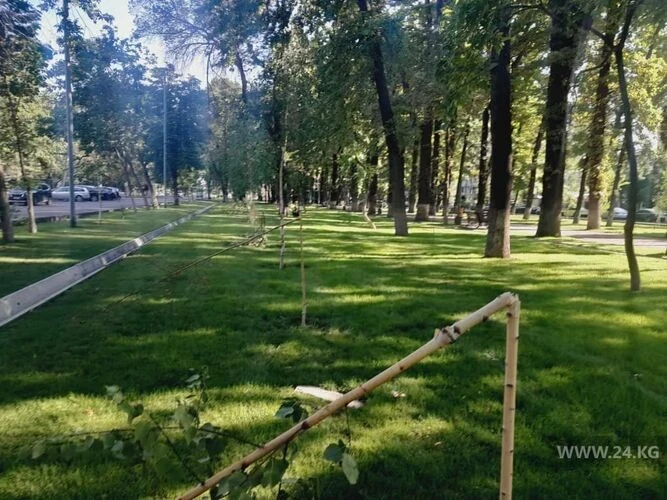
Experts predict that it may take 20-30 years to renew the green fund of the capital. Therefore, residents will have to endure dust and heat on unprotected streets and sidewalks for a long time.