
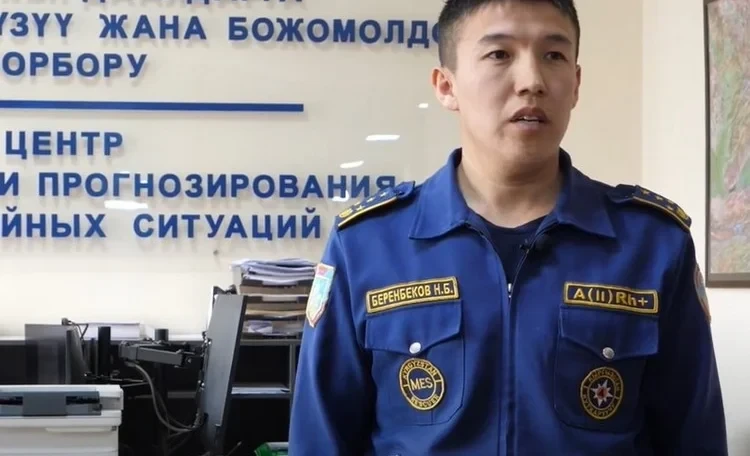
With the onset of spring, natural processes are becoming more active in Kyrgyzstan, increasing the risk of natural disasters. The Ministry of Emergency Situations (MES) conducts extensive activities every year to prevent the consequences of natural disasters while ensuring funding. Protection against natural disasters is a shared responsibility of both government agencies and citizens. Specialists emphasize the importance of cleaning ditches and insuring housing as means to minimize risks. Nursultan Berenbekov, head of the monitoring and analysis department of the MES's protection and coordination management, spoke about the situation related to weather conditions in the country and the actions of the MES.
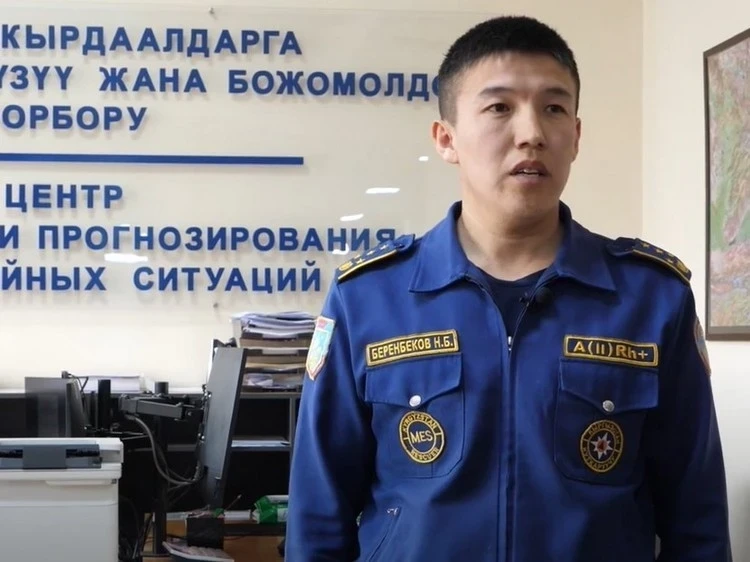
— With the arrival of spring, several natural processes are becoming active in the republic. In particular, there are landslides caused by moisture accumulation in the soil from September to March, as well as possible earthquakes that can also trigger landslides. Another serious problem is flooding related to the lack of cleaning of irrigation systems and drainage structures. Garbage and waste fill the channels, leading to flooding. During inspections, MES employees found that about 70-80% of irrigation systems are polluted, which causes flooding. We have sent recommendations to the presidential administration to hold accountable the heads of responsible government agencies and local administrations. Another threat is mudflow phenomena and floods that arise from a sharp increase in water levels in rivers. We inform the population about possible risks through social networks and the media. Until March 28, there is a threat of avalanches on some roads and in mountainous areas. Avalanche-prone areas are located on the roads Ala-Buka — Kanysh-Kiya, Balykchy — Kazarman — Jalal-Abad, Karakol — Enilchek, and on sections of the Bishkek — Osh road. All services are on standby to carry out necessary work.
— What measures is the MES taking to prevent natural disasters?
— The MES is working to prevent and eliminate the consequences of emergencies in several directions. First of all, this includes mechanical cleaning of drainage ditches, creating new channels, cleaning structures for mudflow protection, and strengthening banks with gabions. In 2026, 200 facilities are planned, of which work has been completed on 11, and 3 are ongoing. In Bishkek and Naryn region, work has not yet started, while in other regions it is in full swing. The most active work is being carried out in Osh region, where more than 30 units of equipment are engaged in cleaning the Ak-Buura River, with plans to complete the work within one to two weeks. Capital construction is also planned, including dams and their repairs, for which 400 million soms have been allocated from the budget. From February to April, the MES will conduct inspections of about 400 facilities according to an approved schedule. Currently, inspections have been completed in Batken region, while work continues in Osh and Jalal-Abad regions. Based on the results, recommendations will be prepared for the relevant agencies. In addition, the MES, together with international organizations, is working on the safety of areas prone to landslides. Currently, projects are being implemented at 46 facilities with a budget of 39 million dollars, including the construction of drainage systems and dams, which are expected to be completed by 2028.
— How can citizens help in preventing natural disasters?
— With the arrival of spring, many citizens go out into nature, so it is important to follow safety rules. Resting near water bodies requires special attention. Cases of drowning of children and teenagers often occur, even in places with seemingly safe depths. In 2024, several citizens, including children, died during a flood in the Nookat area. To prevent mudflows and flooding, every citizen should clean their homes and yards of garbage, ensuring proper drainage. Last year, many floods occurred due to uncleaned irrigation systems. We proposed to hold mass clean-up days in the fall, which was supported by the presidential administration. As a result, in the fall of 2025, about 5 million meters of channels and structures were cleaned, and the work will continue in the spring of 2026.
— What is the role of housing insurance for citizens of Kyrgyzstan in the context of natural disasters?
— Previously, before 2016-2017, the state provided financial assistance to those affected by natural disasters. Since 2017, this practice has been abolished, and we have switched to an insurance system. In rural areas, the cost of insurance is 600 soms per year, in Bishkek and Osh — 1200 soms. In the event of damage from a natural disaster, the insurance company assesses and pays full compensation to the owner. We urge citizens to pay attention to insuring their homes, as the state currently does not provide compensation. The MES is engaged in eliminating consequences and cleaning at the sites of incidents. If necessary, mobile housing can be provided for temporary residence. We strongly recommend that citizens insure their homes!


