
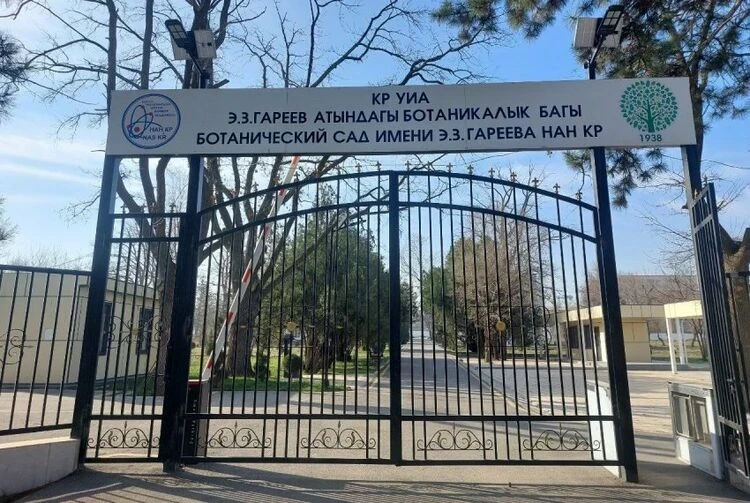
The fate of the Enver Gareev Botanic Garden, one of the largest botanic gardens in Central Asia, raises concerns among the residents of Bishkek.
After President Sadyr Japarov's visit in the spring of 2024, the citizens began to hope for the restoration of this unique place. In January 2025, the Botanic Garden received the status of a specially protected natural area, but the recent mass tree felling on Akhunbaev Street has caused a new wave of concern: residents fear that the area will be developed with high-rise buildings.
“When I drive past the Botanic Garden on Akhunbaev, I can’t believe my eyes — almost nothing is left of it. Instead of restoration, everything has been cut down and they are building football fields! It’s the hardest thing to imagine,” shares her concern one of the residents of Bishkek on social media.
Journalists from 24.kg visited the Botanic Garden to find out what is really happening on its territory and spoke with the management of the institution.
Staff Shortage and Funding: What is Being Spent from 78 Million Soms
The Botanic Garden is divided into three parts: plots on Akhunbaev and Gorky Streets in Bishkek, as well as a branch in Naryn. Director Melis Chaki baev reported that currently only 64 people work in the garden, but the staff is planned to be increased by 89 people soon, including 50 new employees (24 of whom will be seasonal) and 17 scientific staff. The shortage of personnel is particularly acute in Naryn.
Renovation has been carried out at the Botanic Garden: a laboratory and a mini-hotel for employees with a conference room, kitchen, and three laboratory rooms have been restored. Special transport with tents, sleeping bags, and gas burners has been purchased for expeditions, and six greenhouses have been restored at various sites in the garden.
Among the plans is the creation of a production base for growing local seedlings adapted to the climatic conditions of Kyrgyzstan.
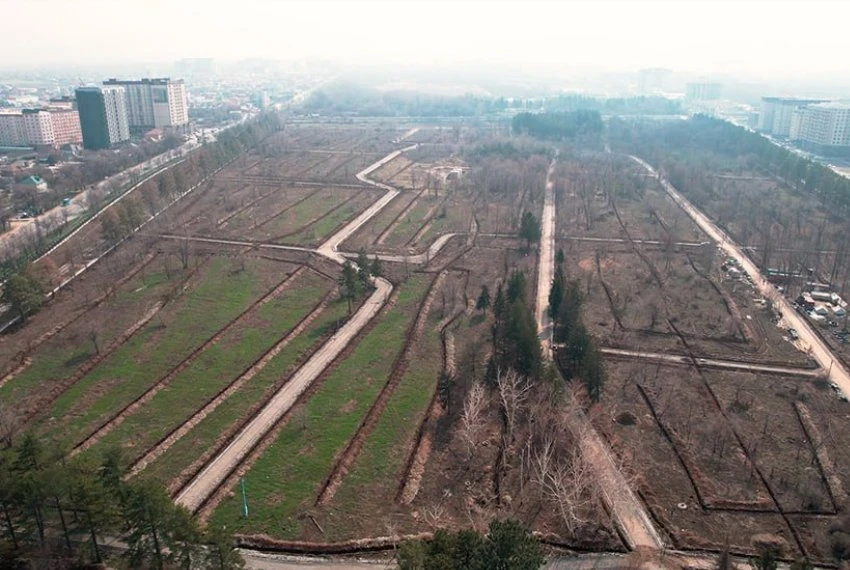
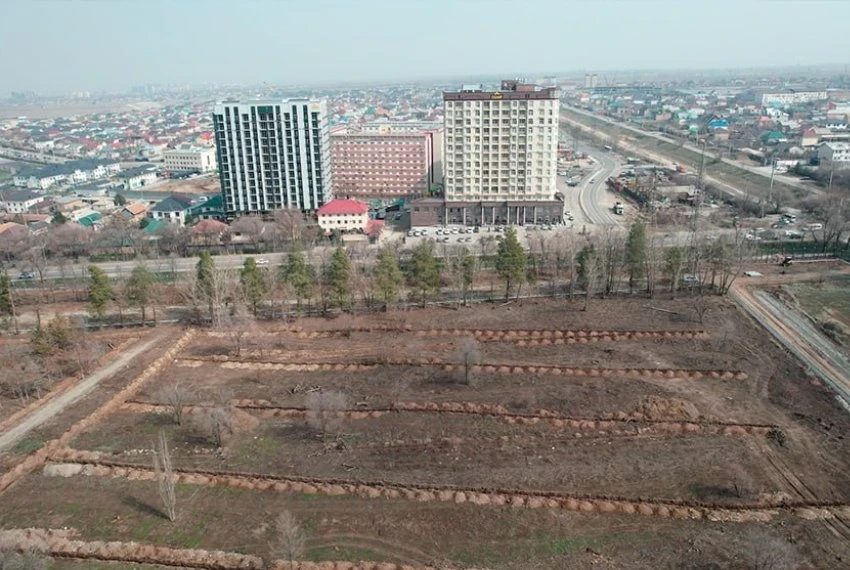
“During the Soviet Union, about 260 people worked at the Botanic Garden. Now the workforce is almost non-existent, mainly scientific staff remain. Security is provided by only 15 people at five posts, and there is none in Naryn. The salary is only 10-12 thousand soms, mainly retirees work. We have neither a plumber, nor an electrician, nor a janitor. Last year, the president allocated funds, and we fenced off 120 hectares,” says Melis Chaki baev.
On Akhunbaev Street, two wells have been drilled, a third is in development, and ten reservoirs for irrigation from April to June are being prepared. Last year, a tender was held for the modernization of the irrigation system for 78 million soms. New seedlings of pines, spruces, and birches have already been ordered. In the upper part of the Botanic Garden, the planting of fruit plants is planned.
Currently, our main goal is to restore the former glory of the Botanic Garden; scientific research is not yet on the agenda.
Melis Chaki baev
Recreational areas, a football field, a workout area, an amphitheater for events and meetings, the renovation of the first floor of the administrative building, and the installation of heat pumps in all seven buildings are also planned.
Botanic Garden on Gorky: Science and Nature
Deputy Director Nurlan Albanov spoke about the current life of the Botanic Garden on Gorky. Previously, he headed the fruit crops laboratory for 34 years and is a breeder with nine patents.
“Each region has its own varieties adapted to the climatic conditions. We have developed the varieties ‘Elena’, ‘Darya’, ‘Anastasia’, ‘Baktygul’, ‘Tulpar’, and ‘Chuy Beauty’. The last variety thrives well in the cold climate of the Naryn region,” Nurlan Albanov proudly shares.
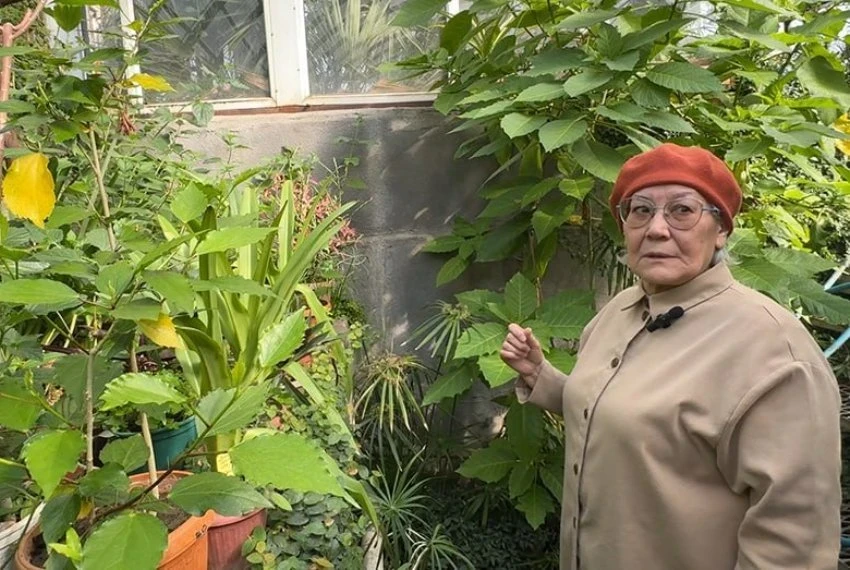
The upper part of the Botanic Garden includes a laboratory for flowering and decorative plants with a greenhouse, where palms, bananas, and subtropical plants create a tropical atmosphere. This laboratory is one of the oldest in Kyrgyzstan, opened in 1938.
In 2022, large-scale reconstruction began: new laboratory buildings were constructed, the greenhouse was overhauled, and a mini-pond with aquatic plants was organized.
Currently, nine employees work here: laboratory assistants, senior laboratory assistants, agronomists, scientific staff, and a security guard. “Their work is not just caring for plants, but preserving a unique corner of nature in the city center,” emphasizes Nurlan Albanov.
Where Plants and People Meet
The upper part of the Botanic Garden is divided into two sections: a flower section, where tulips are grown, and a section for trees.
“We grow tulips, carefully separating one variety from another with stakes. All varieties are zoned, some of them are domestic scientific developments,” says the deputy director.
In April, a large tulip festival is expected here, featuring more than 2000 flowers of various varieties.
It is important to note that the upper part of the Botanic Garden is open to visitors until 20:00. The main condition is to maintain cleanliness, not to walk on the lawns, not to have picnics, not to walk pets, and not to smoke. Order is maintained by video surveillance and a security guard. Tours and wedding photo sessions are allowed.
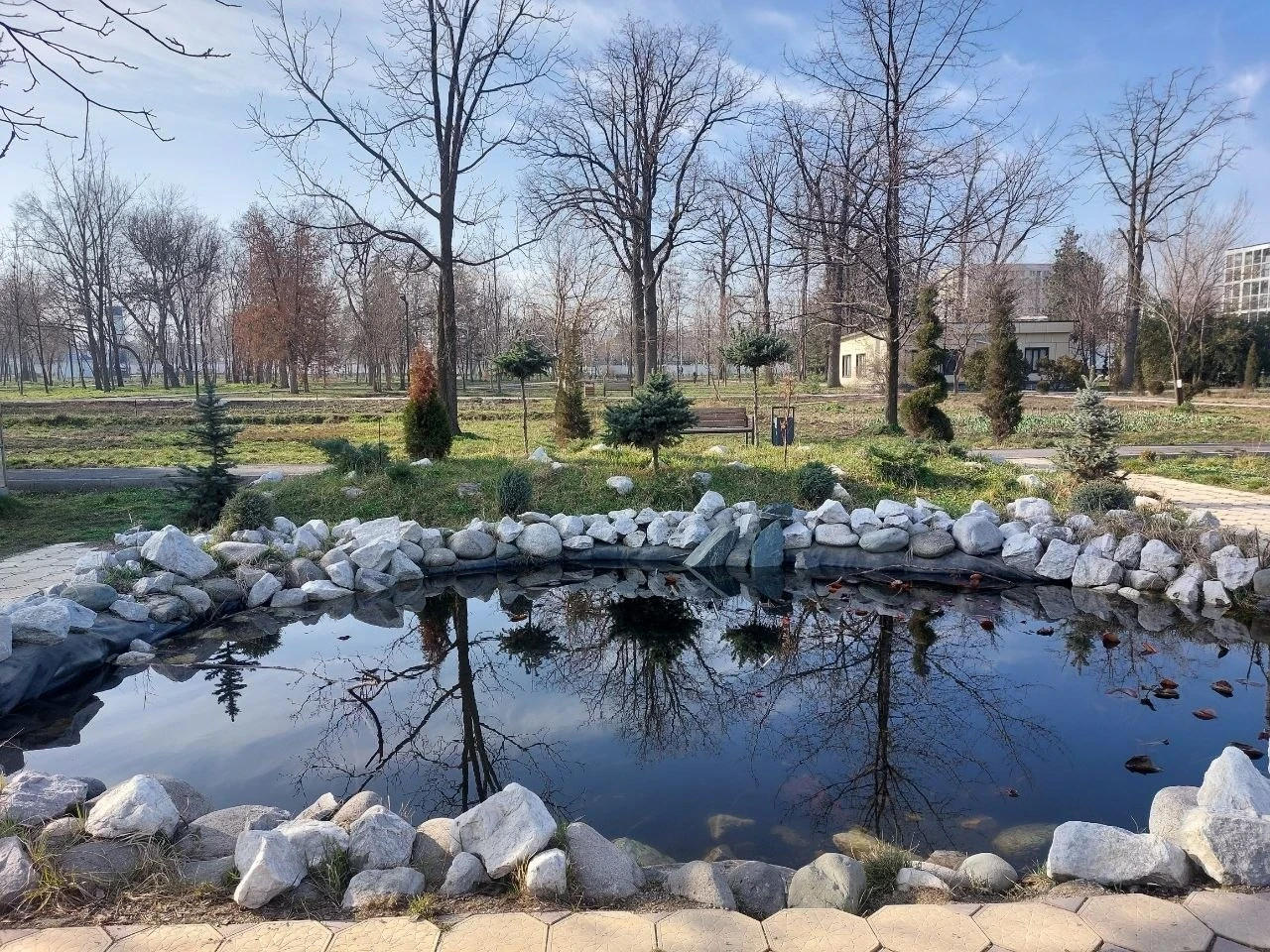
“We have cleared the area of weeds, laid paths for walking and running. Toilets and a parking lot for more than 10 cars have also been built,” adds Nurlan Albanov.
A flower shop from their own plantings is planned to be opened for the tulip festival.
Students also undergo internships at the Botanic Garden. Future landscape designers and specialists in medicinal herbs gain valuable experience working with plants.
“Young people are reluctant to work at the Botanic Garden due to low salaries. But it is a very calm and interesting job. I hope that conditions will improve, and people will strive to come here,” emphasizes Nurlan Albanov.
The 1947 Greenhouse: Tropics in the Heart of Bishkek
“We have improved the irrigation system: the old lines have been updated with new ones. The irrigation channels have been repaired, and now there are both irrigation and drip systems. A well has been drilled, and a water tower has been built,” says the deputy director of the Botanic Garden.According to a Korean project, a forest has been created next to the tower for studying carbon neutrality — five species of trees have been planted for scientific research in the fields of climate and ecology.
The greenhouse was overhauled in 2023: the roof and heating were updated.
It was built in 1947 and houses more than 500 species of plants — figs, monsteras, rare cacti, banana trees, strelitzias, and magnolias.
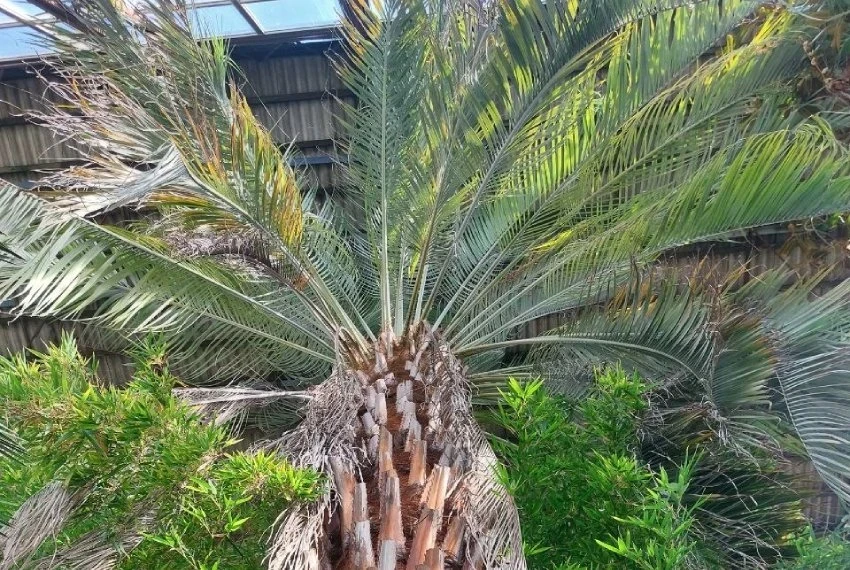
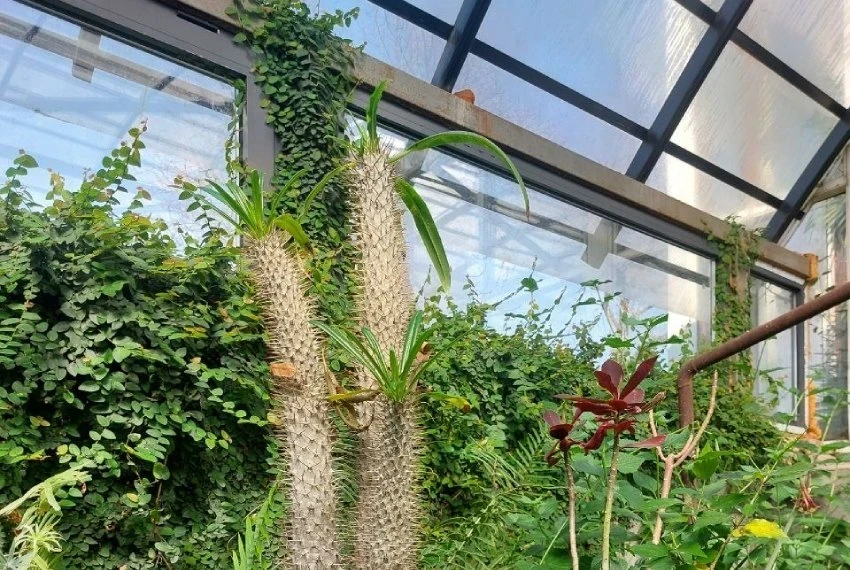
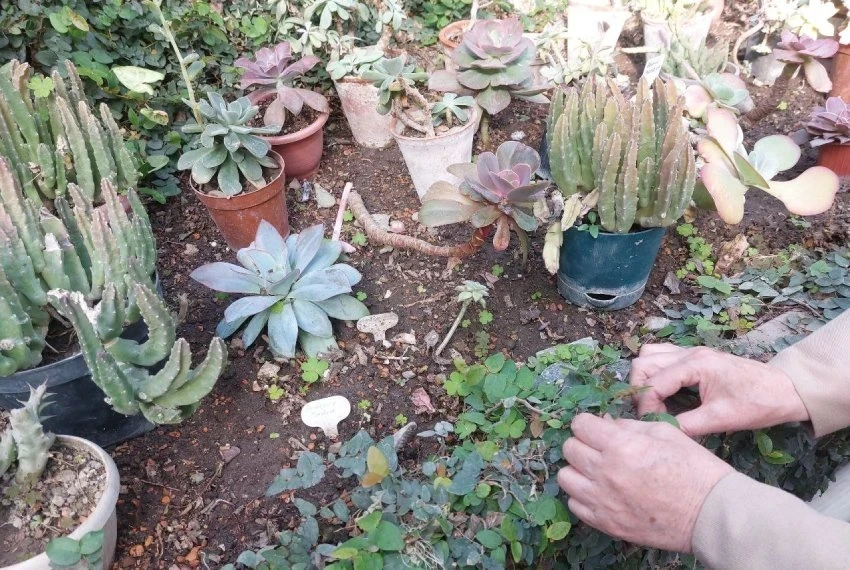
“We have no insects, so we pollinate the plants manually,” says the head of the laboratory, Aisha Turbatova, who has been working here for 43 years.
Protected Area: The Botanic Garden is Not Subject to Development
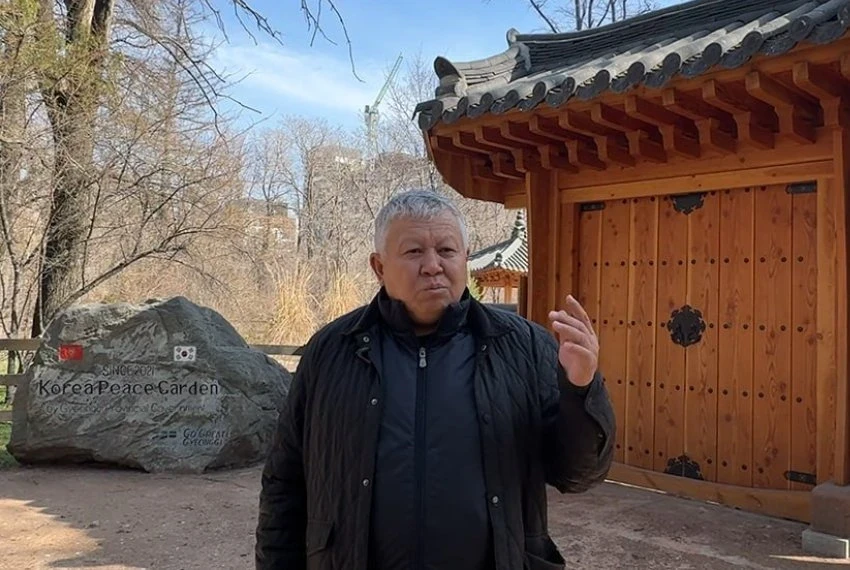
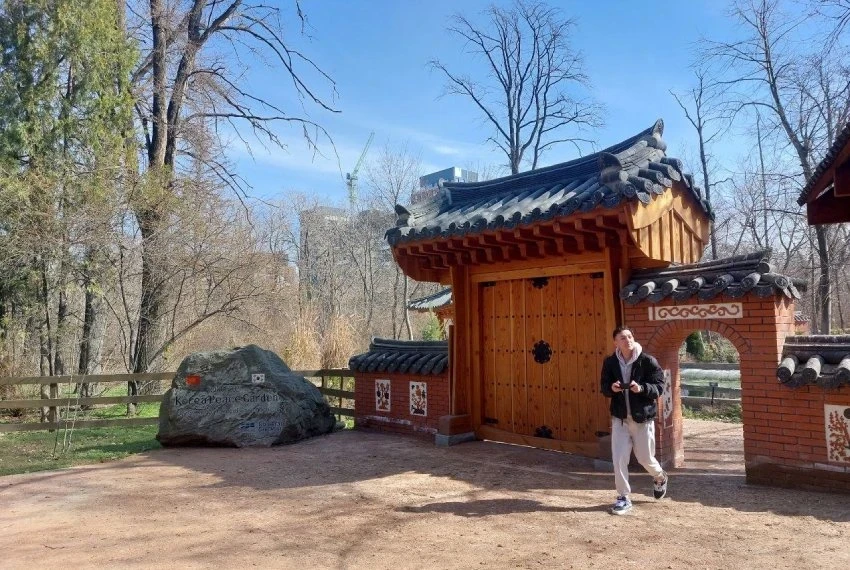
The lower part of the Botanic Garden — the dendrological reserve — is closed to outsiders. Here, more than 4,500 species of plants grow, including sectors dedicated to various countries, among which the Korean Garden of Peace has recently been opened with an arch, a water body, and a gazebo.
In conclusion, the deputy director of the "lungs of the city" assured the citizens:
The status of a specially protected natural area guarantees protection — there will be no development here. We cannot give away a single square meter.
Nurlan Albanov
He also added that the Botanic Garden will continue to exist, and scientific research work will be resumed. Some areas will be reconstructed and opened to visitors. In the lower part of the garden on Akhunbaev Street, running, walking, and cycling paths will appear. Access to the garden is closed during the reconstruction for the safety of visitors.


