
Against the backdrop of these events, experts have begun to express their opinions: from calls for silence among the scandal's participants to assertions that state structures can no longer stop and must see the case through to the end.
24.kg has gathered the opinions of specialists on what concerns them in this situation, why such strict assessments are being voiced, and whether this is a genuine fight against corruption or a new stage in the struggle for power.
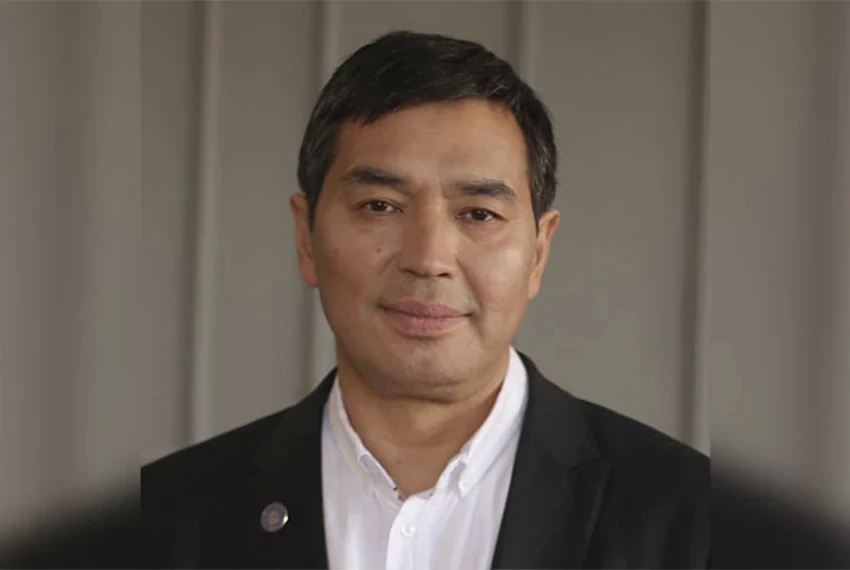
Nurbek Toktakunov: Better to remain silent
Photo from personal archive. Nurbek Toktakunov
Nurbek Toktakunov, lawyer:
— Tai-Muras Tashiev should have exercised his right to remain silent after the revelations from the STS and questioning by the Ministry of Internal Affairs, both before the investigation and before the public.
All his words could be used against his father. Regardless of his justifications, he himself is creating additional evidence confirming that his father, a government member and head of the special services, could have been involved in state purchases of petroleum products for his relatives.
Moreover, in justifying himself, Tai-Muras compares the volume of his purchases with the total production volume at the state oil refinery. But where did he get this data if it is not publicly available? He could only have obtained it through connections with the plant's management, which is evidence of corrupt ties.
If the state has published information about such a clan, it must see it through to the end — all Rubicons have already been crossed.
Zainidin Kurmanov: Corruption as a mechanism of governance
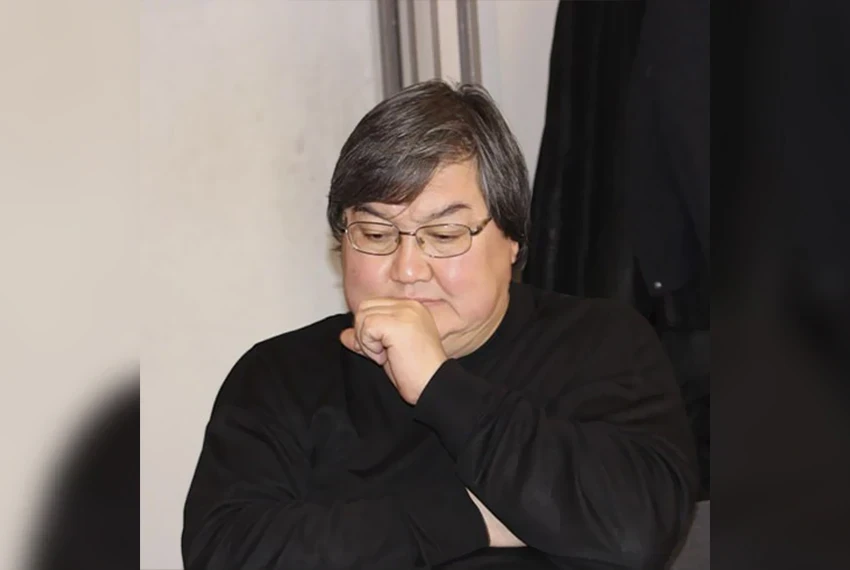
Zainidin Kurmanov, Doctor of Historical Sciences, Professor:
— It’s time to see clearly! This cannot continue. The tax service has uncovered another horrific scheme related to "Kyrgyzneftegaz." In the 90s, this enterprise promised us 300 years of oil independence, but discussions about it have gradually faded. The plant operated, extracted oil, but we were unaware of it.
What is the essence of elite greed? It is not just a matter of "bad people," but a deep systemic problem. Corruption in such societies becomes the norm, not the exception. In traditional cultures, loyalty to one's clan is greater than loyalty to the state. An official sees their position as a resource to help their close ones. In a transitional period, a "legal vacuum" arises where personal connections are more important than laws.
Society does not perceive power as an institution of service. We believe that if the "boss" is not wealthy, it is a sign of weakness, not honesty. Therefore, politicians strive to outdo each other in wealth, gaining approval from the impoverished population. How can we praise thieves?
The fight against corruption is a set of measures, not just one "high-profile arrest." It is necessary to:
Eliminate the human factor through digitalization.
Ensure economic freedom and reduce regulation.
Guarantee the independence of the judiciary and the inevitability of punishment.
Ensure transparency in state procurement and citizen oversight.
Provide decent wages for public servants.
Complete eradication of corruption is unlikely, but a significant reduction in its level is quite achievable. Examples from Japan, Singapore, or Georgia show that with strong political will, the situation can change in a decade. However, without public demand, any reforms may turn out to be an imitation of the fight. People are tired of seeing elites and their children "feasting" on privatized positions.
Musurkul Kabyldekov: A new stage of struggle
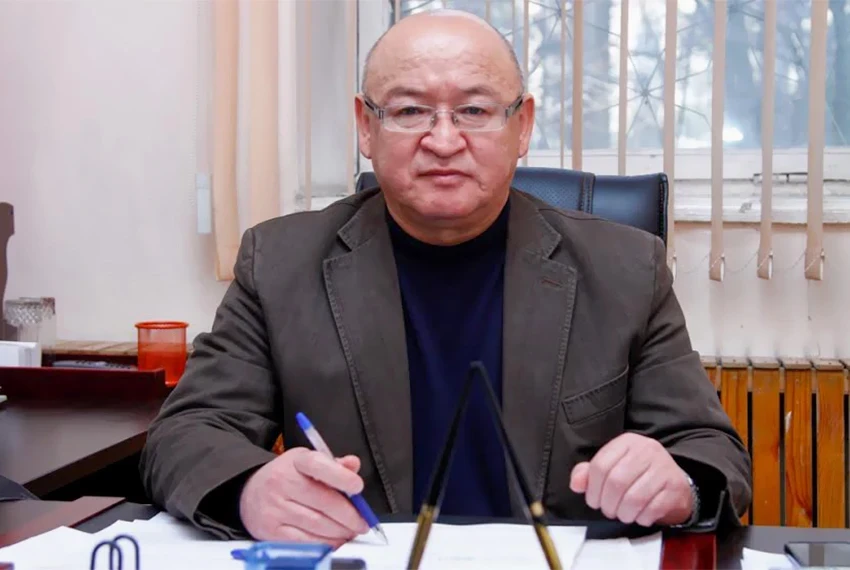
Musurkul Kabyldekov, political scientist:
— The fact that this case has been raised, and by a state body — the Tax Service — says a lot. It indicates a struggle, that the Rubicon between the parties has been crossed. The struggle has entered a phase where neither side can retreat.
If this were a private investigation, it could have been hushed up, but the STS made a statement — a structure that has not previously dealt with this. We see how a state institution is effectively conducting an investigation and voicing such facts. Other supervisory bodies, such as the Prosecutor General's Office, could not remain unresponsive, and as a result, a criminal case has been initiated.
If the facts voiced by the STS are confirmed — and they likely will be, otherwise the service will lose face — it means that everything is coordinated at a high level. Such information does not appear without corresponding decisions. This is already a systemic struggle. It is not only about political rivalry but also about attempting to portray Kamchybek Tashiev as a corrupt individual, initiating a criminal case against him, and effectively excluding him from political life.
All the schemes currently being discussed are somehow related to his relatives — this was known earlier as well. The initiation of a criminal case will likely also involve his son, as once you say "A," you must say "B." As a result, financial flows that previously went into private pockets may start flowing into the state budget, at least for a while, until a final decision is made regarding the company.
From a political standpoint, this signifies the beginning of a serious struggle, and it will be extremely difficult for Kamchybek Tashiev to continue. He has long maintained a pause, which was justified until the key asset was touched. Even in situations involving his circle and accusations of pressure on business, he did not react, citing the inappropriate timing for conflict.
However, after pro-government structures and bloggers began openly accusing the former head of the State National Security Committee of corruption and multibillion-dollar embezzlement, he found himself in a situation where silence is no longer an option.
If he returned to the country without loud statements, it means he came specifically for the fight. The question is where this will lead: to a compromise, seeking "scapegoats," or further escalation.
Given Kamchybek Tashiev's character, his return was expected. Otherwise, he would have completely lost his electorate and exited the political life of Kyrgyzstan. The very fact of his return indicates an intention to defend his positions and protect his loved ones, which corresponds to his behavior.
Most likely, the most interesting events are yet to come. His circle has probably already developed its strategy. The return of the former head of the State National Security Committee is not a spontaneous decision but a carefully considered step. He has serious obligations to supporters, relatives, and people under investigation. In such a situation, remaining abroad would effectively mean excluding himself from the political game — both in the eyes of society and his own supporters.
Tologon Keldibaev: Legality will triumph sooner or later
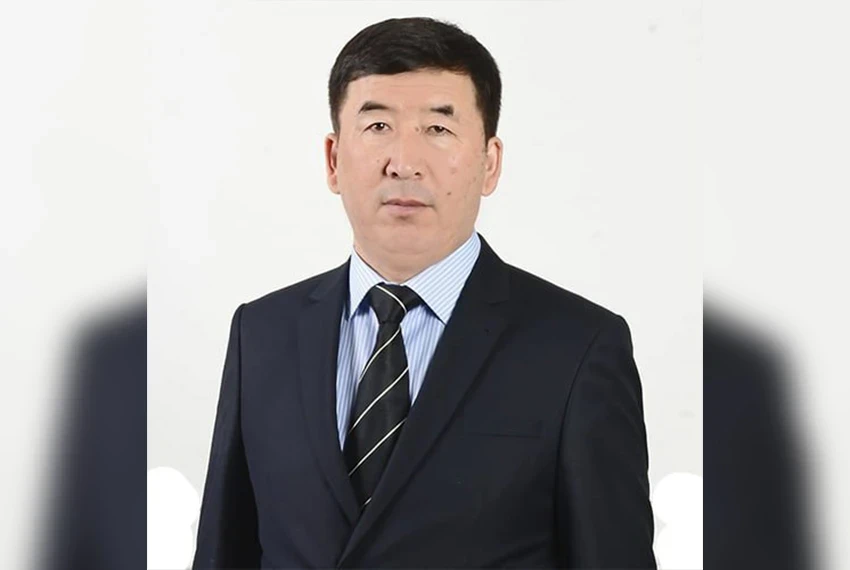
Tologon Keldibaev, political scientist:
— In any government, those around high-ranking officials inevitably arise who commit crimes for personal gain. Regardless of who it is — Tashiev or someone else, his entourage often places their interests above those of the state. Tashiev's entourage may have been involved in corruption and abuse of power.
While Kamchybek Tashiev held the positions of head of the State National Security Committee and deputy chairman of the cabinet of ministers, effectively being the second person after the president, it was impossible to hold people from his entourage accountable. Even if violations were obvious, they preferred to turn a blind eye. After his departure, the tension eased, and entrepreneurs began to openly voice their troubles caused by his actions. Legality may be temporarily absent, but sooner or later it comes into force. I am confident that the actions of the Tashievs will be assessed legally, and the case will be thoroughly investigated.
Although Tashiev has done a lot of positive things, he has also made serious mistakes.
He achieved significant success in the fight against organized crime and corruption, which helped limit corrupt schemes in the social sphere and law enforcement agencies. However, his main problem became the possession of enormous, virtually unlimited power.


