
Initially, his death was characterized as the result of a traffic accident; however, the investigation later reclassified the case as murder. Years of investigation and court proceedings have left questions about what happened unanswered.
Who was Medet Sadykulov
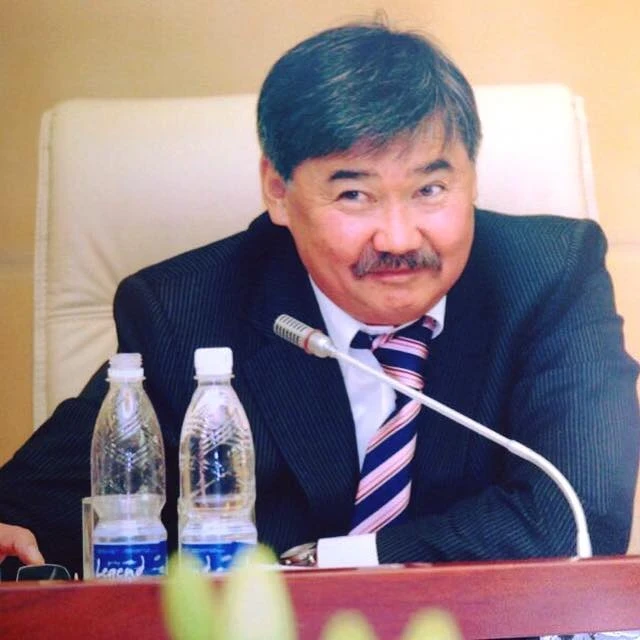
Photo from the internet. Medet Sadykulov
Medet Sadykulov held a prominent position in Kyrgyzstan's political life in the 2000s.
He was the head of the administration for President Kurmanbek Bakiyev and worked in various government institutions under Askar Akayev, as well as representing Kyrgyzstan as an ambassador to Iran.
In political circles, he was considered one of the main power strategists. Nevertheless, in January 2009, he unexpectedly resigned, declining an offer to become the Minister of Foreign Affairs.
After leaving the president's administration, Sadykulov began to actively engage with the opposition.
Chronology of the tragedy
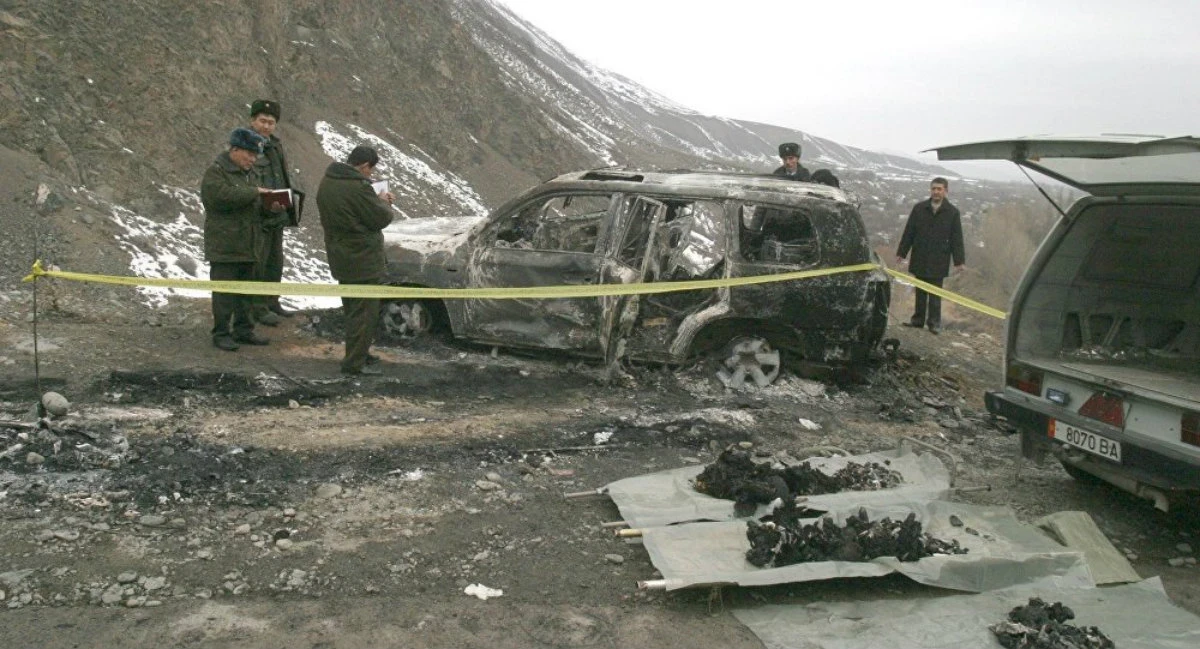
Approximately at 2:20 AM on March 13, their car crossed the border into Kyrgyzstan. According to the investigation, between 3:00 and 4:00 AM, unknown individuals may have approached them on the road. Later, a theory of possible abduction emerged.
In the morning, a burned Lexus was found on a mountain road near Bishkek, containing the bodies of Sadykulov, Slepchenko, and Sulaymanov.
Initially, law enforcement stated that there had been a collision with another vehicle, after which the car caught fire, and the tragedy was classified as a traffic accident.
Doubts about the traffic accident version
Immediately after the tragedy, doubts arose about the official version. Experts and politicians noted the following oddities:
- the car was completely burned;
- the circumstances of the collision remained unclear;
- the victims' bodies were severely burned;
- there was a lack of convincing evidence of a typical traffic accident.
Subsequently, the investigation suggested that the accident might have been staged to conceal a murder.
Sadykulov's death occurred against the backdrop of serious political tension in the country. In early 2009, the conflict between President Kurmanbek Bakiyev and the opposition escalated, with the opposition accusing the authorities of usurping power and persecuting political opponents.
Analysts believe that after leaving the administration, Medet Sadykulov could have become a key figure in uniting opposition forces.
These circumstances intensified suspicions about the political motivation behind his murder.
After the overthrow of the government in Kyrgyzstan in April 2010, the investigation into Sadykulov's murder was resumed. The investigation concluded that the tragedy was not an ordinary accident: the murder, according to law enforcement, could have been disguised as a traffic accident.
According to the investigation materials, Medet Sadykulov, Sergey Slepchenko, and Kubat Sulaymanov were abducted, subjected to brutal torture, and strangled.
After that, their bodies were placed in a vehicle, taken to the road, and set on fire.
Among the possible masterminds were mentioned Janish Bakiyev, the brother of President Kurmanbek Bakiyev and former first deputy head of the National Security Service. The executor, according to the official version, was Sanjar Saparbekov, who had previously worked in special units. He was detained in Bishkek only in November 2021, after which the case was again sent to court.
In November 2022, the Alamedin District Court found him guilty on several counts, including murder and unlawful deprivation of liberty, and sentenced him to 14 years in prison. The court did not satisfy part of the other charges.
Death of one of the suspects
In the early stages of the investigation, one of the suspects was found hanged in a detention center, which again undermined trust in the situation and raised questions about whether Sadykulov's murder was related to the struggle for power.
His death became one of the most high-profile events during Kurmanbek Bakiyev's rule. A year later, on April 7, 2010, a revolution occurred in the country that led to a change of power. For many experts, the Sadykulov case became a symbol of political struggle and instability of that time.
More than 15 years have passed since the tragic events of March 13, 2009, but they remain one of the most mysterious and sorrowful pages in the history of Kyrgyzstan.


