
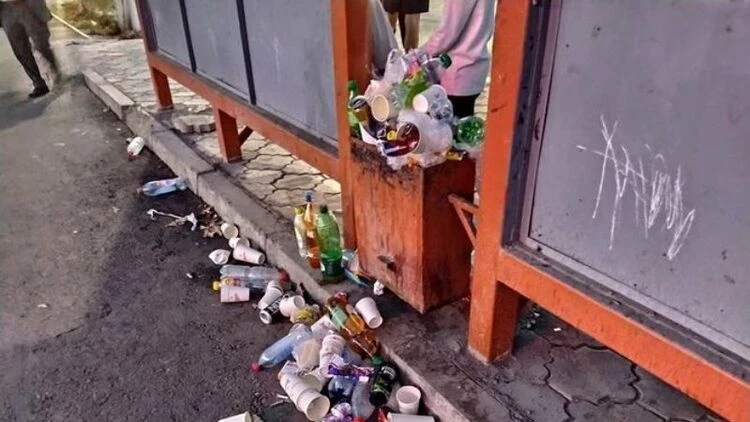
In Bishkek, trash bins play an important role in maintaining the cleanliness of the city streets. These metal structures are installed and serviced by the municipal enterprise "Tazalyk." However, residents of the capital are increasingly noticing that the number of bins has noticeably decreased.
The current situation with bins: data from the city hall
According to information provided by the city hall, there are over 2300 bins in Bishkek, located in parks, squares, at stops, and along major highways — in places where the highest number of people gather.The distribution of bins by districts is as follows:
- Oktyabrsky District — about 850 bins;
- Leninsky District — 218 bins;
- Pervomaysky District — 665 bins;
- Sverdlovsky District — 630 bins.
Every day, Tazalyk employees monitor the condition of the bins and handle garbage collection.
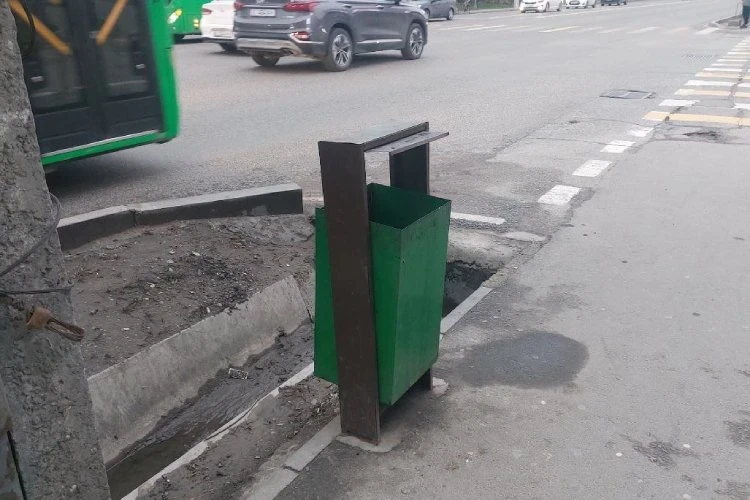
Despite this, many citizens believe that the existing number of bins is insufficient.
Shortage of bins: inconveniences for residents
On the busy Baytik Baatyr Street, instead of two bins, there is only one left, and a similar picture is observed in other areas. For example, on the stretch from Kulatov Street to Bokonbaev Street, there are only two bins over the entire kilometer. This situation is widespread, forcing people to carry their trash with them or hide it in bags.When the distance to the nearest bin is great, not everyone is willing to carry their trash, leading to packaging, bottles, and other waste ending up on the ground, lawns, and in ditches.
Residents are asking: is this a result of cost-cutting or indifference to the problem? After all, collecting trash from bins is easier than cleaning it from sidewalks.
In rainy weather, trash thrown into ditches ends up back on the streets.
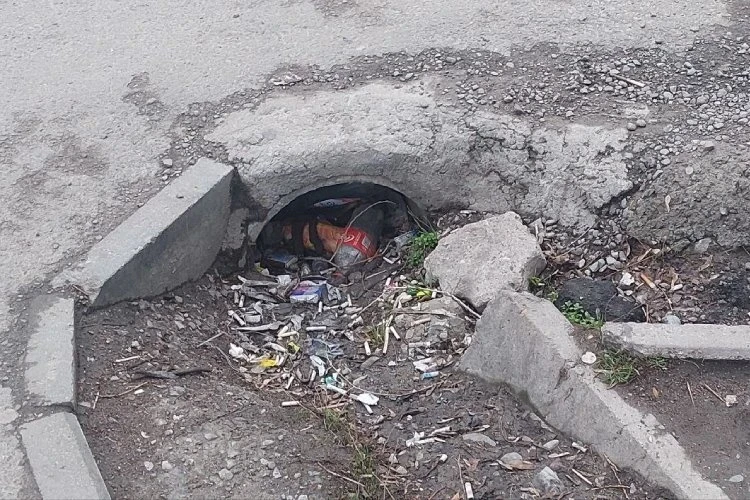
It creates a vicious cycle: although the trash is cleaned up, it reappears.
What happens to the removed bins?
In summer, the problem becomes particularly acute. In parks and boulevards, bins fill up quickly, and trash accumulates nearby.Some bins have been dismantled, while others have been damaged in accidents and are not always restored. The city hall noted that there is no accurate accounting of dismantled bins. Usually, they are restored and installed in other locations, so separate statistics are not maintained.
Theses from "Tazalyk": how the lack of bins affects landfills
The director of "Tazalyk," Zholdosh Chushtukov, explained that bins are intended for small waste, such as cigarette butts and wrappers. According to him, some residents throw household waste into them, thereby filling them up faster.
There are enough trash bins in the city. But we have noticed that more trash accumulates around them, especially in the summer.
Zholdosh Chushtukov
Previously, bins were installed every 50 meters, but now the distance between them has increased. Nevertheless, they still exist at intersections and stops, Chushtukov adds.
According to the observations of the enterprise's workers, in some places where bins have been dismantled, spontaneous landfills have disappeared. The installation of bins continues in newly annexed areas of the city.
Chushtukov also noted that if residents point out specific places where bins are needed, the enterprise is ready to consider such proposals.
Comprehensive approach: fines and awareness as solutions
Most residents believe that the problem should be addressed comprehensively — by installing additional bins in necessary places, regularly cleaning them, conducting educational work with the population, enhancing control, and introducing fines for littering in unauthorized places. It is also important to periodically clean the ditches so that waste does not end up back on the streets.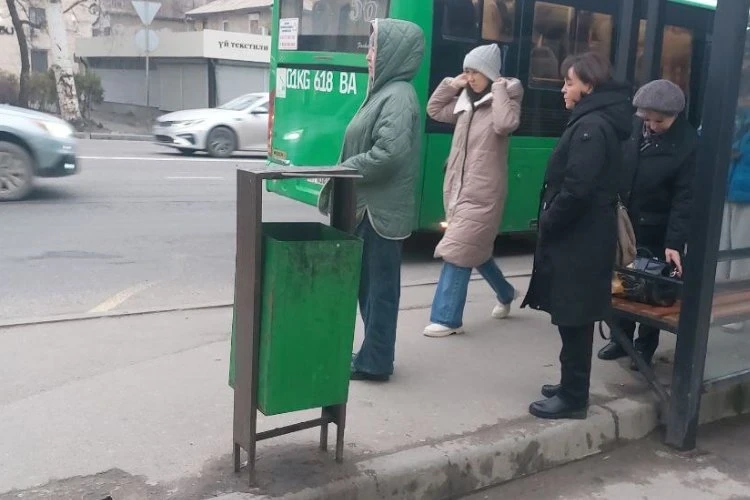
Trash bins are part of a system that affects the health, appearance, and comfort of the urban environment. However, the work of municipal services is not enough. If some strive to maintain order while others continue to litter sidewalks and ditches, the situation will not change.


