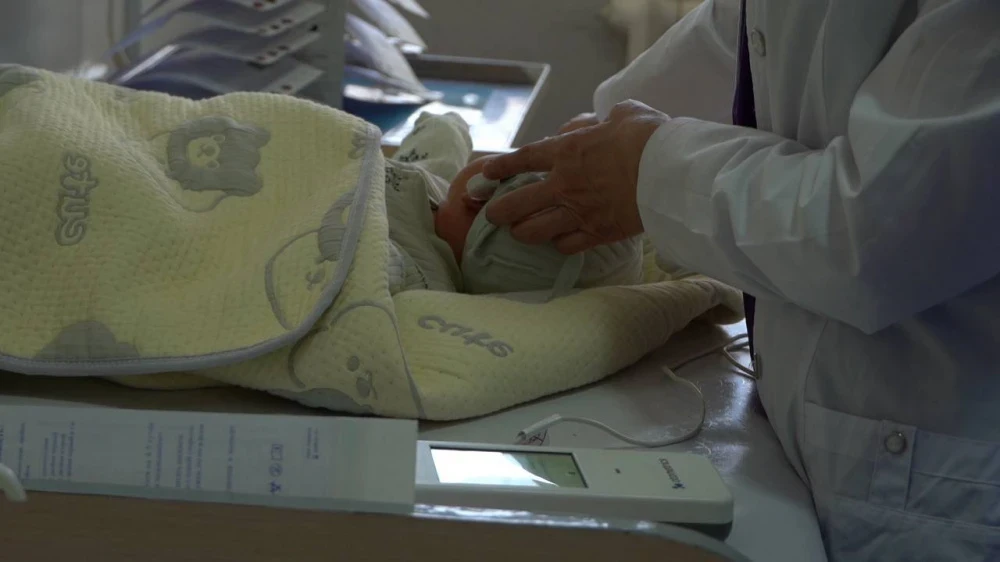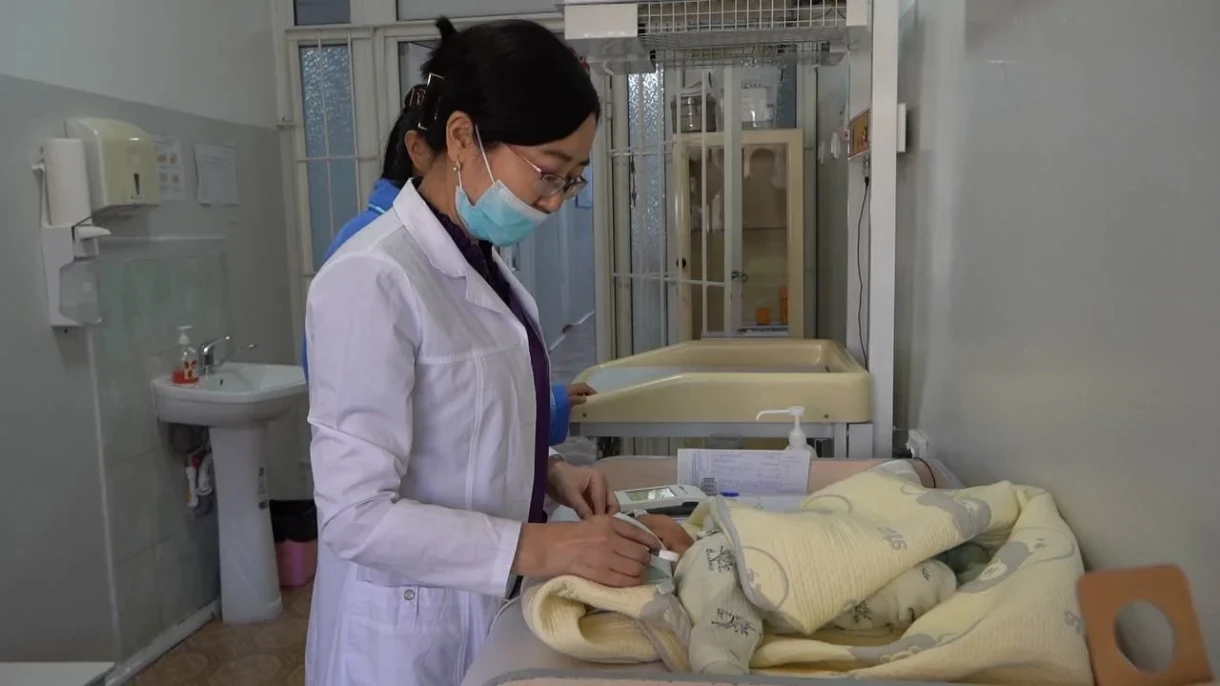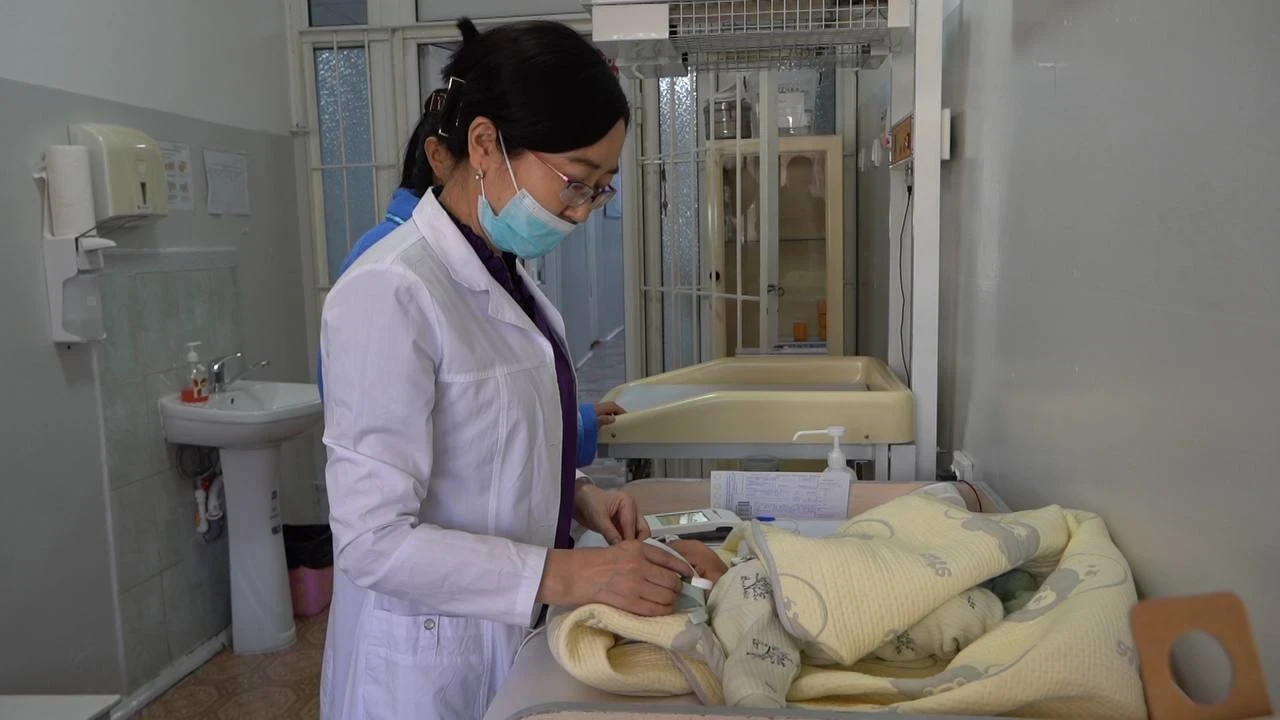
According to the agency, in 2025, more than 30,000 newborns underwent screening.
According to data from the World Health Organization, one to three children out of a thousand have hearing impairments.
Considering that approximately 138,000 newborns are born in Kyrgyzstan each year, it can be assumed that between 130 and 300 children may be born with congenital hearing disorders. Therefore, early diagnosis is vital, as timely detection and rehabilitation significantly increase children's chances for full development and successful adaptation in society.
Hearing checks should become a mandatory procedure for all newborns, as hearing plays a critical role in the formation of speech, thinking, and communication skills.
Photo by the Ministry of Health of the Kyrgyz Republic
Experts note that previously, hearing impairments were often detected only at the age of 3–6 years, when the possibilities for effective correction were limited. However, the situation is gradually improving now.
Audiological screening is currently being conducted in several maternity hospitals located in Bishkek, as well as in the Osh, Jalal-Abad, and Issyk-Kul regions. If the necessary equipment is not available in the region, children are referred to the National Center for Maternal and Child Health (NCMCH) via electronic referral for examination by audiologists.
As explained by ENT doctor and project manager for audiological screening in Kyrgyzstan Munar Beyshenova, a newborn's hearing should be checked before they reach six months of age. Incorrect or delayed detection of the problem can slow down speech development or lead to its cessation, and rehabilitation at a later age becomes significantly more complicated.
The audiological screening program began its work in Kyrgyzstan in 2017.
The initiative started with the support of TIKA, and its subsequent development became possible thanks to the assistance of UNICEF, which provided medical institutions with the necessary equipment.
Currently, the examination takes place in several stages. In the first stage, newborns are checked in maternity wards. If the child does not pass the initial screening, a repeat examination is scheduled within 7–30 days, as there may be fluid in the ears or technical errors.
If the repeat check does not provide a clear picture, the baby is referred for in-depth diagnostics, which allows for an accurate assessment of hearing status and, if necessary, the initiation of treatment and rehabilitation.
Additional materials Children in the Shadows. How Cochlear Implants Change Lives in Kyrgyzstan
After completing the diagnostics, specialists develop a treatment and rehabilitation plan. For children with partial hearing loss, hearing aids and comprehensive rehabilitation are prescribed. In cases of complete deafness, the child is referred for cochlear implantation, which has been performed at the NCMCH since 2018. Currently, these operations are conducted free of charge thanks to support from Qatar, and after the operation, children continue to undergo long-term rehabilitation under the supervision of specialists.