
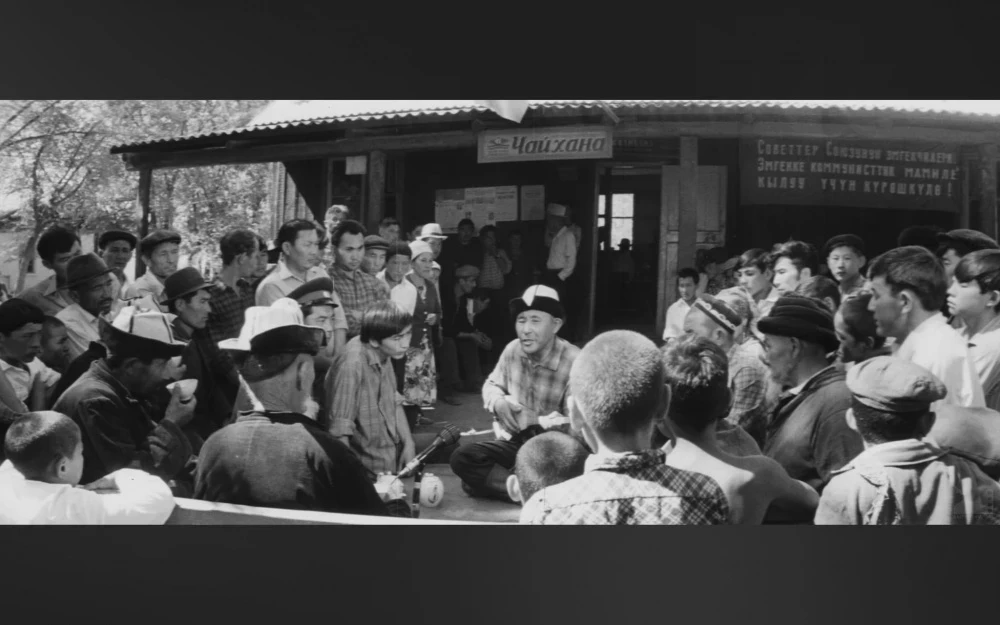
According to information from the director's relatives, he was recognized as the first builder of the Toktogul Hydroelectric Power Station, as evidenced by a certificate and publications in the newspaper "Pravda." Vidugiris did not just observe the construction process; he actively participated in it from the earliest stages, going through the entire journey with the construction team.
In 1979, the well-known public figure and director Gemma Firsova noted that Vidugiris's dilogy represents an outstanding phenomenon in the world of documentary cinema.
The film's plot centers not only on the scale of the construction of the Toktogul Hydroelectric Power Station but also on the stories of people: builders, shepherds, local residents, and archaeologists whose lives were closely connected with the river and changed along with it.
Chingiz Aitmatov also highly praised the film. At the IV Congress of Filmmakers of Kyrgyzstan in April 1982, he said: "...I once again remind you of Vidugiris's works to inspire young graduates of VGIK. Learn from such people, seek your path in real life, not in a fictional plot."
Today, more than half a century later, "Naryn Diary" is perceived as a unique testimony of its time. The modern digital restoration has allowed the film to regain its original depth of image, reopening the history of the people who built the Toktogul Hydroelectric Power Station, as well as the story of the director himself, who was not a distant observer but an active participant in the events. This is what makes the film so valuable.


