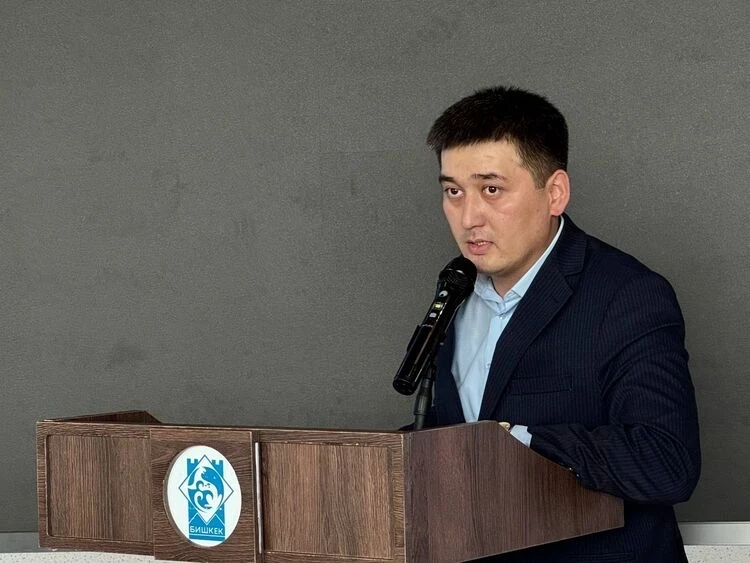
The problem of air pollution in Bishkek continues to be one of the main environmental challenges. In response, the city administration is taking comprehensive measures aimed at improving the environmental situation and reducing the share of harmful substances in the atmospheric air. This was stated by the chief specialist for ecology and urban environment improvement, Nursultan Tashybek uulu.
Priority of gasification in environmental policy
According to Nursultan, studies by international organizations show that the main factors contributing to air pollution in Bishkek are: the use of coal, exhaust gases from old cars, as well as emissions from the Bishkek CHPP and industrial enterprises.The ecologist emphasizes that a key aspect is the gasification of settlements and the transition to environmentally friendly heating systems.
Gasification has been completed in 54 out of 105 residential areas. A total of 69,500 homes are connected to gas supply, of which 52,300 already use gas, with 75% of them being heated by gas boilers.
The interest rate on preferential loans for gasification has been reduced from 8% to 3%, and educational work is being conducted among the population. In cooperation with Gazprom Kyrgyzstan LLC, a gasification plan for the remaining settlements is being developed until 2030.
In addition, the government and the city administration have introduced a ban on the import, sale, storage, and use of bulk coal in the capital.
Reduction of old cars
According to the State Center for Vehicle Registration, there are 468,700 vehicles registered in Bishkek.The ecologist noted that since 2021, the number of cars older than 15 years has begun to decrease. In 2021, there were 353,500 such cars, and by 2025, their number is expected to decrease to 321,500.
Public transport modernization
Currently, there are 1,500 environmentally friendly buses operating in Bishkek, of which 1,400 run on gas.In 2025, 120 electric buses were purchased, and more than 3,000 diesel minibuses were removed from the central streets of the city.
For charging electric vehicles, 82 plots of land have been leased, and 47.1 kilometers of bike paths have been constructed to develop bicycle infrastructure.
Large-scale greening efforts
In 2025, it was planned to plant 12,500 saplings, but in fact, 18,800 were planted. Of these:- 10,700 deciduous;
- 5,000 coniferous;
- 3,000 shrubs.
In educational institutions in Bishkek, 3,100 saplings have been planted.
To restore outdated irrigation systems, more than 5,000 square meters of irrigation channels and over 25,000 square meters of water pipes have been laid.
The dynamics of tree planting from 2021 to 2025 is as follows:
- 2021 — 9,999;
- 2022 — 13,000;
- 2023 — 14,500;
- 2024 — 12,485;
- 2025 — 18,755.
River cleaning and landfill elimination
- The mechanical cleaning of the riverbeds of the Alamedin and Ala-Archa rivers was carried out actively, with 20 kilometers cleaned and over 107,000 tons of garbage removed.
- Old landfills have been completely cleared, and over 3,000 trees have been planted on 5 hectares, creating a green zone.
- The first eco-technological power plant in Central Asia has been put into operation, which processes 3,000 tons of waste per day and generates 124,000 kilowatt-hours of electricity, installing 14 screw pumps.
By 2025, electricity supply will be ensured for five educational institutions. New scrubbers and electrostatic filters will be installed at the CHPP annually.
Modernization of the CHPP and cleaning system
At the municipal enterprise "Bishkek CHPP," devices for capturing flue gases and electrostatic filters have been installed, which allows for a reduction in emission levels. A system for removing sulfur dioxide from flue gases has been implemented at energy block No. 3, and the reconstruction of the "Bishkekselmash" furnace has become an important step towards modernizing the heating system and improving its efficiency.The first phase of the station currently provides heating and hot water to 13,000 consumers.
Nursultan Tashybek uulu noted that the Bishkek city administration is applying a systematic approach: from gasification and transportation modernization to the implementation of modern cleaning technologies and large-scale greening. These measures demonstrate a gradual movement towards improving air quality in the capital.
Work continues, and further steps are outlined in plans up to 2030.