
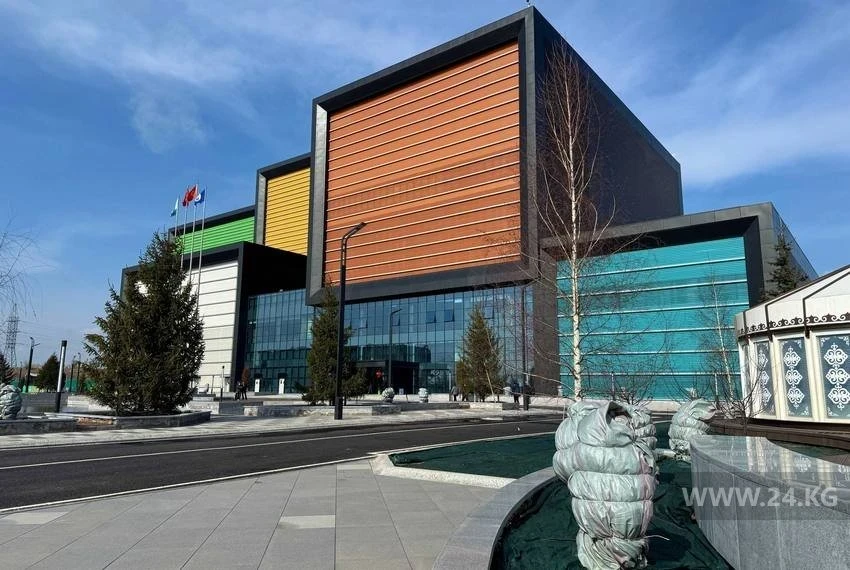
Photo 24.kg. Waste processing plant
The mayor emphasized that the decision to hold the meeting at the plant's location was made so that participants could visually familiarize themselves with its operations.
According to Junushaliev, the plant has a processing capacity of 1,200 tons of waste per day and is capable of producing up to 30 megawatts of electricity. Currently, it consistently generates 27–29 megawatts, which is an important factor given the energy shortage in the city.
The total investment in the construction of this facility amounted to 98 million dollars.
Aibek Junushaliev noted that the plant complies with environmental standards of both the European Union and China, with the Chinese norms being stricter.
At the plant, 80 specialists from China and 34 local workers are employed, who underwent training at the Kyrgyz State Technical University named after I. Razakov. This has allowed for the preparation of qualified personnel to work at the facility.

During the meeting, the mayor also summarized the previous session of the Environmental Council, noting that one of the tasks was to improve the city's greenery. The indicators for tree planting exceeded the planned figures: instead of 15,000 seedlings, 18,000 trees were planted in the capital, and additional plantings were conducted in educational institutions and public spaces at the request of citizens.
In 2026, it is planned to plant 50,000 trees. The seedlings will first be grown in nurseries and then transplanted to the city.
Aibek Junushaliev
The public hearings addressed issues related to improving air quality in Bishkek and further steps for the development of the capital's ecological infrastructure.


