
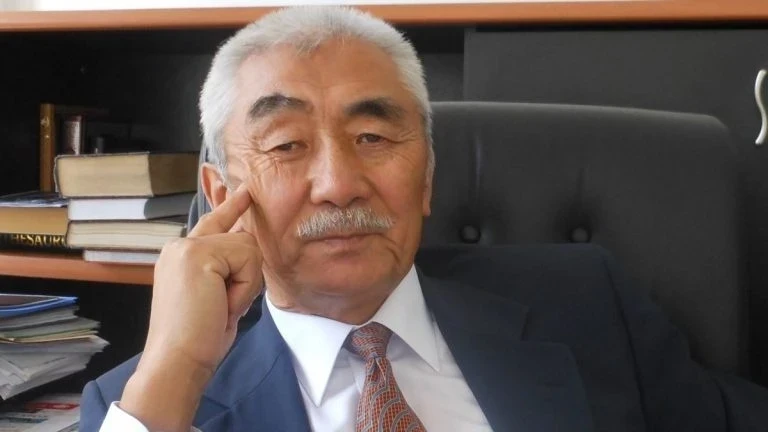
The Academy of Tourism is a private higher educational institution focused on training personnel for the hotel, service, and tourism industries. The educational process here is built with consideration of labor market requirements and is aimed at practical training of students, their early immersion in the professional environment, and active collaboration with employers. The educational programs cover areas such as tourism, management, hotel business, international relations, and linguistics, which allows for a comprehensive understanding of the industry. The rector of the Academy of Tourism, Melis Chormonov, spoke about key aspects of education, the importance of practical training, and collaboration with organizations in an interview for the publication VB.KG.
- Am I correct in understanding that your educational institution is called the Academy of Tourism?
- Yes, that is correct. We are officially named the Academy of Tourism, which emphasizes both our status and specialization. We were created specifically to train specialists for the tourism and related sectors.
- Is the Academy a private university?
- Yes, we are a private higher educational institution. This format allows us to flexibly update educational programs and respond quickly to changes in the tourism sector while adhering to state educational standards.
- What areas of training does the Academy focus on?
- Currently, we train students in five areas: tourism, management, hotel business, international relations, and linguistics. All these fields are interconnected, as tourism encompasses management, service, international relations, and language training. This is why we have created a comprehensive training system.
- What aspect of the university's work have you focused on in recent years?
- We have been actively working on developing and improving educational programs to meet the expectations and requirements of employers in the tourism sector. As the tourism industry evolves rapidly, programs must constantly adapt to the real needs of the market.
- What do you think is most important for employers when hiring graduates?
- Employers primarily pay attention not only to theoretical knowledge but also to the graduate's ability to quickly adapt to the real working environment. Therefore, we emphasize the combination of theory and practice as much as possible within the framework of state standards. We strive to bring the educational process as close as possible to real professional life.
- How is the practical training of students organized at the Academy?
- We have established connections with tourism organizations for which we prepare specialists. We also have our own sports and tourism campus outside the city, which has all the necessary infrastructure: cafes, recreation areas, and sports facilities such as golf courses. One day a week, students practice at this campus, and another day they work in cafes, restaurants, and tourism companies. This allows them to immerse themselves in a real professional environment.
- What role does the combination of study and work play for students?
- We provide students with consultations, helping them understand how to best build their career paths and where to gain practical experience. Students work on-site and then discuss the results of their activities in classes, analyze their experiences, and share impressions with their classmates. This is an important part of the educational process.
- In what areas does the Academy plan to develop in the near future?
- Our plans are focused on student employment. We strive to ensure that as many students as possible undergo internships and find jobs in sought-after tourism establishments. The quantity and quality of such internships and job placements are the main indicators of our work.
- Which organizations do you collaborate with?
- We collaborate with various educational institutions and enterprises in the tourism sector. Collaboration is established based on needs, and we are always open to new partnerships.
- Is there an opportunity for students to intern abroad?
- Yes, such opportunities exist. However, we do not impose strict limits on countries or geographical locations. We focus on market conditions, and the student chooses their path, while our task is to provide them with the necessary tools and knowledge.
- What difficulties might students face in the labor market?
- Students face the same problems as all novice specialists. They may not get a job, or they may, on the contrary, receive several offers. It all depends on their preparation, motivation, and personal qualities.
- Does the Academy engage in the employment of its graduates?
- We do not engage in direct employment, but our task is to prepare students so that they can find jobs independently. We provide consultations and guidance, but the final decision regarding career choice remains with the graduate.
- What do you think is necessary to improve the quality of higher education in the country?
- Legislation in the field of education is constantly being updated, which is a positive step. The world has already accumulated rich experience in training specialists and in the interaction of education with production. It is important for us that the domestic education system meets these global standards.
- What wish would you like to address to the Academy and the students?
- We wish that students, both during their studies and after graduating from the Academy, successfully find jobs, feel confident in their profession, and are satisfied with their life choices.


