
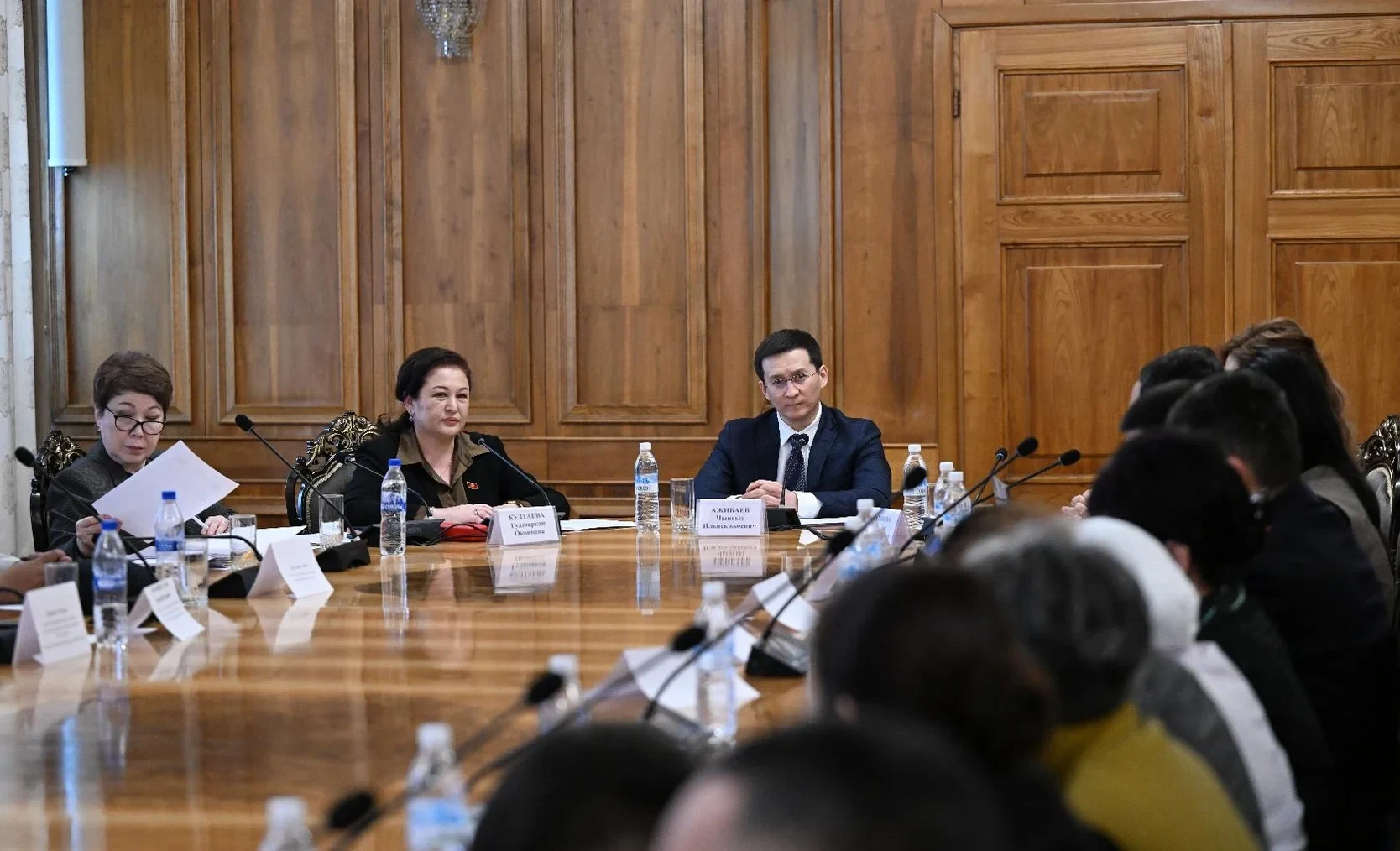
On February 6, the First Deputy Speaker of the Jogorku Kenesh, Chyngyz Azhybaev, participated in a round table titled "Family and National Values - The Main Support of Society." The event gathered a significant number of participants, including deputies Gulsharkan Kultaev, Gulya Kozhokulova, Erkeaiym Seitkazieva, Gulzhan Satieva, Tabyldy Muratbekov, as well as a representative of the UN Women structure in Kyrgyzstan, Sayeda Sadik, and representatives of various public organizations and ministries.
In his speech, Azhybaev noted that issues related to family and national values remain relevant in modern times. He emphasized that the Kyrgyz people have always placed great importance on family traditions, which play a key role in the cultural and spiritual development of society. He also added that the Jogorku Kenesh actively supports initiatives aimed at strengthening the institution of the family.
According to Kultaev's opinion, the family is a fundamental element of a stable and healthy society.
She highlighted the importance of the state's role in supporting families and preserving moral values, adding that the goal of the round table is to discuss the contribution of families and national values to social stability and the preservation of cultural identity.
Representatives of government bodies shared information about comprehensive measures aimed at protecting the rights of women and children, as well as preventing and combating domestic violence. The round table participants agreed that many family problems have a social nature.
Among the most common causes of family breakdown, unemployment, alcoholism, and domestic violence were mentioned. During the discussion, specific steps were proposed to strengthen the institution of the family and protect the rights of women and children. Participants emphasized the importance of a comprehensive approach and highlighted the need to improve the legal and financial literacy of the population, which will help citizens in labor migration better understand their rights and avoid economic and social risks that contribute to conflicts within families.


