
The cooperation between Altai State University and the Kyrgyz National University named after Jusup Balasagyn has become a model of long-term scientific interaction in the Eurasian region. Within the framework of the project, scientific research, expeditions, forums are conducted, and the preparation of a multi-volume publication "Chronicle of Turkic Civilization" is underway. Summer schools for students and graduate students are also being created, which contributes to the development of Altaic studies and Turkology, forming an integrated scientific platform for Central Asian countries and Russia.
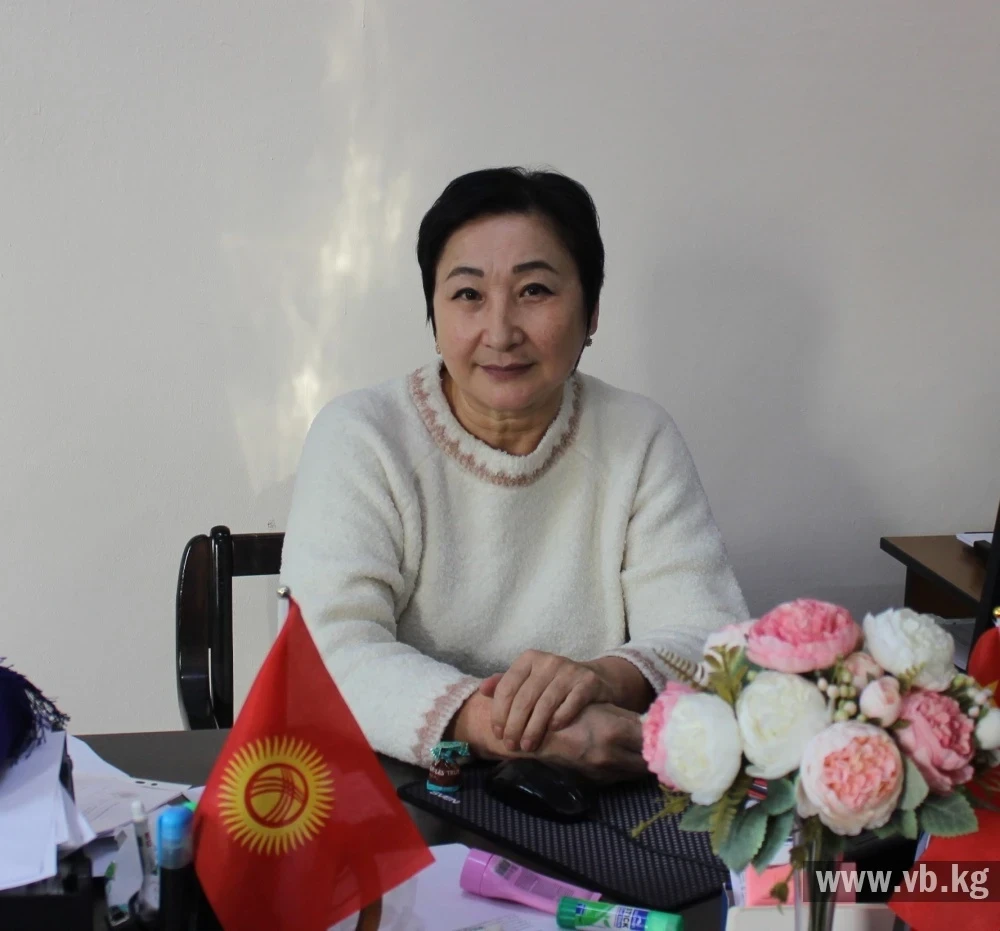
Doctor of Historical Sciences, Professor, and Head of the Department of Regional Studies and Kyrgyz Studies, Omurova Jamyikat Orozobekovna, spoke to VB.KG about the progress of cooperation, the implementation of various projects, and current research, as well as the strategic significance of work within the framework of "Great Altai".
- How did your cooperation with Altai State University begin?
- We began our cooperation in 2013 when a cooperation agreement in the field of education and science was signed between the universities. In the same year, a program in the field of "regional studies" was approved, which marked the beginning of the preparation of master's students in this area.
In 2017, an international forum on the topic "Altai Civilization and Related Peoples of the Altai Language Family" was held in Kyrgyzstan, which involved scholars from several countries, including representatives from Altai University. This event laid the foundation for closer scientific cooperation.
- What projects have been implemented within the framework of your cooperation?
- In 2019, the project "Turkic World of Great Altai: Unity and Diversity in History and Modernity" was launched, covering six areas: history, ethnography, archaeology, jurisprudence, philology, and media space. Our historians, ethnographers, and philologists are actively involved in this project. Despite the challenges posed by the pandemic in 2019-2020, after it ended, our cooperation resumed, and since 2021 we have begun conducting joint expeditions first in Kyrgyzstan and then in the Republic of Altai. The results of the scientific work and expeditions have been quite significant.
– What are the results of the international forums within the project?
- The project includes scientific forums that are held every two years. The first forum took place in 2021, and its subsequent results were discussed in 2023 and 2025. At the fourth forum, the multi-volume publication "Chronicle of Turkic Civilization" was discussed, the first volume of which was published in 2023, covering the VI–XII centuries, while the second volume is planned for 2025 and will be dedicated to the XIII–XVII centuries. Work on the third volume, which will cover the XVIII–XIX centuries, has already begun.
- How has cooperation changed since its inception?
- Cooperation has noticeably expanded. While in 2019 it only covered Kyrgyzstan and Russia, now scholars from Central Asia — Uzbekistan, Kazakhstan, and Mongolia, as well as periodically from Azerbaijan, Turkey, and Hungary, are involved in the project. Russia remains the main partner, but the geography of the project has significantly increased, covering the entire Eurasian region.
- How are conferences conducted within the project?
- In 2023, we held the first international conference at KNU named after J. Balasagyn on the topic "Political, Socio-Economic, and Ethnocultural Processes in Eurasia in the Medieval Period," dedicated to the opening of our center for Altaic and Turkic studies "Great Altai." Subsequently, the conferences became annual, and in 2024 and 2025 we organized them at our university, while this year we plan to hold a conference in Samarkand, where a representative center has also been opened.
Three international conferences have been held at the center, and various ethnographic and archaeological expeditions have been organized, which have become an important part of our research.
- What are the directions of expeditions within the project?
- The expeditions include ethnographic and archaeological research, which were initially conducted in Kyrgyzstan, then in the Republic of Altai, and currently in Uzbekistan. These expeditions take place annually in the summer and demonstrate high scientific results thanks to cooperation with Altai State University.
- How do you involve youth in the project?
- Young people play a key role in our project. Every year we conduct summer schools and include students from Kyrgyzstan, Russia, and Kazakhstan in the expeditions. There is a separate youth section at the forums for presenting their work, which is important for forming a new generation of researchers who continue to study Turkic civilization and the Altai space.
- What research is being conducted on the topic of the connection between Kyrgyz people and Altai?
- This direction is one of our main areas of research. There are many hypotheses that the historical homeland of the Kyrgyz is connected to Altai. During the first forum at Altai State University, we noticed similarities between the Altai and Kyrgyz languages, which allowed us to easily understand each other. Ethnographic studies confirm this: many traditions and cultural features have been preserved in this region. Archaeological excavations provide new valuable data, allowing us to accurately determine the historical periods during which the Kyrgyz inhabited this territory and what types of economic activities they engaged in.
– What experience have you gained from Altai University?
- We have adopted an approach to the comprehensive organization of interdisciplinary research. In the "Great Altai" project, specialists from various fields work as a single team, which has significantly increased the effectiveness of our research. Additionally, we have adopted the experience of preparing large collective scientific publications, such as the multi-volume "Chronicle of Turkic Civilization," which has allowed us to effectively organize scientific editing and peer review. Working with young researchers has also become an important part of our experience, and we successfully apply this practice.
The cooperation between KNU named after J. Balasagyn and AltSU has become a significant example of interaction in the scientific and educational spheres. Participation in such projects not only contributes to the development of scientific research but also strengthens cultural and academic ties between the countries of the region. The "Great Altai" project represents not only interaction between universities but also full-fledged intergovernmental cooperation that promotes integration and the development of international relations.


