The art of Kyrgyzstan is often associated with ethnosymbolism or social protests. However, Edilson's exhibition offers a new path — an intellectual analysis of the psyche. The artist, coming from the business sphere, applies a scientific approach in his works, creating what Western critics may characterize as "neuroaesthetics." Each painting is accompanied by a description, adding uniqueness to the exhibition.
Colleagues and fellow artists note that Edilson's success highlights a significant trend: contemporary art from Kyrgyzstan is beginning to acquire international value. It is no longer just "souvenir" or "local," but finds its place in a global context where authenticity and relevant themes, such as mental health awareness, are valued.
Emotional Intelligence and the Capitalization of Art
— Why did you decide to depict a person through their emotions and feelings rather than through their external appearance?— The idea began to form ten years ago. At a conference, I heard that emotional intelligence would become an important competency of the future. This prompted me to delve deeper into the topic. Previously, I thought emotional intelligence was related to empathy and communication. But I became interested in how emotions influence decision-making and quality of life.
Reading the works of brain researchers like Daniel Goleman and studying gestalt psychology led to unexpected discoveries. I realized that to understand one's own emotions, they need to be expressed; for example, anger — it is important to let it out.
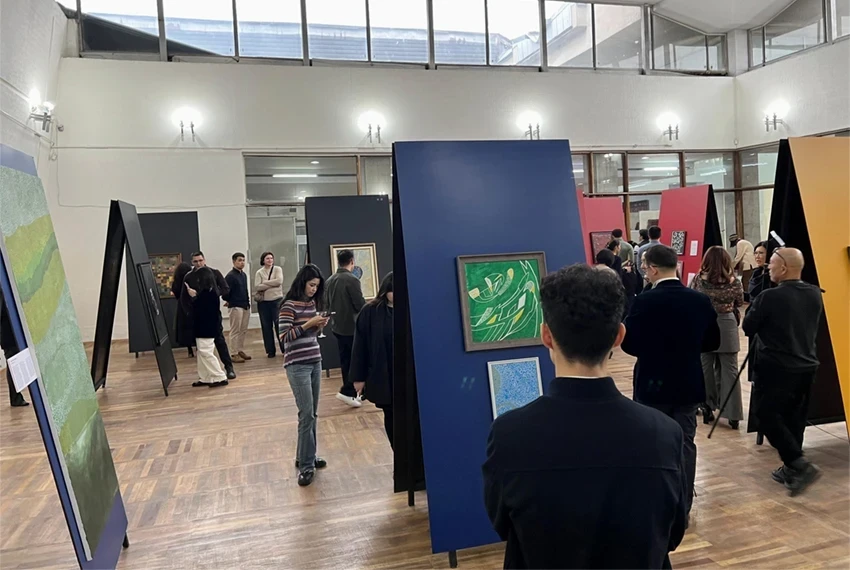
— Your exhibition is divided into four colors: red, blue, yellow, and black. What is the connection to emotions?
— When I was studying to become a psychologist, we explored emotions and feelings. During this period, I began to associate colors with them. In my marketing work, I conducted research on the psychosomatics of color and found that red is associated with determination and activity, while blue symbolizes reliability, and yellow — joy and lightness.
I also noticed that in Kyrgyz culture, where even adult children feel a duty to their parents, there is a complexity of separation, which is reflected in emotional experiences.
— What significance do you attribute to the word "anatomy" in the title of the exhibition?
— Emotions are closely linked to the body and health. There are four primary emotions: sadness, anger, joy, and fear. Anger can be both destructive and healthy. Sadness also has different facets and is sometimes necessary to complete a certain stage. In the past, expressing emotions could be seen as a weakness, which affected the way of life.
Modern research shows that suppressing emotions can lead to somatic diseases.
With "Anatomy of Human Emotions," I want to convey the idea that feeling is not shameful, regardless of gender. I often hear that women are considered more emotional, which sounds negative, but for me, it is a strength. Accepting one's vulnerability makes a person stronger.
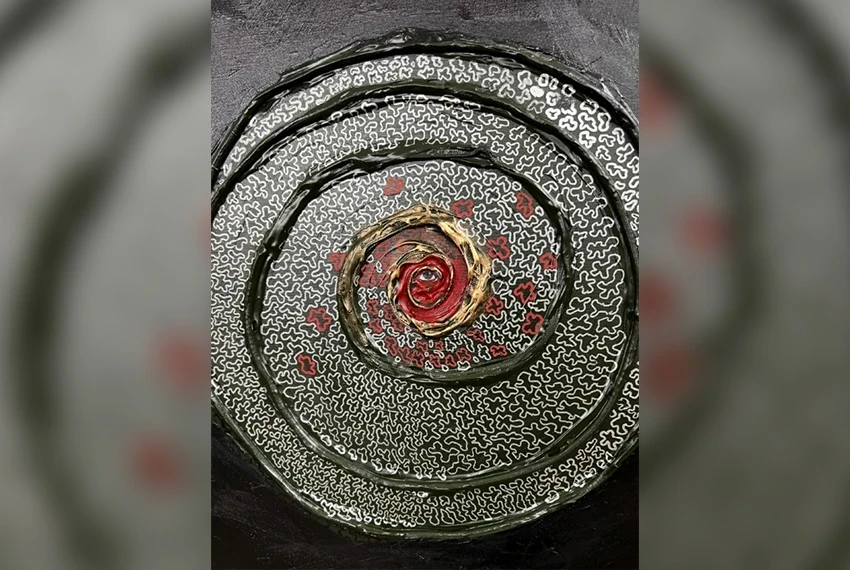
— I noticed your work "Betrayal," where cuts evoke anxiety. What feelings did you experience while creating it?
— This is one of the most challenging works for me. I cut the canvas in three places, symbolizing betrayal as broken arms: forgiveness is possible, but embracing is no longer possible. The three open wounds represent a visualization of how trauma destroys trust. Even if it is stitched up, the scar will remain forever.
I strive to develop contemporary art in Kyrgyzstan and show that we are capable of creating exhibitions that discuss themes relevant in New York, London, or Paris, on an international level. My works contain elements of abstraction and modernism that intertwine with each other.
Anthropology of Feelings: A Dialogue with the Nation
— You speak of a cultural code. What else might viewers have missed?— The exhibition "Anatomy of Human Emotions" represents a bold conversation about mentality. I seek to understand how historical trauma and the nomadic code affect the ability of modern Kyrgyz people to feel. Previously, restraint was a condition for survival, but now we are evolving. Generation Z lives differently, and my works serve as a bridge between survival and a full life.
— What awaits the theme of emotions and feelings in the future?
— That’s a good question. The exhibition is still ongoing, and I don’t yet know what will happen next. But I definitely want my works to improve people's quality of life, helping them live more happily. I am a patriot of Kyrgyzstan and believe that patriotism lies in small but significant actions, such as education and caring for the environment. I hope to create an exhibition dedicated to our country and culture.
I sincerely believe that the Kyrgyz people are unique. Although our culture has its limitations in expressing emotions, today we have the opportunity to preserve our identity while simultaneously bringing it to an international level.
The exhibition will run until February 1.