
A Journey of Hope
The main character is 9-year-old Samir, a social orphan living in an orphanage. His dream is to find his mother, who works in Russia. Supporting him on this journey is Adil, a 35-year-old man with a kind heart and a childlike perception of life.Together, they embark on a challenging journey filled with trials and encounters. This path becomes not only a search for his mother but also an important stage of inner maturation, faith, and awareness of one’s roots.
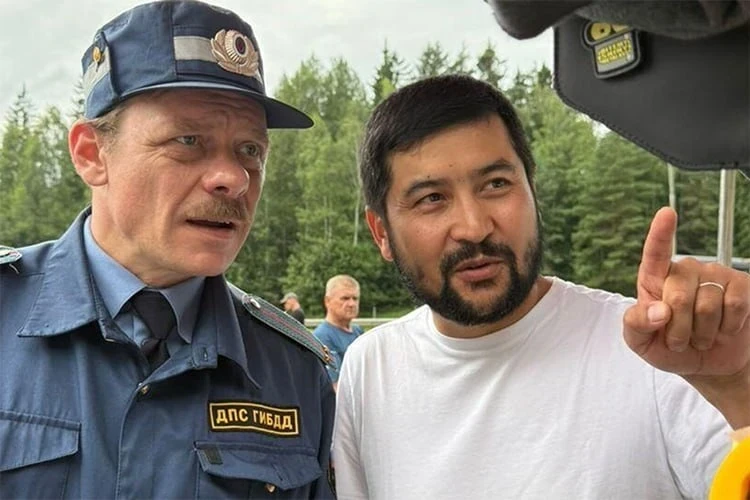
The film features actors from Kyrgyzstan and Russia, including Emil Esenaliev, Abil Sadiev, Anarkul Nazar kulova, Aysalkyn Kiyykbaeva, as well as well-known Russian artists such as Stanislav Bondarenko, Alexey Shcherbakov, and Pavel Maikov, who is familiar to many from the series "Brigada." The filming took place in several countries, including Kyrgyzstan, Kazakhstan, Tatarstan, and Russia. The film has been translated into Kazakh, Uzbek, and Russian, making it accessible to a wide audience.
Private Screening and Audience Reaction
On January 22, a private screening was held, attended by representatives of the clergy. The film made a strong impression on all present.Viewers noted that the director and screenwriter skillfully combined humor, drama, and tragedy, touching on the most vulnerable strings of the human soul.
In the second part, the religious component has significantly intensified: the film includes elements of Muslim culture, such as the significance of the Quran, learning to pray (namaz), holy water (zam-zam), and the theme of pilgrimage. These details are organically woven into the plot, giving it a deep spiritual meaning.
Emotions That Cannot Be Hidden
After the screening, the actors admitted that they could not hold back their emotions.Emil Esenaliev, who plays Adil, noted that his character in this part takes on a more passive role, complementing Samir's character. He added that every time he watches the film, he cannot hold back tears:
“Themes of children, family, and parents always touch the soul. I am a father of three children myself, so this is close to me. To convey a role, it is not necessary to be active and talk a lot. Sometimes silence speaks louder.”

Young actor Amir, who played Samir, also could not hold back his emotions during his performance. The audience supported him with prolonged applause, noting his successful debut. One of the representatives of the clergy, as a sign of appreciation, gifted the boy his watch.
Film as a Tool of Influence
Representatives of the clergy emphasized that the film's plot is so captivating that it was impossible to hold back emotions. It was interesting to observe how even adult men did not shy away from tears.According to them, cinema is a soft but powerful tool capable of changing consciousness and shaping values.
Religious figures called for the creation of more such films that form correct national values and teach kindness, wisdom, and morality.
In an interview with 24.kg, one of them noted that after watching the film, he wanted to call his mother, who lives in the region: “She often says that I rarely visit her. Now I feel embarrassed, and I think I should at least talk to her on the phone more often,” he confessed.
What the Film Speaks About
"Beish 2: apama kat" touches on a number of acute and relevant topics:— the problem of orphanages and nursing homes for the elderly, which, according to the authors, should not exist in an ideal society;
— the theme of labor migration and its consequences, such as abandoned children, neglect, and begging;
— interethnic harmony;
— the value of family and relationships between parents and children;
— maternal love, spiritual guidelines, and the connection between generations;
— the search for loved ones, the meaning of life, and human gratitude.
The film represents not only a physical journey for the characters but also their internal spiritual path to understanding themselves, their faith, and their place in the world.
After its release in Kyrgyzstan, the film will also be shown in other CIS countries, continuing the dialogue with the audience in the language of sincerity, pain, and hope.


