


Alimony represents financial support for family members who need assistance. Primarily, these are funds that one of the parents transfers for the maintenance of their minor children.
Although alimony is most often associated with payments for children, the law also allows parents to demand alimony from their children in cases of incapacity or old age. However, such situations are quite rare.
Who is the alimony payer and how is it collected?
After a divorce, alimony is paid by the parent who does not live with the child. Alimony collection can occur:
- by mutual agreement;
- by court decision.
According to the Family Code of the Kyrgyz Republic, alimony for minor children is established as a percentage of income:
- for one child — 25% of income;
- for two children — 33% of income;
- for three or more children — 50% of income.

To collect alimony in court, a statement must be submitted by the interested party. Based on this statement, a court order is issued, which serves as the basis for the actions of the bailiff.
When submitting, it is necessary to provide documents confirming kinship with the child:
- birth certificate;
- marriage certificate;
- copy of the applicant's passport;
- residence certificate;
- medical certificate regarding the child's health status.
In some cases, alimony may continue to be paid even after the child turns 18 if they are studying on a paid basis at an educational institution. In this case, payments may continue until the age of 21.
Methods of collecting alimony
Initially, the bailiff offers the debtor to voluntarily fulfill their obligations. If this does not yield results, the following measures are applied:
- restriction on leaving the country;
- seizure of bank accounts;
- seizure of property.
Evading alimony payments is classified as a crime under Article 178 of the Criminal Code of the Kyrgyz Republic.
What is the statistics of alimony debtors in the country?
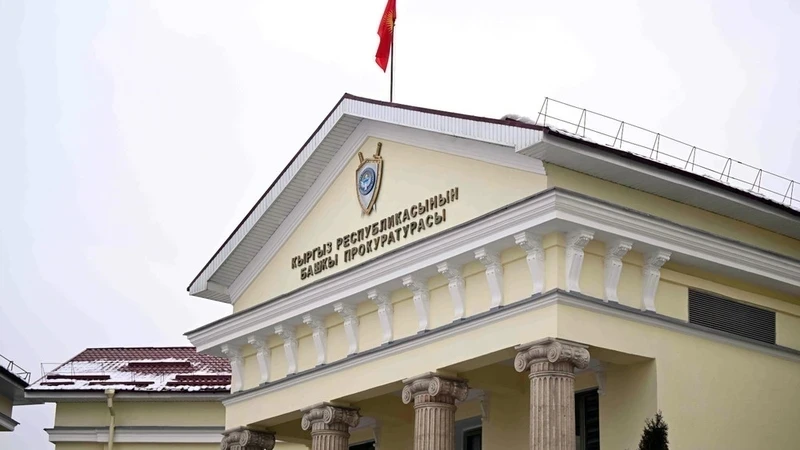
According to information from the General Prosecutor's Office, the number of alimony debtors who are wanted is 1,205 people, and the enforcement proceedings on these cases have been temporarily suspended.

- 280 debtors were fined;
- 63 people were assigned to community service;
- in 244 cases, the initiation of a criminal case was refused;
- 18 cases were returned for revision;
- in 143 cases, the proceedings were terminated;
- 376 cases are under consideration.
Strengthening measures against alimony non-payers
The General Prosecutor's Office is currently working on a draft law that proposes the forced employment of individuals who evade alimony payments, as well as the withholding of alimony from their wages.
The draft law has already passed its first reading in the relevant committee and includes:
- a three-day arrest for alimony arrears exceeding three months;
- a seven-day arrest for repeated violations within a year;
- for arrears of 12 months, community service from 100 to 200 hours or imprisonment for up to one year;
- for concealing income and evading court decisions — a fine of 100,000 soms or imprisonment for up to three years.

Recent changes in legislation
According to Masalbekova, there is no separate law regulating alimony obligations in Kyrgyzstan. The collection of alimony is carried out based on the law "On the Status of Bailiffs and Enforcement Proceedings." For intentional evasion of alimony payments, liability is provided under Article 178 of the Criminal Code of the Kyrgyz Republic.
Nevertheless, statistics show that despite the measures taken, the alimony collection system remains insufficiently effective, and the share of unfulfilled decisions remains high," she added.
How is alimony collected from citizens living abroad?
Collection of alimony from citizens living outside Kyrgyzstan occurs based on the legislation of the state in which they reside, as well as international treaties and agreements:
- international conventions to which Kyrgyzstan has acceded;
- agreements on legal assistance within the CIS;
- bilateral treaties on mutual legal assistance between judicial and investigative bodies.

Information about the income and place of work of debtors can be obtained:
- through official requests to foreign authorities;
- through international legal assistance channels;
- through information exchange between migration and law enforcement agencies.

- through diplomatic channels;
- by international mail;
- using electronic communication means.
What is the statistics of requests for legal assistance regarding alimony?
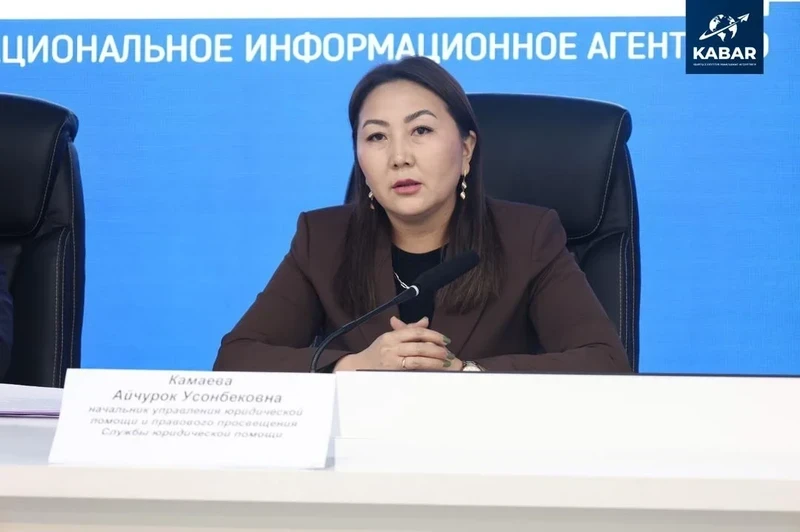
Aichurek Kamayeva, head of the legal assistance and legal education department, reported that requests regarding alimony rank second after pension issues.
"Over the year, 3,665 requests were registered regarding pensions and benefits, while 2,447 were for alimony.
In 2025, qualified legal assistance was provided to 18,181 people, of whom 1,037 sought assistance on alimony cases, which constitutes 5.7% of the total number of those who received help.
The second is qualified legal assistance, where a lawyer represents the applicant's interests in court instances and ensures the enforcement of court decisions.
This approach protects the rights of citizens, especially children," she emphasized.


