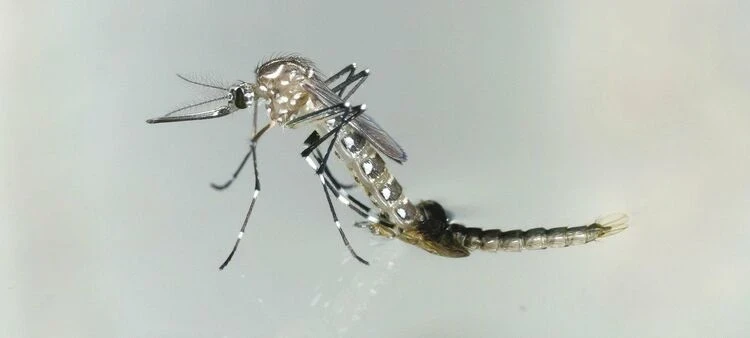
The Aedes albopictus mosquito, also known as the "tiger mosquito," was first spotted in Austria in 2012 and has since spread across all federal states of the country. In recent years, Graz has been facing a particularly high population of these insects. In response to the increasing complaints and the growing risk of arbovirus spread in Europe, the city turned to the IAEA for assistance in conducting a study using the MRR method.
This methodology involves the release and recapture of a specific number of marked sterile male mosquitoes to analyze their behavior within the local population.
Experiment Process
Over the course of seven weeks, in August and September of last year, more than 800,000 sterile mosquitoes were released over an area of 15 hectares in the southern part of Graz."Mosquito populations, including invasive species such as Aedes albopictus, are rapidly increasing across Europe and the world due to changing climate conditions, urbanization, and the growth of international trade. Rising temperatures and altered precipitation levels create ideal conditions for breeding, allowing species previously confined to the tropics to successfully adapt in temperate latitudes. The expansion of their habitat poses serious challenges for public health, as mosquitoes can carry dangerous diseases such as chikungunya, dengue, and Zika virus," the organization explained.
Data Processing
The analysis of information obtained from the recaptured mosquitoes as part of the joint study between Graz and the IAEA provides important data on the size of the wild mosquito population, the distance that sterile males can travel, their survival in the wild, and their mating capabilities.Method Effectiveness
Preliminary results of the study confirmed the high effectiveness of the method used. The sterility rate of the eggs was approximately 70%, and the number of females caught in traps significantly decreased during the experiment compared to neighboring untreated areas. This indicates that sterile males successfully compete with wild individuals, and their release could significantly reduce mosquito populations in densely populated cities.Photo on the main page: IAEA.