
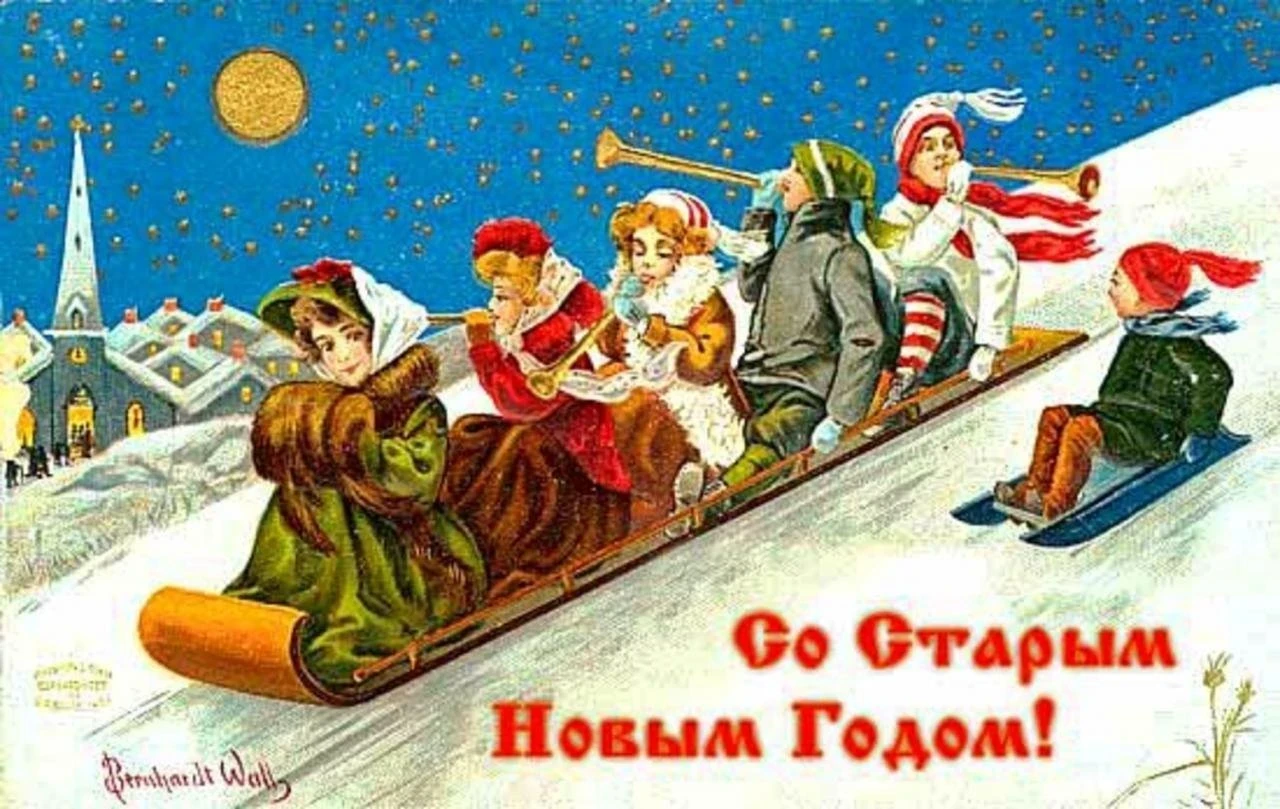
Interestingly, this unofficial holiday is celebrated not only in the former republics of the USSR but also in countries such as Serbia, Montenegro, Greece, Tunisia, Algeria, and Switzerland. Each of these countries has its own unique traditions.
In the countries that were once part of the Soviet Union, it is customary to carol: people go from house to house, scattering wheat or oat seeds and singing folk songs with wishes for prosperity. There is also a belief that divinations on this night are the most accurate.
Photo from the internet. Postcard for the Old New Year
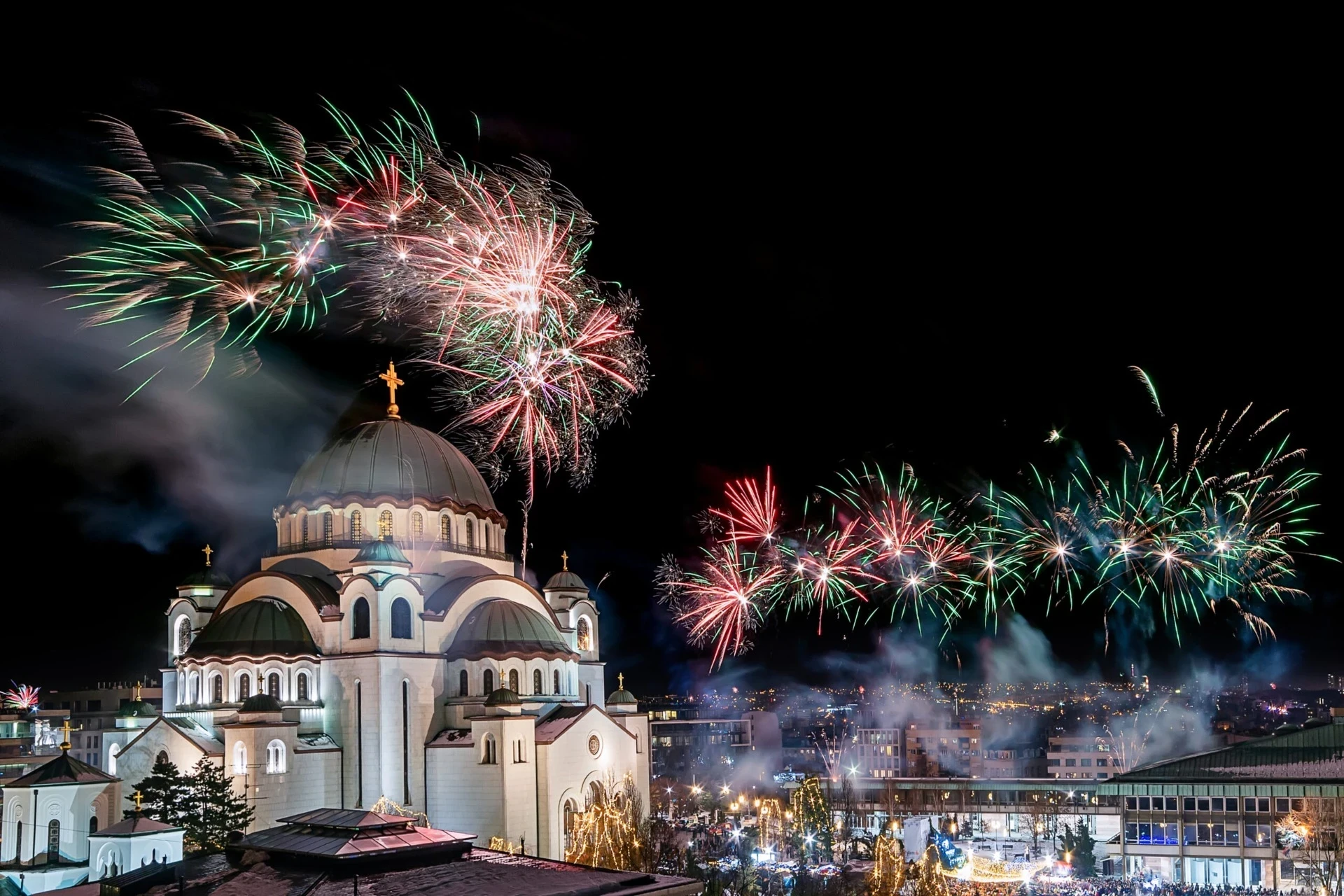
In the countries of the former Yugoslavia, this day is celebrated with fun and fireworks. In Serbia, the holiday is called Serbian New Year, and it is celebrated with particular grandeur, especially at the Temple of Saint Sava in Belgrade. On this day, it is customary to burn the badnjak — a log left over from Christmas. In the Republic of Srpska, January 14 is a non-working day, and in Montenegro, this event is called "Prava nova godina," which translates to "the correct New Year."
In Abkhazia, January 13 is celebrated as the Day of Creation of the World and is considered a holiday. The celebration is associated with the worship of the deity Shashva, and on this day, residents sacrifice goats and roosters.
In Greece, this day is known as Saint Basil's Day, who is considered the Greek Santa Claus. Children place their shoes by the fireplace to find gifts there in the morning. It is forbidden to quarrel on this holiday; otherwise, the whole year will be full of conflicts.
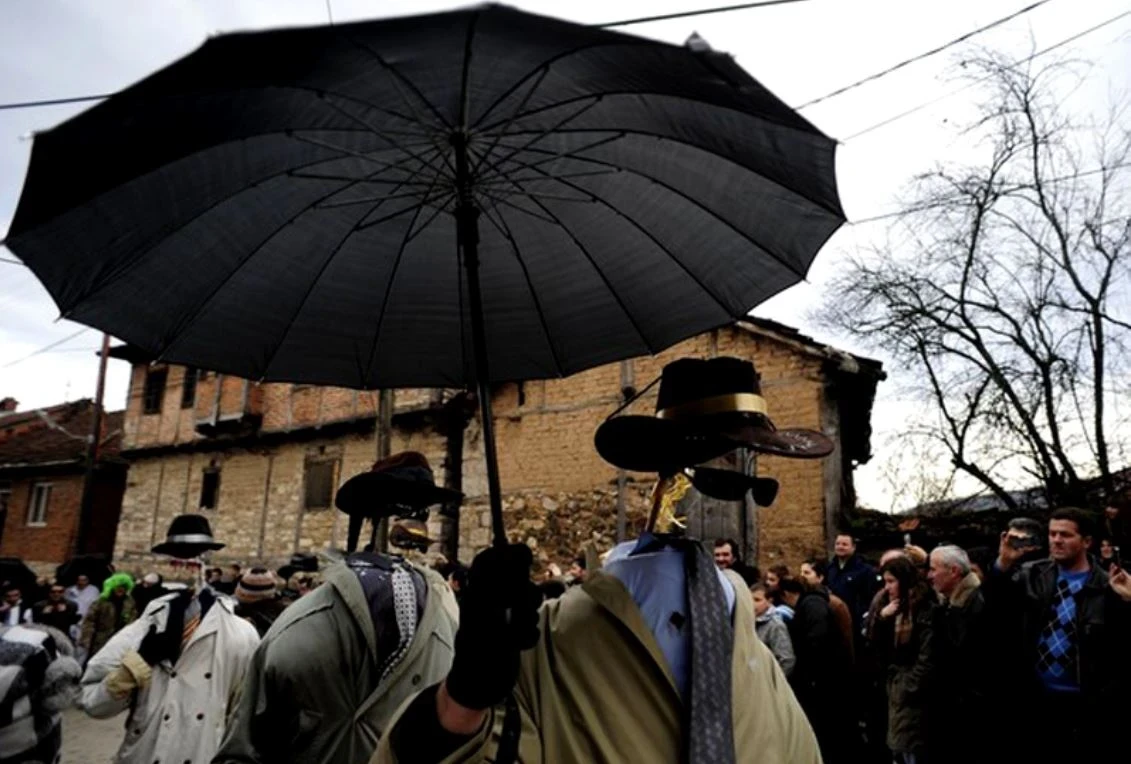
From January 12 to 14, Macedonians hold carnivals with dancing around large bonfires to scare away evil spirits.
In Wales, the Hen Galan festival is celebrated, symbolizing the beginning of the new year according to the Julian calendar, when children go from house to house in search of gifts.
In some German-speaking cantons of Switzerland, the Old New Year is also celebrated, coinciding with Saint Sylvester's Day. This holiday arose as a result of popular resistance to the transition to the Gregorian calendar in the 17th-18th centuries, and on this day, people traditionally wear Sylvester Claus costumes and roam the streets performing yodeling.
The Berbers, the indigenous people of North Africa, celebrate the New Year according to the Berber calendar, which, although based on the Julian calendar, has its own peculiarities. In Algeria, the first day of the new year has been an official holiday since January 12, 2018, and due to inaccuracies in the dating system, it is celebrated two days earlier.
In 2023, the Berber New Year was included in the official holiday calendar in Morocco and falls on January 14.
The Japanese celebrate the small New Year, called "Koshogatsu," on January 15, visiting temples and praying for a good harvest. On this day, New Year decorations are removed, and instead, bamboo, rice cakes, coins, and amulets are hung in homes.


