
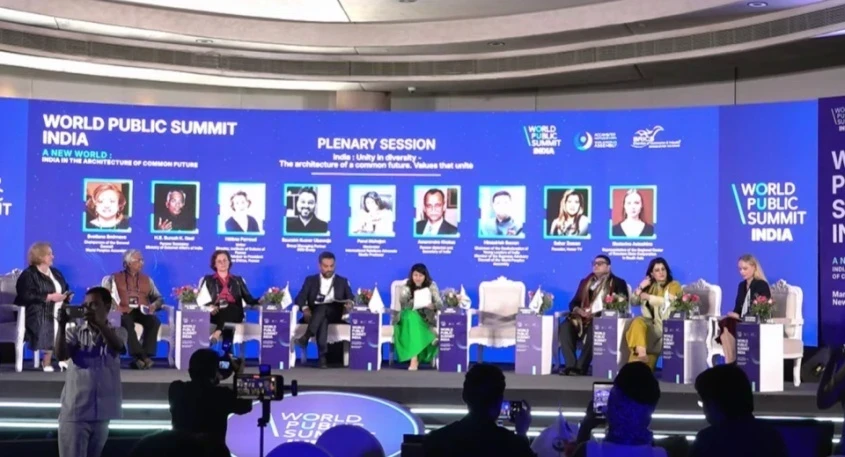
A plenary session of the World Public Summit titled "New World - India in the Architecture of a Common Future" took place in New Delhi. This landmark event opened an international cycle of forums scheduled for 2026 and gathered over 1,500 participants from 24 countries. Representatives of government structures, diplomats, businesspeople, scientists, media managers, and spiritual leaders met on a single platform to discuss the future.
The opening of the session began with the Indian ritual of lighting the Lamp of Peace, symbolizing the victory of light, knowledge, and goodwill over division. The discussions focused not only on numbers but also on issues of cultural and spiritual heritage, the development of public diplomacy, and the creation of a new type of leadership. Participants unanimously agreed that the modern world requires a transition to a partnership economy and intercultural interaction based on respect for human dignity.
The key political outcome of the summit was the adoption of the Delhi Declaration. This document enshrined the principles of human unity, emphasizing the importance of recognizing diversity and shared responsibility for the planet's future. Experts note that the forum in New Delhi became not just a place for discussions but a genuine platform for civic initiatives. All proposals developed during the meeting will form the basis for the agenda of the second World Public Summit "New World - Values that Unite," which will take place in Moscow in September 2026.
The summit in India confirmed that in the context of global instability, public diplomacy can become a connecting link between different civilizations. The Delhi meeting set high standards for subsequent regional forums, shifting the focus from confrontation to the search for common values and the creation of a unified space for development.


