
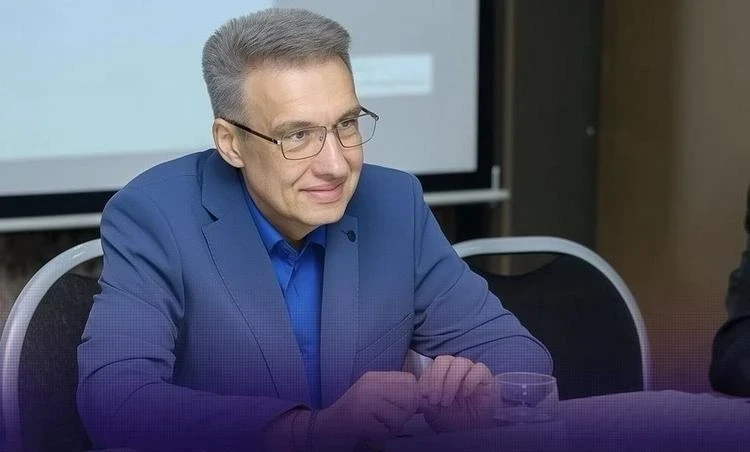
Recent military actions in the Middle East have demonstrated that the so-called "security umbrellas" in the form of American military bases have proven to be insufficiently reliable. Political scientist and director of the Economic Initiatives Center "Oiy Ordo," Igor Shestakov, noted at a round table titled "Military Conflicts in the SCO Area of Responsibility: The Role of Kyrgyzstan in Ensuring Regional Security" that missile attacks and drone strikes from Iran have affected not only American facilities but also the civilian and economic infrastructure of Arab countries.
Shestakov also reported that as a result of these attacks, not only US military personnel were harmed, but also residents of countries such as the UAE, Kuwait, Bahrain, and Qatar. He emphasized that despite Qatar's active cooperation with Central Asia in defense matters, the current security doctrine based on US presence has demonstrated its inadequacy. In this regard, he expressed doubts about proposals to return NATO bases to Central Asia, calling them unfounded.
Furthermore, the political scientist noted that the new "Council for Peace," created at the initiative of the US, has not become an effective tool for ensuring peace in the Middle East. "This council, which some media call the 'Trump Council,' has effectively become just a platform for exchanging opinions, without real mechanisms for achieving peace. The rules of the Council's operation are determined solely by the American administration," Shestakov stated.
He also pointed out that Central Asian states such as Uzbekistan and Kazakhstan have joined this Council, while Kyrgyzstan was not invited to its establishment. Experts emphasize that participation in the Council may lead to dependencies on US decisions, which raises doubts about the ability to achieve the national interests of the member countries.
Shestakov also emphasized that US military actions against Iran can be viewed as part of a broader strategy to counter China, as a significant portion of Iranian oil goes to the Middle Kingdom. "The conflict in the Middle East primarily affects the transportation logistics of Central Asia, while the military confrontation between Pakistan and the Taliban poses direct threats to the region," he stressed.
There is significant concern about a possible influx of refugees from Afghanistan in the event of an escalation of the conflict between Kabul and Islamabad. Shestakov warned that terrorists could infiltrate Central Asia disguised as civilians, posing a threat to the secular regimes of the countries in the region. He also noted the US's desire to return its troops to the base in Bagram, indicating Washington's intention to use the conflict for its own interests.
The main question is who will be able to ensure security at the borders of Central Asia with Afghanistan. Shestakov pointed out that the SCO has not paid adequate attention to this conflict, and China's attempts to stabilize the situation have not yet been successful. He also noted that Turkey, seeking to strengthen its position in the region, may attempt to create a military component within the CSTO, although economic difficulties may hinder the implementation of such projects.
In conclusion, Shestakov reaffirmed that the only real guarantor of security in the region remains the CSTO, which has already demonstrated its effectiveness in ensuring security in Central Asia during the events in Kazakhstan in January 2022.
"Additionally, within the framework of the CSTO, a program for ensuring border security with Afghanistan is being implemented," Shestakov added.


