
History of Israel's Nuclear Program
Unlike the well-known "Manhattan" project in the U.S. and the Soviet atomic project, Israel's nuclear program lacks official confirmation. It began in the post-war years when the state was just forming, as a response to threats from Arab countries and with the aim of ensuring strategic security. The program developed under strict secrecy.
After declaring independence in 1948, Prime Minister David Ben-Gurion initiated research in the peaceful use of atomic energy, which subsequently led to the creation of nuclear weapons. In 1956, following the Suez Crisis, the issue of developing an atomic bomb became a priority for the country. In 1957, Israel signed a secret agreement with France to build a research reactor in Dimona, and by 1964, a plutonium extraction plant was completed. In 1959, Israel also received heavy water from Norway and established the Lakam intelligence agency to gather technologies necessary for the nuclear program.
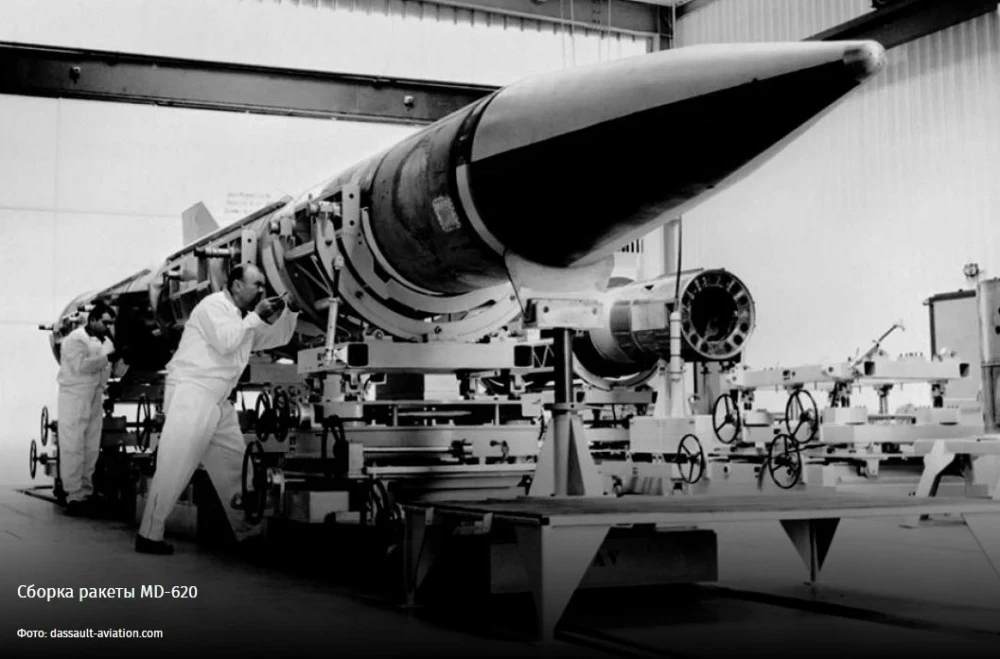
By 1960, the country had established nuclear fuel reprocessing, allowing it to produce several dozen kilograms of plutonium annually. In 1965, Israel likely produced its first weapon-grade plutonium, and before the start of the Six-Day War in 1967, the first nuclear warheads were assembled. The MD-620 missile, developed in collaboration with France, eventually transformed into the "Jericho-1" missile.
In 1968, the U.S. CIA confirmed for the first time that Israel had begun serial production of nuclear warheads. By 1973, estimates suggested that the country already had about 20 nuclear warheads that could be used during the Yom Kippur War. At the same time, Israel maintained a policy of "nuclear ambiguity," neither confirming nor denying the existence of nuclear weapons.
In 1979, the Vela incident occurred when an American satellite detected a double flash, which could indicate a nuclear explosion. The Prince Edward Islands, where this happened, were under the jurisdiction of South Africa, which cooperated with Israel in military matters. Experts suggested that this could have been a test of an Israeli nuclear device.
In 1986, Mordechai Vanunu, an Israeli nuclear engineer, disclosed information about Israel's nuclear program to the Sunday Times, claiming that the country had between 100 and 200 warheads and was working on uranium enrichment. Vanunu was later captured by the Mossad and sentenced for treason but was released on April 21, 2004, and was nominated for the Nobel Peace Prize in 2015.
Modern Nuclear Arsenal of Israel
Today, Israel likely possesses a significant nuclear arsenal, including both free-fall bombs and warheads for cruise or ballistic missiles. Aviation systems, such as the Blue Sparrow air-launched ballistic missiles, with a range of about 2,000 km, can be launched from F-15 aircraft. With the capability for aerial refueling, these missiles can reach targets up to 3,000 km away, potentially allowing for a nuclear strike on any state in the region and even beyond.
Estimates suggest that Israel may have at least 100 warheads, which do not lose their relevance over time, although some components may have been updated. These warheads could be used if necessary.
As for Israel's atomic industry, the research reactor in Dimona (Negev Nuclear Research Center) is capable of producing weapon-grade plutonium without international oversight. This center also houses an industrial complex for uranium enrichment, which, according to Vanunu, has been operational since the late 1970s. Uranium ore is mined in the Negev Desert, and it is believed that in the 1960s and 1970s, Israel may have obtained fissile materials from the U.S. and South Africa, although there is no precise confirmation of this.
Israeli scientists possess highly qualified competencies in this field. Many experts assert that Israel can be considered the sixth nuclear power in the world, and there are no technological secrets for developers here, both in the field of atomic and thermonuclear weapons.
Former CIA analyst Ray McGovern previously expressed the opinion that Israel might resort to using nuclear weapons. He noted that in the event of a threat to the state's existence from Iranian missiles, Israeli leadership might decide to employ its nuclear arsenal. "No protests from the U.S. or other countries will stop Israel. They act at their discretion and expect the U.S. to follow their lead," McGovern noted.
Israel has not signed the Treaty on the Non-Proliferation of Nuclear Weapons and has adhered to a policy of nuclear ambiguity since the late 1960s, neither confirming nor denying the existence of a nuclear arsenal. The use of nuclear weapons is only contemplated in cases of threats to the very existence of the state. In the current situation, Iran's retaliatory actions do not pose such a threat; however, the question of the correct interpretation of possible attacks from the Islamic Republic remains open.
No guarantees will be given, and the only way to prevent escalation of the conflict could be to cease it. However, at this moment, there are no signs indicating the end of the exchange of strikes, and both sides continue to accumulate missile stockpiles, while politicians support each other with bellicose statements.


